

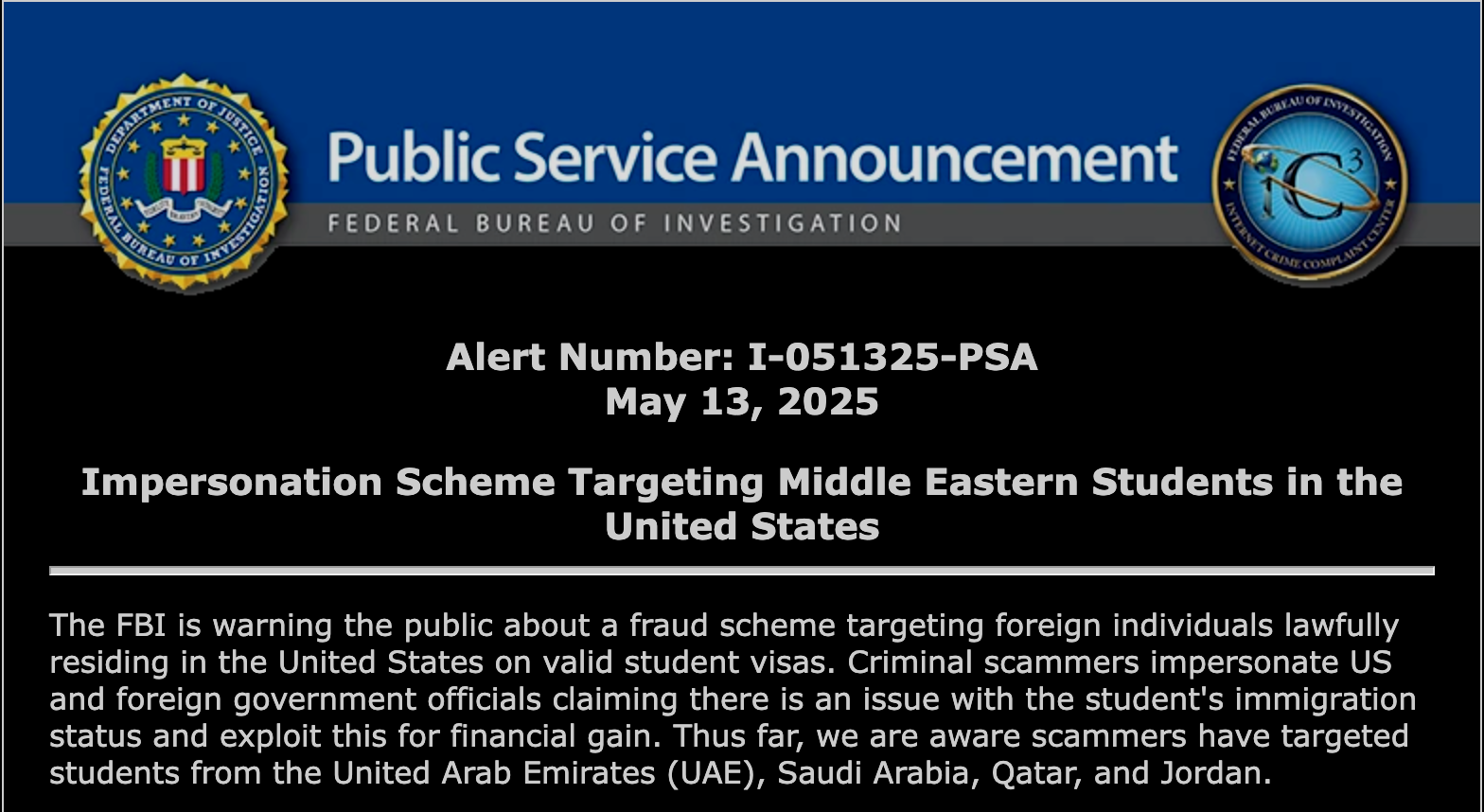
A new scam sweeping across the U.S. has international students looking over their shoulders and their phones. According to the FBI, fraudsters are posing as federal agents and threatening to deport students unless they cough up cash, often in the form of wire transfers, cryptocurrency, or even gift cards.
The scheme has taken root in Washington state but is hitting students from all over the world, particularly those from the Middle East—Saudi Arabia, UAE, Qatar, and Jordan are among the most impacted. FBI Special Agent Ethan Via says scammers are betting on the assumption that these students come from money, making them more likely to fall for the con.
Here’s how it plays out: students get a call, text, or email saying there’s a problem with their visa. The impersonators claim to be from Homeland Security, U.S. Citizenship and Immigration Services, or similar agencies. Sometimes they spoof real government phone numbers and even send links to fake official-looking websites.
Then comes the pressure. They’re told if they don’t pay up immediately, they’ll be prosecuted or deported. Some victims are told to wire money. Others are asked for crypto or gift cards. It’s a slick operation, and unfortunately, some fall for it.
Via emphasizes that real federal agents may reach out to speak with people, but they’ll never ask for money to solve a visa issue—and definitely not via crypto or gift cards. That’s a red flag.
The scam has been especially effective in light of ongoing global tensions and increased immigration enforcement in the U.S. Scammers are using fear to get fast results, exploiting the urgency of the moment to override students’ instincts.
This year alone, Washington state has reported $19 million in losses from government impersonation scams—surpassing last year’s total of $15 million. And that’s just what’s been reported.
The FBI is urging all international students to stay alert and take the following precautions:
• Don’t respond to unexpected calls or messages from someone claiming to be a government agent.
• Always verify government websites and phone numbers yourself.
• Be skeptical of any demand for payment, especially if it’s urgent or requires cryptocurrency or gift cards.
• Never share two-factor authentication codes or download files from unknown sources.
• If something feels off, report it right away to IC3.gov or your country’s embassy.
Victims are encouraged to act quickly—within 2-3 days—to give authorities the best shot at recovering lost funds.
The FBI isn’t letting borders stop their investigation. As Via puts it, “If we have the information, we’re good at tracking these people down—no matter where they are.”
If you’re an international student and get a sketchy call about your visa, double-check with the agency that issued it. Chances are, your visa is just fine—and someone’s trying to rob you.
Stay sharp, stay safe.
