


Amazon isn’t easing up on sellers anytime soon, and this latest move makes it clear who’s about to feel the pressure. The Amazon fuel and logistics surcharge is officially rolling out, with the company confirming a new 3.5% fee tied directly to rising operating costs.
In a notice sent to sellers, Amazon said fulfillment and logistics expenses have climbed across the industry. The company explained it has been absorbing those increases up to this point. However, with costs still sitting high, Amazon is now passing part of that burden along through what it calls a temporary surcharge.
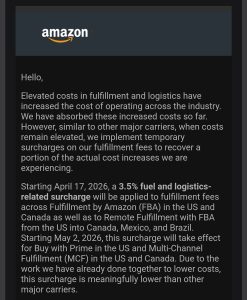
Starting April 17, 2026, that 3.5% surcharge will hit Fulfillment by Amazon fees across the US and Canada. It also extends to remote fulfillment routes from the US into Canada, Mexico, and Brazil. Then on May 2, 2026, the same fee structure expands to Buy with Prime and Multi-Channel Fulfillment orders in both the US and Canada.
Amazon framed the move as necessary, pointing to elevated fuel and logistics costs. While the company did not name specific geopolitical events, global oil markets have been unstable due to ongoing international conflicts and supply chain pressure. That volatility has kept fuel prices unpredictable, which directly impacts shipping, warehousing, and last-mile delivery. So even if Amazon kept things steady for a while, the math eventually caught up.
The company also made sure to note that this surcharge is lower than what other major carriers are charging. Still, for small and mid-sized sellers already dealing with tight margins, even a few percentage points can shift pricing, profits, and competitiveness overnight.
Because when fulfillment fees go up, sellers have two options. Either they absorb the cost and take the hit, or they pass it to customers through higher prices. And in this economy, neither option lands softly.
This isn’t the first time Amazon has adjusted fees in response to external pressure, and it likely won’t be the last. Fuel costs move, global tensions rise, and logistics follows right behind. So while Amazon calls this temporary, sellers know how these “temporary” charges tend to stick around longer than expected.
