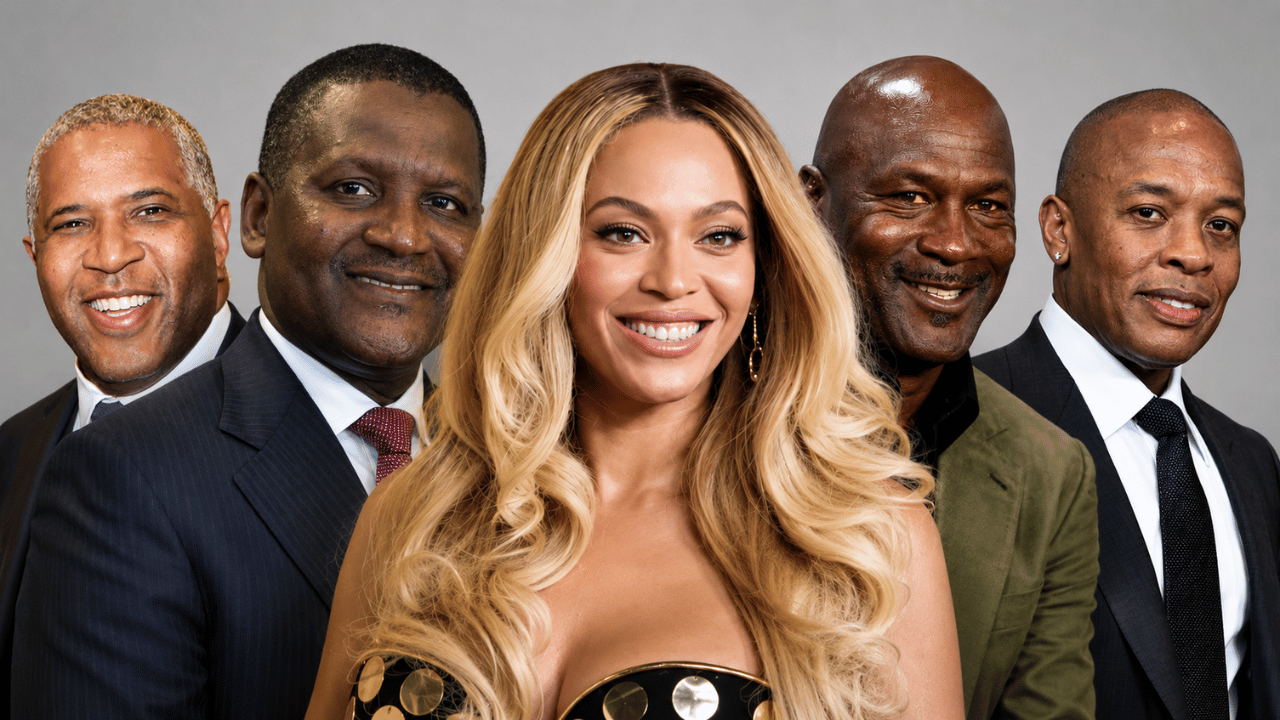
When the enslaved people of Texas were finally told they were free in June of 1865, they had no land, no money, no legal protections, and no reparations. What they had was each other, and the determination to build something out of nothing. 161 years later, the ledger looks different. In 2026, Forbes counted a record 27 Black billionaires worldwide, with a combined estimated wealth of $121 billion, up from 23 billionaires worth $96 billion just a year prior. That’s not a fluke. That’s momentum. The expanding footprint of Black wealth across technology, private equity, entertainment, and global industry is showing up in the data in ways it never has before.
Leading the list: Aliko Dangote at $28.5 billion, followed by Alexander Karp at $13.4 billion, Robert F. Smith at $10 billion, and Michael Jordan at $4.3 billion. But the two new entries making the most noise? You already know their names.
Beyoncé Knowles-Carter officially crossed the billion-dollar threshold in 2026. And this wasn’t built on streaming checks alone, it was built on ownership. Her Renaissance and Cowboy Carter world tours. Her haircare line Cécred. Her Texas whiskey brand SirDavis. Bey has been quietly building a diversified empire for years. The billion is just the scoreboard catching up.
View this post on Instagram
Dr. Dre is also on the board. The Beats by Dre legacy that Apple bought for $3 billion back in 2014 laid the foundation, but Dre kept building. His Gin & Juice spirits brand with Snoop Dogg is one of the newer additions to a fortune that just crossed into ten-figure territory. This is what freedom looks like when it’s given the resources and the runway to compound.
View this post on Instagram
Of the 1,000 wealthiest people in the world in 2025, only three were Black Americans. The wealth gap that began when formerly enslaved people were freed without land, without capital, and without the 40 acres that was promised, then taken back, is still alive and visible in those numbers. Greenwood was burned. Redlining was policy. Generational wealth was interrupted on purpose, repeatedly, by institutions and laws designed to keep it from forming. 27 billionaires is a milestone. It is also a fraction of what this community has built for others over centuries without credit, compensation, or equity.
It marks how far we’ve come. It also marks how far we still have to go. And it’s a reminder that the wealth our ancestors built for others was never paid back, so everything being built today is being built on top of that debt. The 27 names on Forbes’ list represent what’s possible. The gap between their wealth and the median Black household net worth in America represents what’s unfinished.
We celebrate the milestone. And we keep building.