

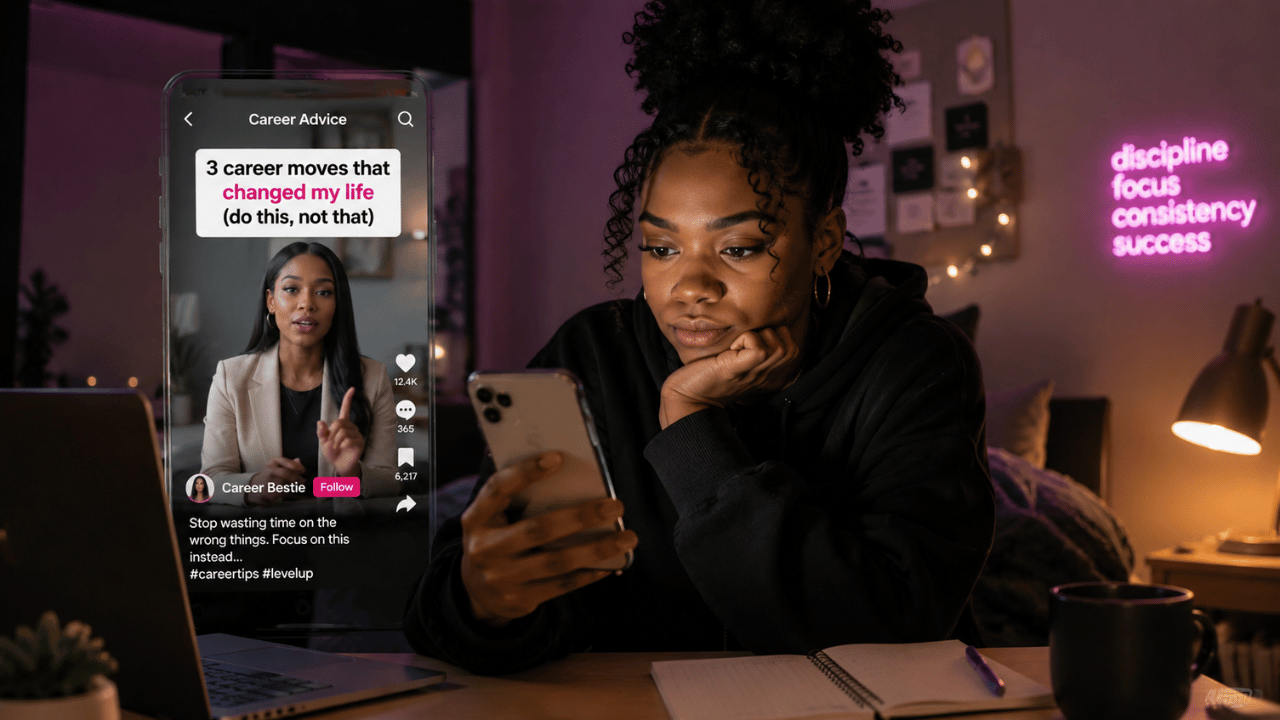
Career advice is no longer just coming from recruiters, mentors, campus counselors, or managers. For Gen Z, it is showing up between story times, day in the life videos, salary confession clips, and creators promising to tell them what school never did. That access can be powerful, especially for young workers who do not always have a professional network to lean on. But according to Zety’s Gen Z Misinfluence Report, the same feeds helping young professionals find jobs are also pushing misleading guidance that can damage a job search.
Per the recent survey, 94 percent of Gen Z workers said they followed viral career advice on social media that turned out to be misleading or negatively affected their job search. All respondents said they use social media for career advice, while nearly half said they trust creators and influencers more than traditional recruiters or career coaches.
The survey was conducted on February 23, 2026, and included 919 employed Gen Z workers living in the United States who were ages 18 to 27 at the time. Zety also found that “YouTube” was the top platform for professional advice, with 80 percent of respondents using it for career guidance, followed by Instagram at 73 percent, Facebook at 40 percent, X at 38 percent, TikTok at 32 percent, Reddit at 30 percent, and LinkedIn at 26 percent.
That does not mean social platforms are useless, as 98 percent of respondents said they effectively used social platforms to find jobs, internships, or professional opportunities. The report also found that 69 percent said they landed a job through Instagram, while 28 percent credited TikTok with helping them secure employment. Career advice online can open doors, but the problem starts when a viral post becomes the only source behind a major life decision.
Social media has already pushed young workers into big career moves. The report found that 60 percent said online advice inspired them to change industries or fields, 41 percent started a side hustle, 36 percent quit a job, 31 percent began freelancing or gig work, 27 percent negotiated higher pay, and 16 percent enrolled in a course or certification program. Those moves can be smart when they are planned, researched, and tied to real goals. They can get expensive fast when they are based on a creator’s highlight reel.
The first way Gen Z can protect itself is to treat every piece of career advice like a lead, not a command. A creator can share what worked for them, but their story may depend on timing, privilege, location, industry, family support, savings, credentials, or luck. Before quitting a job, paying for a certification, changing majors, or switching fields, young workers should look for the same advice from multiple credible sources. According to digital literacy expert Mike Caulfield’s SIFT method, people evaluating online information should stop, investigate the source, find better coverage, and trace claims back to the original context.
That pause matters because a confident tone is not the same thing as proof. According to Stanford researchers Sam Wineburg and Sarah McGrew, professional fact checkers often evaluated websites by leaving the page, opening new tabs, and checking what other sources said about the original source. That habit, known as lateral reading, can help Gen Z career advice seekers avoid being impressed by clean graphics, big follower counts, or official looking language that has no real support behind it.
The second way to avoid faulty career advice is to verify the person giving it. Before taking advice from a creator, check whether they have worked in the field they are discussing, whether they disclose paid partnerships, whether they are selling a course, and whether their advice matches current hiring practices. Career advice from a recruiter, hiring manager, licensed professional, union representative, professor, or working professional in the actual field usually carries more context than advice from someone whose main credential is going viral.
The third move is checking the labor market before buying the dream. According to the U.S. Bureau of Labor Statistics Occupational Outlook Handbook, workers can research occupations by pay, duties, education, training, and job outlook. According to the U.S. Department of Labor’s O*NET page, job seekers can also find occupation reports with critical tasks, skills, local salary information, training opportunities, and job postings. That means a TikTok saying a certain job pays six figures should send someone to salary data before it sends them to checkout for a certificate.
The fourth move is learning the difference between career advice and a job scam. According to the Federal Trade Commission, scammers advertise jobs online, on job sites, and on social media just like real employers do, but they are often after money or personal information. In an April 30, 2026 consumer alert, the FTC warned that fake recruiters may claim to represent familiar companies, advertise remote roles, mention daily or weekly pay without clear job details, and ask people to reply with “YES” or “INTERESTED.”
Young job seekers should ignore generic unexpected texts, WhatsApp messages, or Telegram messages about jobs, never pay to get paid or get hired, and avoid anyone offering money for positive ratings or online likes. That advice is especially important because social media scams are not small. According to the FTC, consumers reported losing $2.1 billion to scams that started on social media in 2025 alone.
The fifth way to stay safe is to separate motivation from strategy. A video that makes someone feel brave enough to ask for more money can be useful. But the actual negotiation should be built around market data, job performance, responsibilities, timing, and company policies. According to the National Association of Colleges and Employers, career readiness includes core competencies that prepare college educated workers for workplace success and lifelong career management. That means the real flex is not just quitting loudly or posting a wins video. It is building communication, critical thinking, professionalism, leadership, teamwork, technology, equity, inclusion, and career development skills that still matter when the algorithm moves on.
Zety’s report also shows that Gen Z is not only taking career advice from social media, but using it to judge employers. The report found that 99 percent of respondents research a company’s social media before applying, while 63 percent said they would not apply if a company’s content felt “overly polished” or inauthentic. Zety called this the “vibe check” recruitment barrier, but job seekers need to apply that same standard to creators. If a page only shows wins, hides risk, pushes urgency, or makes every path sound effortless, that is not mentorship. That is marketing.
The safest approach is not logging off forever. Social media can introduce Gen Z to jobs, salary language, workplace rights, professional communities, and industries they may have never seen up close. But career advice should be filtered through credible sources, real people, official data, and personal circumstances before it becomes a move. The algorithm can start the conversation, but it should never get the final say on someone’s career.
