

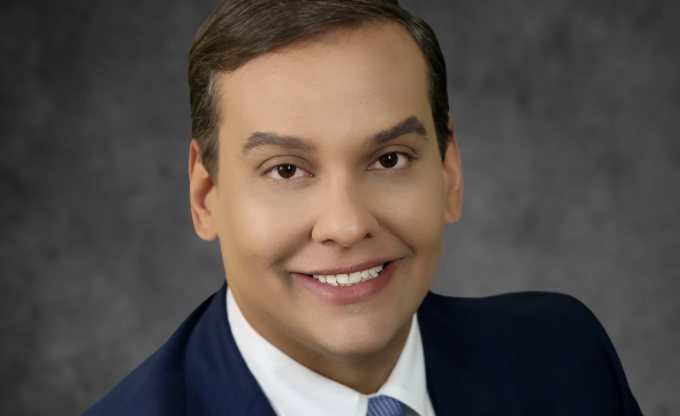
George Santos is back under federal investigation, and the easy version of this story writes itself. The man who lied his way into Congress, pleaded guilty to fraud, went to prison, got sprung early, and apparently could not resist one more scheme. That version is fun for about ten seconds. The version that actually matters has very little to do with Santos and everything to do with the platform that caught him.
Here is what investigators are looking at. Ahead of Trump’s State of the Union address in February, Santos went online and announced he would be there, telling the world he would be sitting in the gallery. That announcement did something specific. It moved a market. On Kalshi, the federally regulated prediction platform where users bet real money on real world outcomes, the odds that Santos would show up shot up toward 75 percent on the strength of his own public word. Then he placed his bets against himself, wagering that he would not attend. Then he did not attend, posting afterward that his travel plans had collapsed and he was watching from an airport. When the dust settled, he had allegedly cleared tens of thousands of dollars by betting on information only he controlled.
That is not a gambling story. That is the prediction market version of pump and dump, and it is exactly the behavior the entire industry has been promising regulators it can police. What happened next is the part the comedy headlines skip. Kalshi detected the suspicious activity on its own, froze the account tied to Santos, and referred the matter to both the Justice Department and the Commodity Futures Trading Commission. The platform did not get subpoenaed into cooperation. It flagged its own user and walked him to the door. NPR broke the federal scrutiny first, and Santos told the outlet he was unaware of any investigation and would not say whether he even held a Kalshi account.
The timing makes this bigger than one disgraced politician. Prediction markets like Kalshi and Polymarket have exploded into the mainstream, pulling in serious money on everything from elections to award shows to whether a specific person shows up to a specific room. That growth put a target on the sector. The CFTC has openly signaled it intends to crack down on insider trading inside these markets, and Santos is shaping up to be one of the first marquee names to test how that enforcement actually works. He is not even the only case. Federal authorities have already scrutinized other suspicious wagers, including a windfall tied to someone with inside knowledge of a high profile international capture. The pattern regulators are watching is people betting on outcomes they personally know or can move.
There is also the matter of who Santos was betting around. The market in question existed because of Trump’s State of the Union, and the same Trump commuted Santos’ fraud sentence and let him out after only a few months of an 87 month term. The man got a second chance from the top of his own party and walked straight into a fresh federal file, this time built not by prosecutors digging through campaign records but by an algorithm at a betting company that noticed the numbers did not add up.
For anyone trying to understand where civic life and the betting economy are colliding, that is the real headline. The platforms are no longer passive. They are watching their own books, and they are willing to call the government when a user games the house. Santos is the cautionary tale. The system that caught him is the story.
