

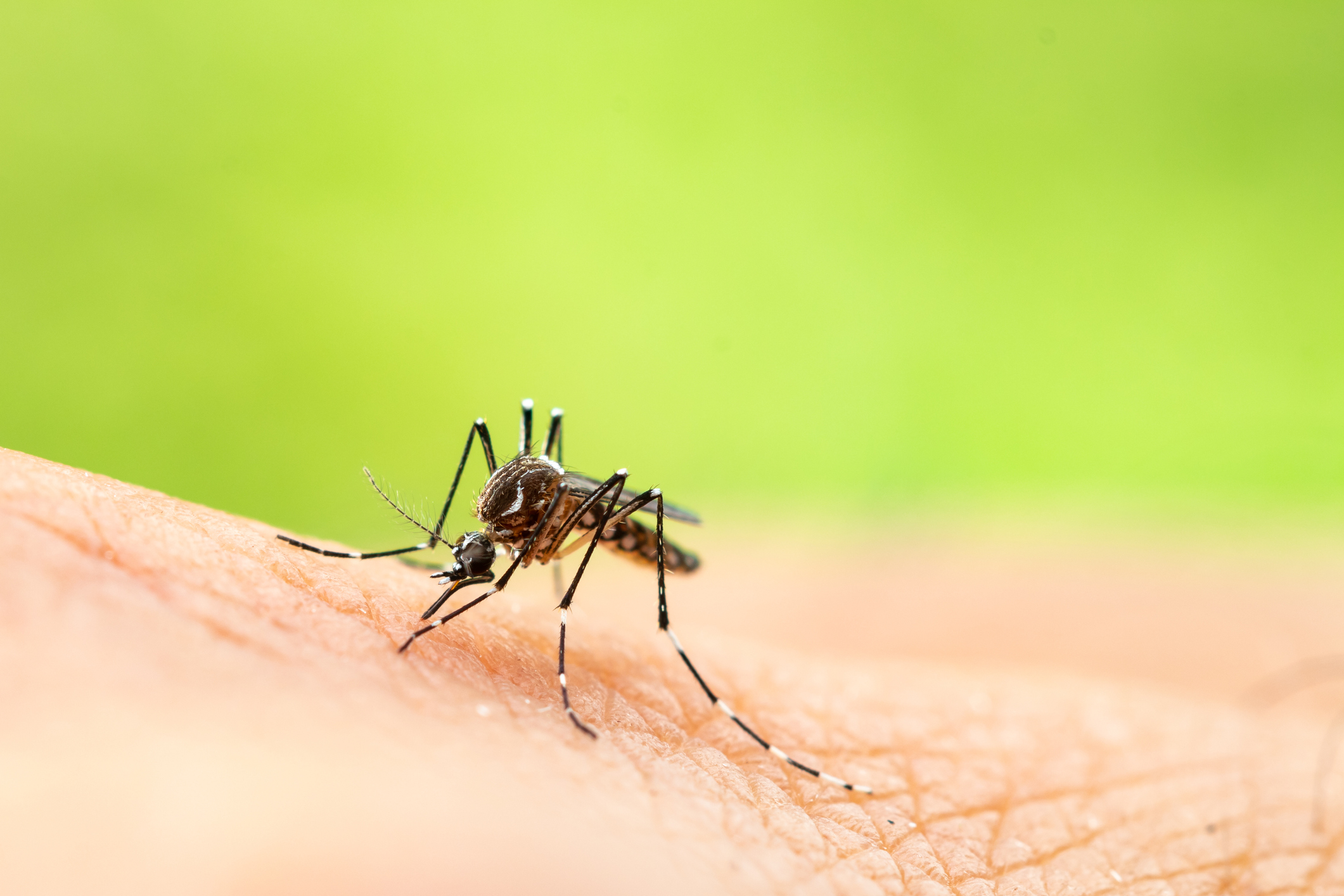
Read that headline one more time. Google, the search engine, wants to release 32 million mosquitoes into Florida and California. On purpose. If your first reaction was a hard no, you are not by yourself. But before the panic sets in, the real story is stranger, more scientific, and a lot less scary than the headline makes it sound.
Here is what is actually on the table. Google has submitted a proposal to the U.S. Environmental Protection Agency asking for permission to release up to 32 million specially treated mosquitoes across the two states over the next two years. The EPA is reviewing it as an experimental use permit under the federal pesticide law, and according to the Federal Register notice, the rollout would be split evenly. Up to 16 million mosquitoes in Florida in year one, then another 16 million in California in year two. No specific release locations have been named yet, and the public comment period is open through June 5th before regulators decide anything.
The reason behind all of this is disease. Mosquitoes are the deadliest animal on the planet, and the proposal is aimed at slowing the spread of illnesses like West Nile virus, St. Louis encephalitis, dengue, Zika, chikungunya, and yellow fever. It specifically targets Culex quinquefasciatus, a species already firmly established in both states that the CDC names as the leading carrier of West Nile in the country. This is not a hypothetical. West Nile kills more than 130 Americans and hospitalizes over 1,300 every year according to the CDC, and a positive West Nile sample was confirmed in Riverside County, California as recently as last Friday.
Now here is the part that should bring everybody’s blood pressure back down, because this is where the fear and the facts split. There is no genetic modification involved. Google is releasing male mosquitoes carrying Wolbachia, a bacteria that shows up naturally in a huge number of insect species and cannot infect humans. And the key detail people miss in the panic is this. Only female mosquitoes bite. The males being released cannot bite you and cannot spread disease. When one of these Wolbachia males mates with a wild female that does not carry the same strain, the eggs she lays never hatch. Do that over and over across enough releases and the local mosquito population starts to shrink. In plain terms, Google is not adding a single biting mosquito to your neighborhood. It is flooding the dating pool with duds so the next generation of biters never gets born.
So why is a tech company running a public health play in the first place? Because the hardest part of this is a sorting problem, and sorting is what Google does. You cannot separate 32 million mosquitoes by sex with human hands. Google uses artificial intelligence and robotic systems to breed, sort, and release them at scale, with camera based analysis reading each mosquito’s anatomy to pull the males from the females before anything goes out the door. A single female slipping through would defeat the entire purpose, since the whole point is to release things that do not bite. That sorting challenge is the real reason a company you associate with search results is suddenly in the mosquito business.
And the approach is not brand new or untested. The project lives under Google’s Debug initiative, launched in 2016 through its life sciences arm, now called Verily, and Debug has already released more than one billion mosquitoes across four continents. An earlier trial in California’s Central Valley, which began in 2017 in Fresno County, came close to wiping out disease carrying mosquitoes at three test sites entirely, with results published in the journal Nature Biotechnology. In Singapore, a sustained program using the same method has produced 80 to 90 percent suppression of mosquito populations in treated areas and more than 70 percent lower dengue risk among residents. A recent large scale trial there found just 6 percent of suspected dengue patients tested positive in treated areas, compared to 21 percent in untreated ones. Singapore now releases more than 10 million of these male mosquitoes every single week.
That is the science, and the science is strong. But here is where a little side eye is completely fair. Brent Nye, a Florida resident, told 10 Tampa Bay News he finds the idea interesting but is not sure he wants it in his backyard, saying he would rather they experiment on some other state. It is easy to wave that off as not in my backyard noise, but it is worth sitting with. There is a long and documented history in this country of certain communities being treated as test subjects, sometimes without their full knowledge or consent, and that history is exactly why people get uneasy when one of the biggest companies in the world shows up wanting to use their neighborhood as a live laboratory. The fact that Google has not named a single release location yet only sharpens the question of who ends up getting chosen, and whether those residents will get a real say. This is not the first time the program has hit that wall either. Earlier Debug trials in the Florida Keys faced serious public pushback before they were cleared to move forward, and critics of similar efforts elsewhere have pointed to mixed results, including reports of dengue increases in parts of the Caribbean after bacteria based releases, although public health agencies and Google dispute those accounts.
The good news is that this is one of those rare moments where the public actually has a seat at the table before the decision gets made. The EPA comment window closes June 5th, and anyone can weigh in through the federal portal at regulations.gov by searching the docket number EPA-HQ-OPP-2025-3951. After that, regulators will decide whether to grant the experimental permit, deny it, or approve it with conditions. With Florida up first and California next, residents of both states have a direct opening to make their voices heard rather than finding out after the fact.
So whether you think this is the future of disease control or a tech experiment that deserves a lot more scrutiny, the smartest move is to know the facts before the fear. The bugs in question genuinely cannot bite you. The bigger and more honest question is who gets to decide where they go, and whether the people living there are treated as partners or as test sites. That part is still being written, and for once, you have until June 5th to be part of writing it.
