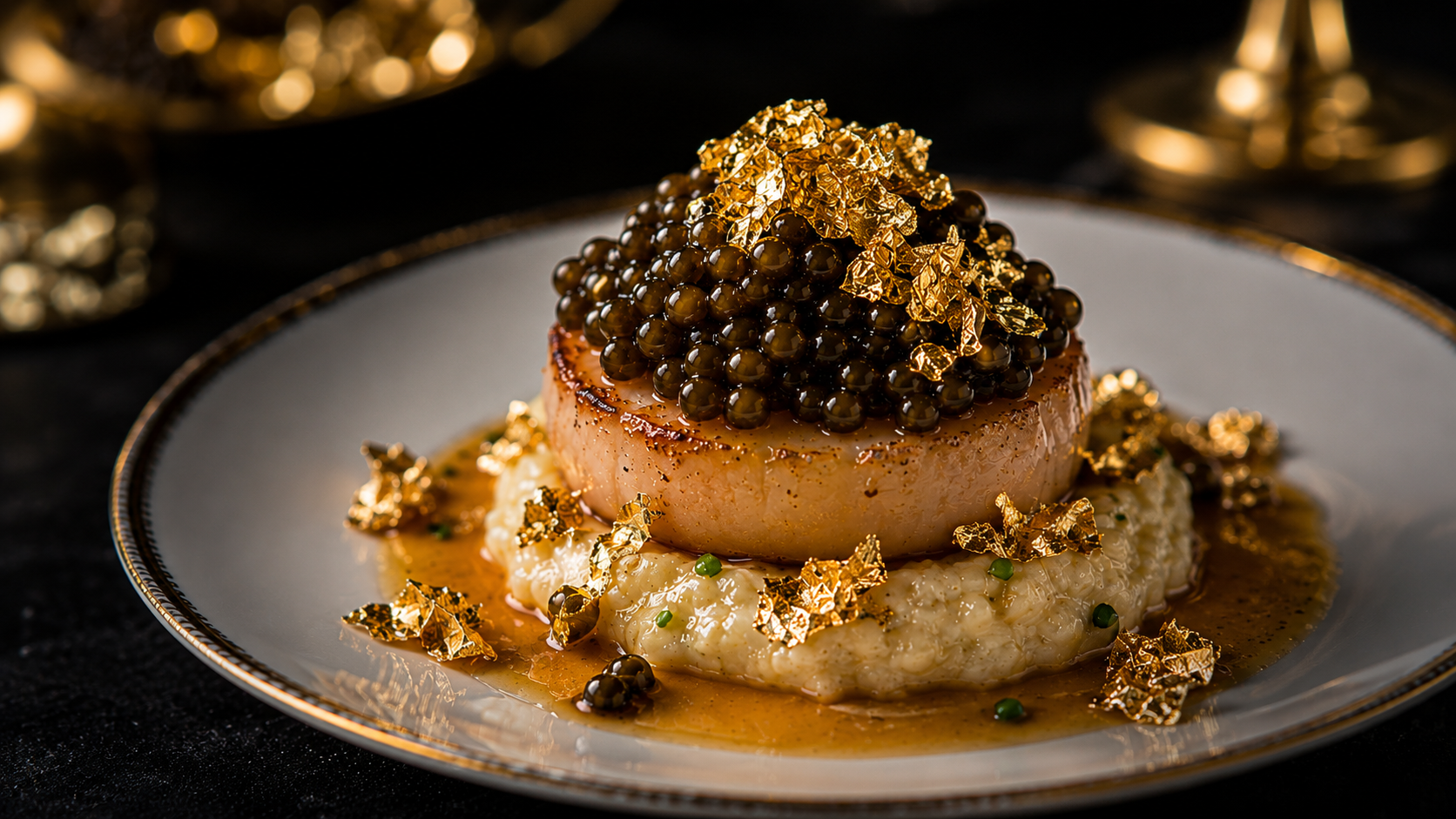
Expensive meals have always been about more than hunger. At a certain price point, dinner stops being dinner and becomes a declaration. It says someone has access, options, curiosity, and enough disposable income to turn a simple craving into a story that sounds almost fictional.
Most people consider a $50 dinner a splurge. Maybe that means appetizers, a good entree, a cocktail, and a little dessert if the night is going well. But in the upper rooms of luxury dining, $50 barely covers the garnish. There are plates that cost more than a designer bag, tasting menus that rival rent, and single items that feel built less for flavor than for the shock value of being able to say you tried them.
That is the real pull of expensive meals. They are part food, part theater, part status symbol, and part social media bait. The ingredients matter, but the story matters just as much.
The usual suspects show up again and again. Japanese A5 Wagyu remains one of the biggest names in luxury beef because of its marbling, tenderness, and tightly controlled grading. The meat is rich enough that chefs often serve it in small portions, which only adds to the feeling that every bite is being measured like jewelry. Then there is caviar, the old school signal that the table is not operating on a normal budget. Almas caviar, sourced from rare albino beluga sturgeon, has long been associated with some of the highest prices in the food world.
Gold leaf may be the most honest luxury ingredient of all, because it does not pretend to be about taste. Edible twenty four karat gold does not bring depth, acidity, heat, or texture in the way a chef usually builds a dish. It brings optics. It brings the kind of sparkle that lets everyone know the plate was made to be photographed before it was eaten.
That is why expensive meals keep breaking through online. They are easy to understand at first glance. A burger is one thing. A burger with lobster, premium beef, rare cheese, and champagne attached to the check becomes a headline. Pizza is already one of the most accessible foods in the world. Add caviar, truffles, foie gras, Stilton cheese, and sheets of gold, and suddenly the same basic shape becomes a $2,000 flex at Industry Kitchen in New York.
View this post on Instagram
The same logic applies to the famous Zillion Dollar Lobster Frittata from Norma’s in New York. Eggs are usually the affordable part of breakfast, which is why the dish became such a perfect luxury stunt. Add lobster and a heavy serving of Sevruga caviar, and breakfast suddenly enters a different tax bracket. Even if Norma’s now lives more as restaurant lore than a current reservation, the dish still represents exactly how luxury dining plays with expectations. The most ordinary meal of the day became the most outrageous one on the table.
Las Vegas understood that energy perfectly with the $777 burger from Burger Brasserie. The restaurant is no longer operating, but the burger still sits comfortably in the hall of fame for expensive meals. It pulled together premium beef, Maine lobster, rich cheese, aged balsamic, and a bottle of Rosé Dom Pérignon, turning a casino burger into a high roller souvenir. In Vegas, that kind of price tag makes sense. The city is built around people spending big money in public and pretending they did not blink.
Then there is the $25,000 taco from Grand Velas Los Cabos, which may be the cleanest example of luxury dining as spectacle. The taco was built with Kobe beef, langoustine, Almas Beluga caviar, black truffle brie, and a gold flake infused corn tortilla. That is not just a taco. That is a press release folded into a tortilla. It takes one of the most beloved, everyday foods in the world and pushes it into a category where the price is the point.
View this post on Instagram
For some diners, that sounds ridiculous. For others, that is the attraction. Nobody is paying $25,000 because they are simply hungry. They are paying for rarity, service, setting, exclusivity, and the ability to say they ate something most people will only read about.
The highest tier of expensive meals goes even further by making the room part of the dish. At Sublimotion in Ibiza, the experience has been described as a multisensory production with a small number of guests, a long tasting menu, projection mapping, technology, and performance elements surrounding the food. The meal becomes immersive, almost like fine dining crossed with theater, art direction, and a private show.
Alchemist in Copenhagen pushes that same idea into another lane. The restaurant describes its experience as up to 50 impressions, with edible and experiential elements spread across different physical spaces. That wording matters because it shows where luxury dining is headed. Chefs at this level are no longer just selling courses. They are selling pacing, emotion, architecture, lighting, sound, and a controlled sense of wonder.
View this post on Instagram
Expensive meals also tap into a culture that already understands the power of the flex. Courtside seats, private chefs, yacht dinners, rare bottles, celebrity restaurant sightings, and impossible reservations all live in the same universe. Food becomes another way to show access. It is not always about whether the dish is the best thing someone has ever tasted. Sometimes it is about being in the room at all.
For athletes, entertainers, executives, and people who live in spaces where luxury is part of the language, these meals are not random indulgences. They are lifestyle markers. A five figure taco or a four figure tasting menu sounds outrageous to most people, but to a certain crowd, it functions like a watch, a car, or a VIP table. It communicates without needing much explanation.
Still, there is something fascinating about how these dishes keep pulling in people who would never buy them. Part of the fun is disbelief. We want to know what could possibly make a pizza cost $2,000, or why a taco would need a deposit, or whether gold leaf actually changes anything about the bite. The answer is usually simple. It changes the story.
That may be the real secret behind expensive meals. The food has to be good, but the memory has to be better. Nobody talks this much about a normal omelet, burger, pizza, or taco. Add caviar, Wagyu, truffles, champagne, and gold, and suddenly the table becomes a headline.
For the rest of us, the closest we may get is watching the videos, reading the menus, and deciding whether we would ever spend that kind of money if the account balance allowed it. Maybe the answer is no. Maybe the answer changes after a few wins, a milestone birthday, or one very expensive vacation.
Either way, luxury dining proves that food can still surprise people, not just with flavor, but with audacity.