

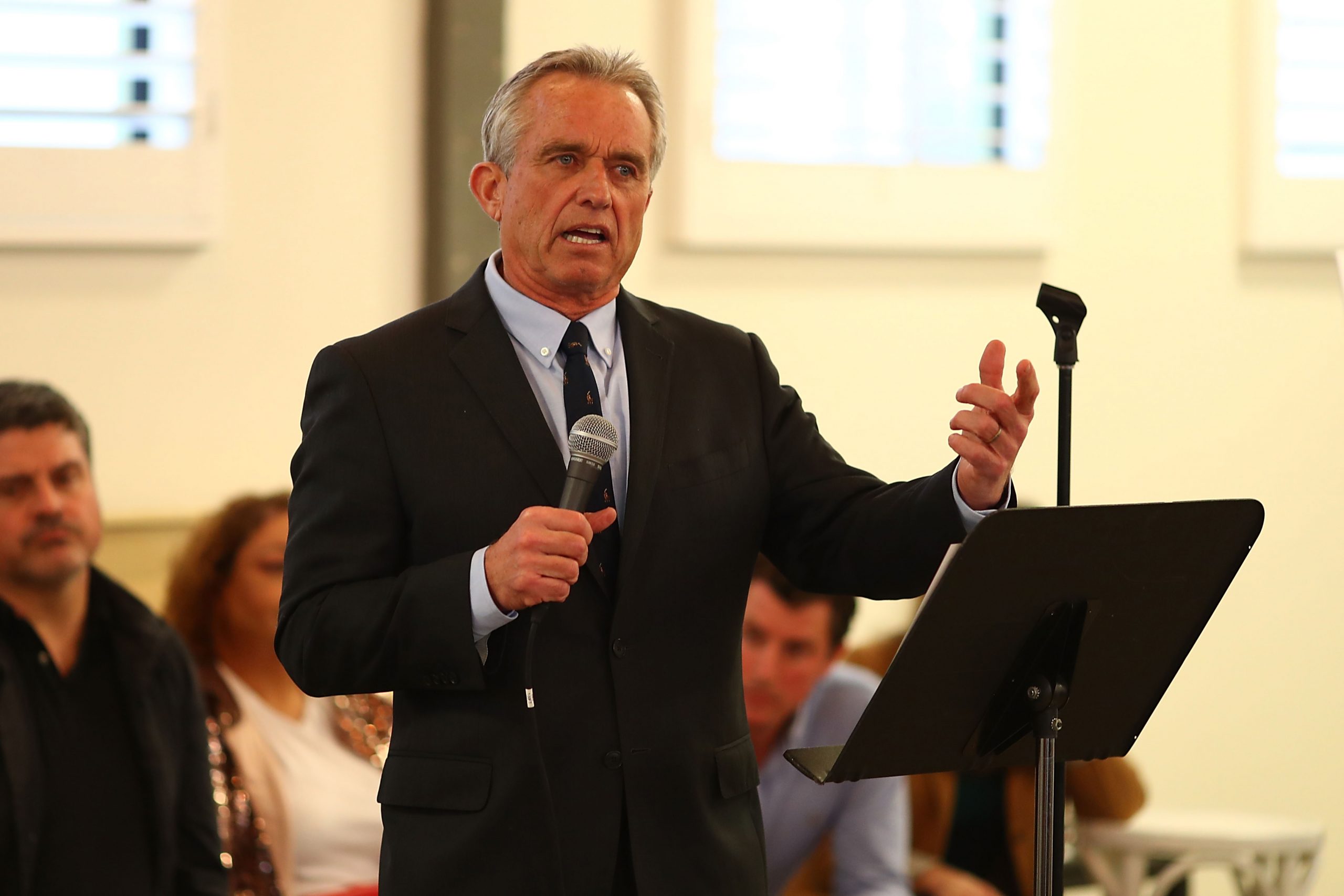
Robert F. Kennedy Jr. came into Washington selling medical conspiracies, but now, it seems he may be ready for early retirement. Kennedy, known widely as RFK Jr., now listed by HHS as secretary of the Department of Health and Human Services, oversees one of the most consequential portfolios in the federal government. HHS says its divisions work across public health, health care, research, safety, and human services, while its FY26 budget proposal called for $94.7 billion in discretionary authority. That is not a symbolic job. That is a national machinery job.
According to a New York Times report provided in the source material, colleagues described Kennedy as isolated from much of his department’s top staff and focused heavily on food policy, pesticides, and vaccine-related priorities while showing limited engagement with the broader HHS portfolio. The report says several people in attendance at leadership meetings described him as “checked out.”
That phrase is doing a lot of damage because it lands during a tense stretch for public health. The World Health Organization declared the 2026 Ebola outbreak in the Democratic Republic of Congo and Uganda a public health emergency of international concern on May 17, citing the Bundibugyo strain. The CDC later announced enhanced travel screening, entry restrictions, and other public health measures tied to the outbreak.
Kennedy’s public answer when asked about Ebola was short: “Yeah, we’re working on it.” The Times report said he had made little public comment on the outbreak after that, while CDC officials handled much of the response.
That is where the brand problem turns into a leadership problem. Kennedy has built his public identity on challenging institutions, vaccinations, scientifically proven medical research, while taking on entrenched interests, and promising to “Make America Healthy Again.” Reuters reported that when the Senate confirmed him on February 13, 2025, the vote was 52-48, and his confirmation came despite sharp resistance tied to his vaccine views.
His allies argue the disruption is the point. In the Times report, Dr. Mehmet Oz defended Kennedy’s approach, saying, “You do not come to Washington to challenge powerful interests, disrupt decades of business as usual, and demand accountability to make friends.” He added, “You do it to deliver results.”
But critics are now asking whether disruption without command creates a vacuum. The same report described major posts sitting vacant or filled on an acting basis, including the CDC being led by Dr. Jay Bhattacharya while he also serves as NIH director. Michael T. Osterholm, director of the University of Minnesota Center for Infectious Disease Research and Policy, put it bluntly: “You would never accept a major corporation operating this way.”
The timing cuts even deeper because Kennedy’s tenure has already collided with vaccine politics and outbreak response. Now Ebola has added another stress test. U.S. health officials and former CDC figures warned Congress against a plan to treat Ebola-exposed Americans overseas, saying, “This policy raises profound clinical, ethical, operational, and legal concerns.”
So the new issue is not simply whether Kennedy is physically showing up to meetings. It is whether a Cabinet secretary can run a massive health department like a personal crusade and still deliver when the job demands grinding, unglamorous coordination.
Kennedy’s defenders say the work is happening. HHS spokeswoman Courtney Spencer said, “Nothing has slowed our ability to execute.” The White House also said the Ebola response showed HHS continues to protect Americans under Kennedy’s leadership.
Still, the optics are rough. A secretary known for challenging the system is now being accused of drifting from the system he controls. And in public health, the difference between message and management can become very real, very quickly.

It is going to take YEARS to recover from the damage of this deeply unqualified administration…. if recovery is even possible anymore.