

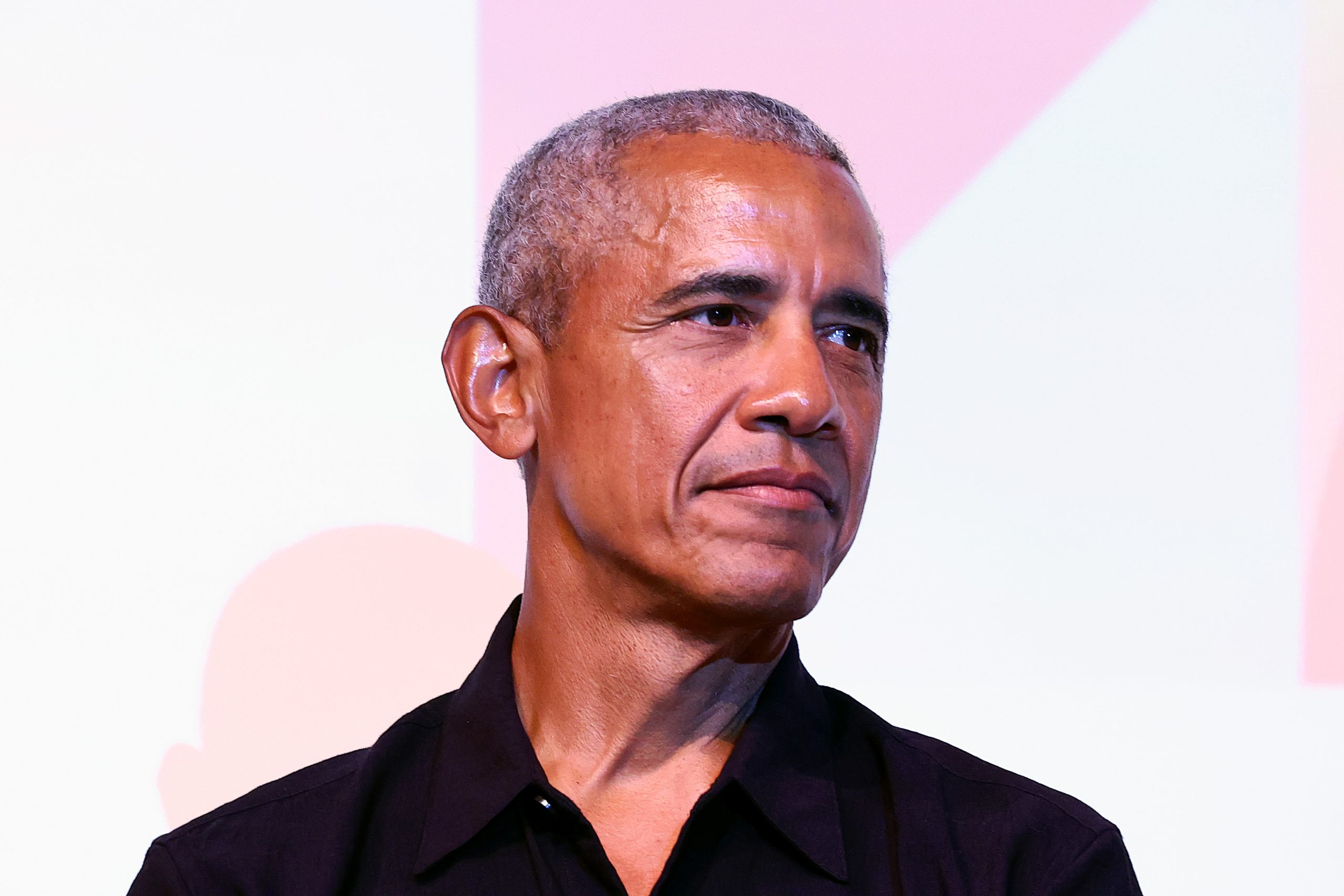
Barack Obama returned to the South Side and opened the Obama Presidential Center on Thursday morning with a speech that read less like a ribbon cutting and more like a love letter to the city that made him. Standing on the newly named John Lewis Plaza, the 44th president dedicated the $850 million campus in Jackson Park, just blocks from the neighborhoods where he learned to organize, fell in love, and built the life that carried him to the White House. The center opens to the public on Friday on the Juneteenth holiday, and the symbolism of that timing landed with everyone watching.
The Obama Presidential Center dedication drew a rare gathering of American power to one stage. Former Presidents George W. Bush, Bill Clinton, and Joe Biden sat alongside Hillary Clinton, Kamala Harris, Doug Emhoff, and Nancy Pelosi. The Roots performed for invited guests while thousands more packed a public watch party along the Midway Plaisance. Tom Hanks and David Letterman were in the room. The moment that cracked the ceremony open belonged to Michelle Obama, whose tribute to her husband moved him to tears before he ever reached the microphone. He opened by joking that she refused to let him preview her remarks because she knew she would, in his words, mess him up.
From there Obama did what he does best and turned the personal into something universal. He took the crowd back to a late summer afternoon in 1985, when he rolled into Chicago at 23 years old in a janky used car with everything he owned crammed into the trunk and back seat. A group of South Side churches had hired him to help organize a community gutted by steel plant closings and chronic neglect. He knew no one in the city. The Obama Presidential Center now rises near the path he drove in on, but back then he carried only a faith that giving people more say over the forces shaping their lives could build an America where everyone counts and everyone belongs, even, as he put it, a mixed race kid with a weird back story and a name nobody could pronounce.
The Obama Presidential Center sits on the very ground where that story began. Obama reminded the audience that he entered Chicago through the exact spot where the campus now stands, and that nearly everything he treasures traces back to those surrounding blocks. His wedding reception was at the South Shore Cultural Center, close enough to walk. His daughters were born down the street. He bought his first home nearby and launched his first run for the Illinois state senate at a Ramada Inn on Lake Shore Drive, serving pretzels and soda. For him, he said, the center could not have been built anywhere else.
He made it clear he did not want a lifeless monument. He joked that he is too young for a mausoleum and that the top attraction will probably be Michelle’s dresses anyway. Instead the roughly 19 acre campus is designed as a living space for community, with a library, a full size basketball court, a museum tower, and room for art, music, sport, and play. The Obama Presidential Center carries a clear point of view even while its programming stays nonpartisan. Obama said plainly that the work is not values neutral, and the building was never meant to gather dust.
Much of the keynote turned toward democracy itself, delivered weeks before the country marks its 250th birthday. Obama walked through how radical self government was in 1776 and acknowledged the founders fell short of their own words by leaving slavery intact and restricting the vote. He framed American history as generations of ordinary people widening the circle until We the People came to mean all of us rather than some of us. That is why the Obama Presidential Center opens its exhibits not with his origins but with the nation’s, featuring a founding era print of the Declaration of Independence, an inkstand used by Frederick Douglass, Lincoln’s bible, a pamphlet by Ida B. Wells, and a hard hat worn by Frances Perkins.
The dedication also became a stage for a pointed defense of democratic values. Obama named the principles he believes belong to no single party, including checks and balances, an independent judiciary, a free press, and a military that answers to the Constitution rather than to any president. He pushed back hard against cynicism and the pull of algorithms that feed outrage and reward the loudest, most extreme voices. He admitted he is not immune to anger or doubt, but argued that giving in now would betray the founding faith of the country. The Obama Presidential Center, in his telling, exists to remind people of what they can still be.
He closed on the words carved into the arch at the south end of the plaza, the line Theodore Parker first preached and Martin Luther King Jr. later carried, that the arc of the moral universe is long but bends toward justice. Standing on the grounds of the Obama Presidential Center, the former president reminded the crowd that Parker offered those words during one of the bleakest stretches of the abolitionist fight, as a declaration of faith rather than a promise of easy victory. The next chapter, he said, belongs not to him or Michelle or anyone with a fancy title, but to a new generation already doing the work on the South Side and far beyond it. He asked the country to join them, and then he asked Chicago to do what Chicago does.
