
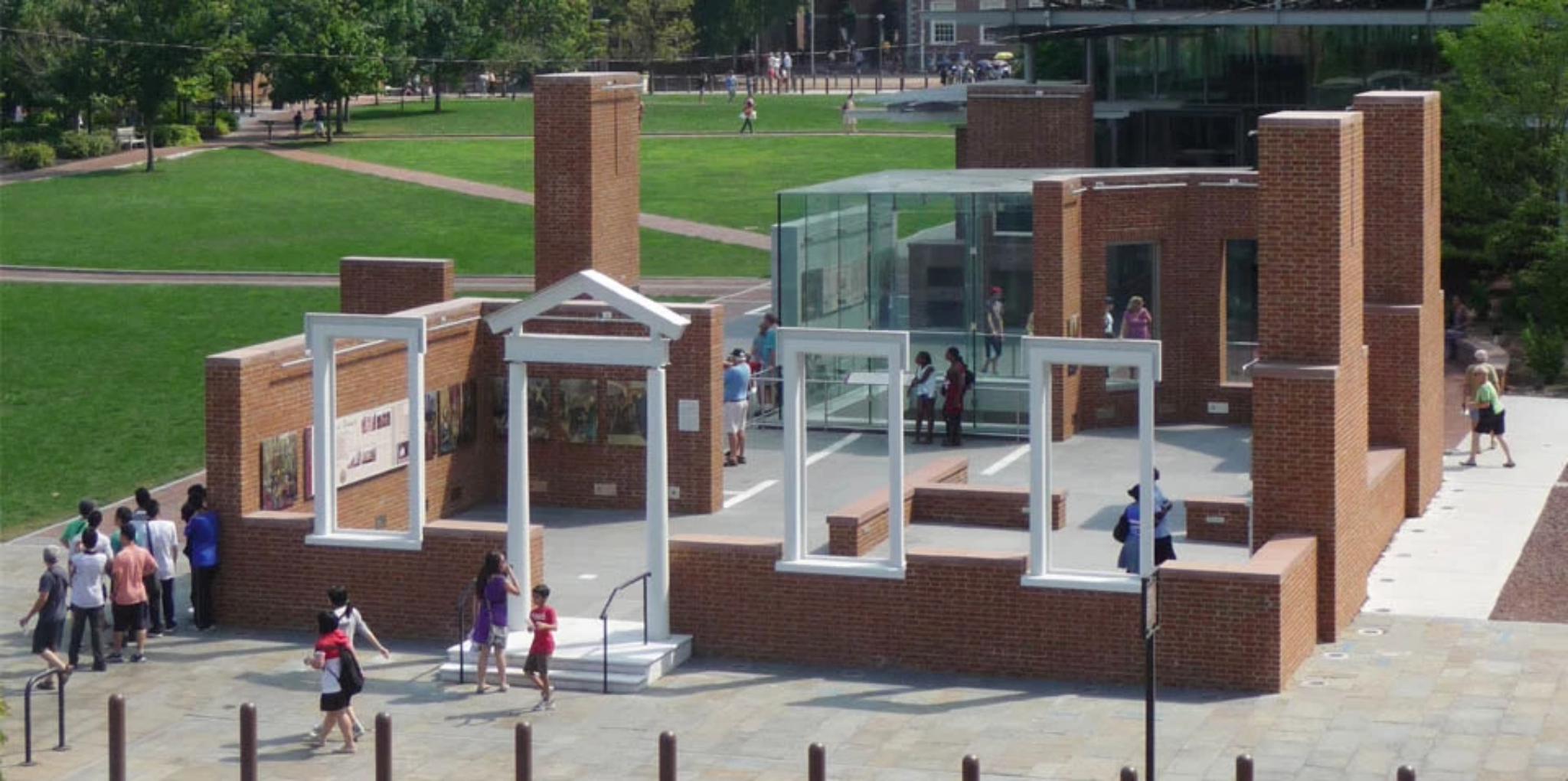
The slavery exhibit restored at the President’s House is now back in play after a federal judge ordered the National Park Service to reinstall panels it removed about George Washington’s enslaved workers.
On February 16, 2026, a federal judge in Philadelphia granted a preliminary injunction in favor of the City of Philadelphia. The court ruled that the government must restore 34 educational panels and video displays that were taken down on January 22, 2026.
The slavery exhibit restored at the President’s House is not just about plaques. It is about who controls the narrative of American history.
The President’s House sits within Independence National Historical Park in Philadelphia. It marks the location where George Washington and John Adams lived while serving as president.
Historians later confirmed that nine enslaved Africans lived and worked at that residence. The exhibit included their names and stories, including Oney Judge, who escaped to freedom.
In 2022, the site was designated under the National Underground Railroad Network to Freedom because of Oney Judge’s escape.
However, on January 22, 2026, the National Park Service removed 34 panels that referenced slavery and turned off related video exhibits.
The City of Philadelphia filed suit soon after.
The court found that the City is likely to succeed on its claims under the Administrative Procedure Act.
According to the ruling, the federal government likely acted in an arbitrary and capricious manner by:
- Failing to consult the City
- Ignoring cooperative agreements dating back to 1950
- Disregarding the park’s own foundational documents
- Removing material tied to the Underground Railroad designation
The opinion makes clear that executive orders do not override congressional statutes that require mutual agreement and cooperation.
In plain terms, you cannot just pull down history because leadership changes.
The removal followed Executive Order 14253, titled “Restoring Truth and Sanity to American History,” signed in March 2025.
The order directed the Secretary of the Interior to ensure federal monuments do not contain content that “inappropriately disparage Americans past or living.”
But the judge pushed back hard.
The opinion directly referenced George Orwell’s 1984 and rejected the idea that agencies can erase established historical facts.
That part landed.
Because this case touches a nerve that runs deeper than one historic site.
For now, the slavery exhibit restored at the President’s House must return to how it looked on January 21, 2026.
The order requires the government to:
- Reinstall all removed panels and video exhibits
- Prevent further changes without written agreement from the City
- Preserve the site during ongoing litigation
The lawsuit is still active, but the message from the court was clear.
History is not a mood board.
And Philadelphia is not letting its story get edited without a fight.