

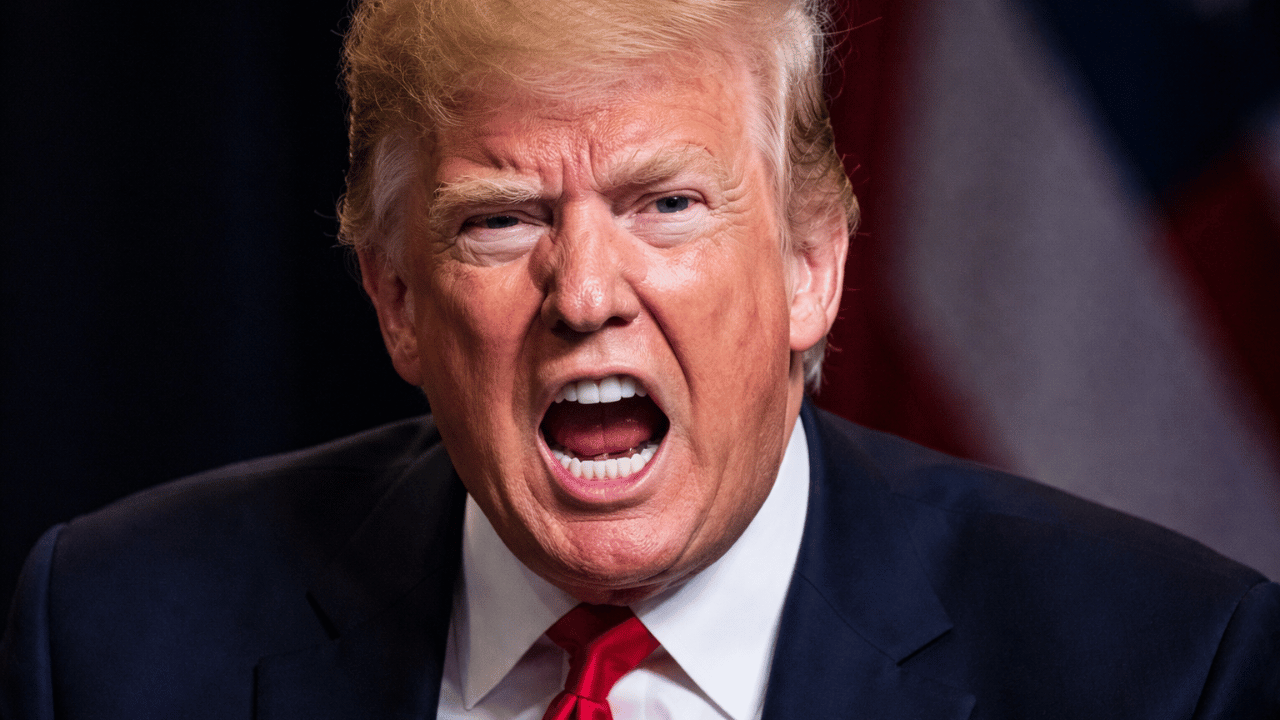
Trump Iran instructions dominated the political conversation Friday after Donald Trump told the New York Post that he has already spelled out exactly what should happen to Iran if the country ever succeeds in assassinating him. His answer was blunt. Bomb them at levels they have never seen before.
Speaking to the Post’s Caitlin Doornbos, Trump framed himself as a man who has spent years living with a target on his back. “I’ve been on their list for a long time. That’s what we’re dealing with,” he said. “The only thing is, I’ve left instructions, if anything happens, to just literally bomb them at levels that they’ve never seen before.” The line functioned as both a warning to Tehran and a statement about his own mortality.
The comments landed at a volatile moment. Trump was asked directly about recent reporting that Israel had passed Washington intelligence describing a new Iranian plan to kill him. He waved the reports off. “No, no. Israel came up with nothing,” he said, insisting there was no fresh plot and that Iran has wanted him dead for years. “I’ve been No. 1 for a long time, and it’s the way life is, you know,” he added, before telling the paper, “I hope you’ll miss me.”
Iran’s grievance against Trump traces back to January 2020, when he ordered the airstrike that killed Qassem Soleimani, the powerful commander of Iran’s Quds Force. Tehran has treated that killing as an open wound ever since, and US officials have repeatedly warned that Iranian operatives have looked for revenge. In November 2024, the Justice Department charged an alleged Iranian asset, Farhad Shakeri, accusing the Islamic Revolutionary Guard Corps of tasking him with building a plan to assassinate Trump. Trump himself has survived multiple attempts on his life, including the shooting in Butler, Pennsylvania, that came within inches of ending it.
This week only sharpened the standoff. Trump declared earlier in the week that the ceasefire with Iran was effectively finished, telling reporters he no longer wanted to deal with Tehran and describing the regime’s leadership in harsh terms. The two governments have traded strikes in recent days, with fighting flaring around the Strait of Hormuz after Iranian forces targeted commercial vessels and Washington answered with force. Traffic through the vital shipping corridor has thinned again as the region braces for what comes next.
The Trump Iran instructions are not entirely new. Back in February 2025, he made a nearly identical claim, saying he had left orders for a devastating response if Iran managed to kill him. What makes the latest version notable is the timing, arriving the same week that Israeli intelligence reportedly flagged a specific plot and only days after he publicly buried the ceasefire. The repetition suggests the message is deliberate, aimed at making Tehran calculate the cost of ever acting on its threats.
There is also a practical question buried inside the bravado. Whoever occupies the White House cannot bind a successor’s hands, and any real decision about a military response would fall to whoever holds command at the time. In this scenario that would be Vice President JD Vance, who would inherit the authority to decide the scale of any retaliation. Trump’s instructions, in other words, work more as a public deterrent than as a binding order that would automatically trigger on its own.
The Trump Iran instructions spread quickly online after journalist Aaron Rupar shared the quote, drawing the split reaction such statements tend to draw. Supporters read it as strength and deterrence, a message that any strike on Trump would carry catastrophic consequences for Tehran. Critics saw recklessness in promising to bomb a nation at unprecedented levels. The phrase “levels that they’ve never seen before” has already prompted speculation in the press about whether that language points toward a nuclear option, though Trump did not specify what kind of strike he actually meant.
Iran has not publicly responded to the latest remarks. The comments add another layer to a standoff that has swung between open threats and stalled diplomacy for years, and they arrived with the ceasefire already declared dead and both sides trading fire near the Gulf. What the instructions would actually set in motion, and who would carry them out, remains a decision that would land on others entirely if the worst ever came to pass.
