

The U.S. worldwide caution alert is now active, and it is not just another routine advisory.
So what does this actually mean for Americans traveling right now?
The alert, issued by the U.S. Department of State on March 22, 2026, is a global warning urging travelers to stay alert due to rising tensions and potential security threats.
This is not limited to one country. It applies worldwide.
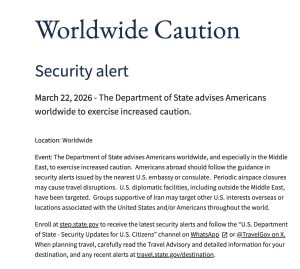
Right now, officials are especially focused on regions like the Middle East, where instability and conflict risks are higher. But the message is broader than that.
No location is being treated as completely risk free.
The concern comes from a mix of factors, including geopolitical tensions, possible retaliatory actions, and recent incidents involving U.S. diplomatic sites.
According to officials, some embassies and related locations have already been targeted. Because of that, there is concern that groups aligned with Iran could potentially target U.S. linked individuals or facilities in other regions.
That does not mean attacks are guaranteed.
But it does mean the risk level is elevated enough to require caution.
For travelers, the biggest immediate impact could be disruptions.
Airspace closures, sudden flight changes, and local security restrictions can happen quickly and without much warning. That means even well planned trips can shift fast.
So what should you actually do if you are traveling?
First, check the specific advisory level for your destination before you go. Not all countries carry the same level of risk, and conditions can change daily.
Second, stay connected to official updates. The State Department recommends enrolling in the Smart Traveler Enrollment Program, which provides real time alerts and helps officials contact you if there is an emergency.
Third, stay aware of your surroundings at all times. Avoid large gatherings, monitor local news, and know where the nearest U.S. embassy or consulate is located.
This alert is less about panic and more about preparation.
It is a reminder that global conditions can shift quickly, and travelers need to stay informed instead of assuming everything will go as planned.
Stay alert, stay flexible, and do not travel on autopilot.
Thanks Trump.
