

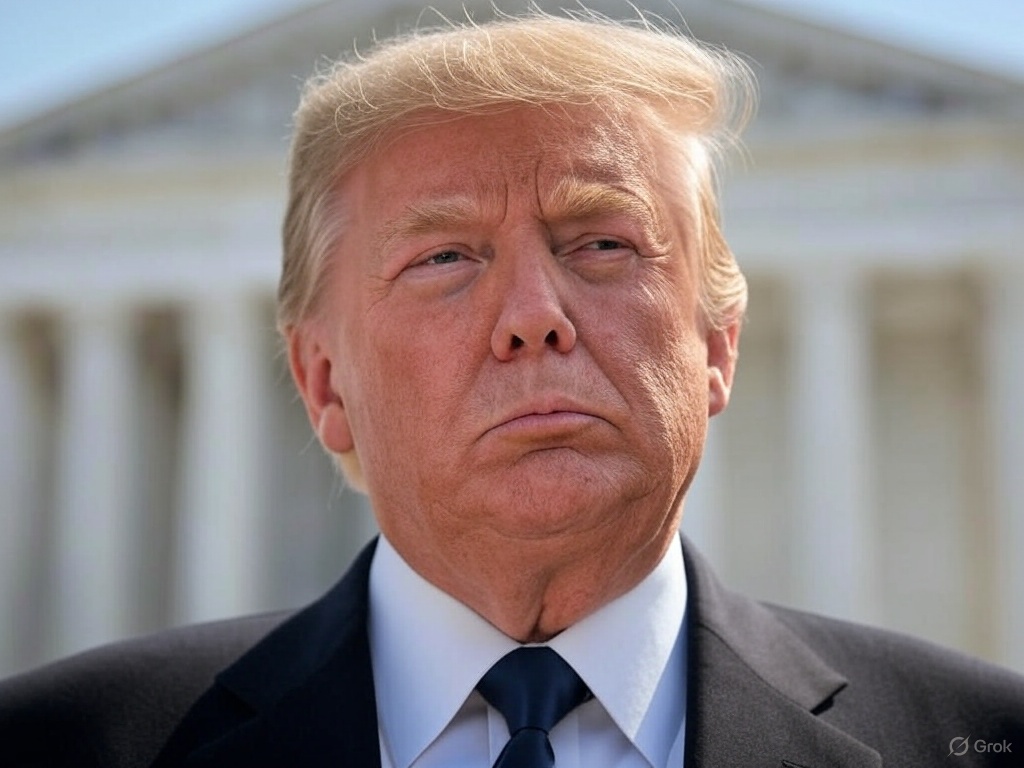
A federal judge voided the Trump IRS lawsuit settlement on Monday, erasing the deal that was supposed to move billions of taxpayer dollars toward Donald Trump and his allies, and she did not stop at killing the money. US District Judge Kathleen Williams issued a 56 page opinion in the Southern District of Florida finding that Trump brought the case for an improper purpose, that he acted in bad faith, and that the whole exercise was an attempt to manipulate the judicial process. She ordered sanctions against the attorneys who ran it. She referred Trump’s private lawyer, Alejandro Brito, to the Florida Bar for possible discipline. She blocked another attorney who represented him from entering appearances in her district for the next year. And she ordered copies of her opinion sent to the disciplinary boards in New York and Washington, DC that are already reviewing ethics complaints against acting Attorney General Todd Blanche and Associate Attorney General Stanley Woodward.
Understand what the Trump IRS lawsuit actually was before you decide how big this is. On January 29, 2026, Trump, his sons Donald Jr. and Eric, and the Trump Organization sued the IRS and the Treasury Department over the leak of his tax returns by former IRS contractor Charles Littlejohn, who is already serving a five year sentence for handing records to The New York Times and ProPublica. The suit demanded at least $10 billion. The theory behind that number was that every single view of a news article containing the leaked information counted as its own separate $1,000 violation. Trump was suing agencies he controls. He was on both sides of the table, and everybody in the building knew it.The Justice Department, rather than defending the government, moved to settle. That settlement would have created a $1.8 billion fund to compensate people who claimed they were harmed by what the administration calls lawfare and weaponization. Not victims of the tax leak. People with grievances the law does not actually define. The committee that would decide who got paid was to be selected by Blanche, its decisions were irreversible, and its members could be replaced by the administration at any time. The same settlement was then used to justify an administration order granting Trump and his businesses amnesty for past tax issues.
Congress balked. In May, 93 members of the House filed a brief arguing there was no real case or controversy because the plaintiff controls the defendant. Republicans got nervous. Thune cast doubt on it publicly. Trump’s lawyers filed a voluntary dismissal on May 18, two days before a court deadline to explain why the judge even had jurisdiction. The fund was scrapped in early June. And now the settlement itself has been voided, which means the Trump IRS lawsuit ends with no money, no immunity, no fund, and a sanctions order with his lawyer’s name on it.Williams wrote that the nature of the suit and the conduct of the parties made plain that this was an attempt to use the court to confer legitimacy on an agreement that granted immunity to people connected to Trump and earmarked billions in taxpayer money for harms the law does not recognize. She was equally hard on the Justice Department, writing that in walking away from its duty to defend the interests of the United States, the government entered into a settlement that broke from its own posture in similar cases, disregarded its own policies, and accomplished things the law specifically prohibits. She also indicated the retired judges who pushed her to scrutinize the deal may be entitled to have their legal fees covered.
A spokesman for Trump’s private legal team responded by returning to the leak itself, saying the IRS allowed a politically motivated employee to release private information about Trump, his family, and the Trump Organization, and that Trump will keep holding those who wrong America accountable. That statement does not engage the actual finding, which is not about whether Littlejohn broke the law. He did, and he went to prison for it. The finding is about what Trump did with that fact afterward.
The Trump IRS lawsuit was never really a lawsuit. It was a mechanism. Sue an agency you run, have the agency you run decline to fight back, settle with yourself, and use a judge’s signature as the receipt that makes it all look legitimate. The $1.8 billion was the payout. The amnesty was the bonus. The court was supposed to be the rubber stamp. A judge in Miami read the whole thing and said no, in writing, at length, with names attached.
It also lands in a stretch where the courts have been the only reliable brake. On June 29 the Supreme Court declined to hear his appeal of the E. Jean Carroll verdict, leaving the $5 million judgment and the jury’s finding of sexual abuse and defamation intact, with no noted dissents. In late June three separate federal judges gutted his executive orders on elections, blocking the proof of citizenship requirement, the federal voter list, and the mail ballot restrictions, with Judge Denise Casper writing flatly that the Constitution gives the office no specific power over elections. Two judges blocked his overhaul of public service loan forgiveness. The Supreme Court struck down his birthright citizenship order, and on July 9 he called that ruling insane and said he would ask the court to reverse itself.
