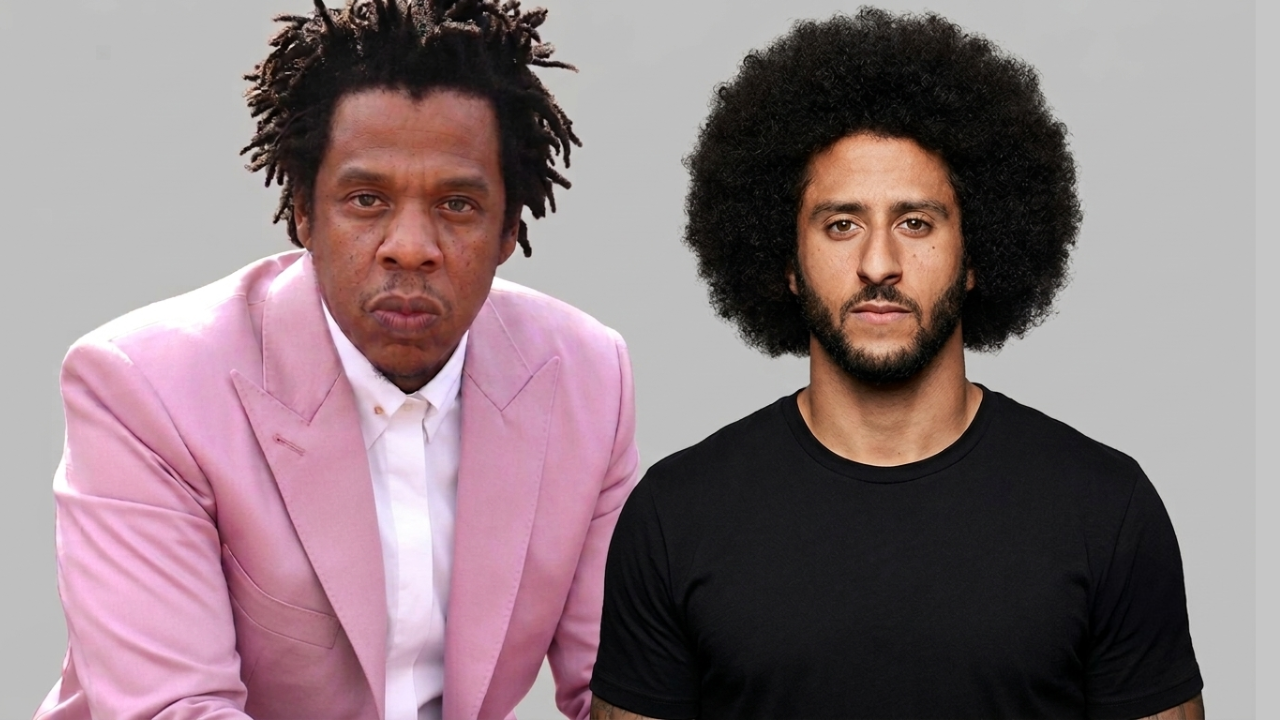
Jay-Z used a freestyle at Yankee Stadium to accuse Colin Kaepernick of trading his voice for a settlement check, and sources with direct knowledge told TMZ Sports that Kaepernick never signed any such agreement, which puts the Jay-Z Kaepernick rift back on the table seven years after it started. The bars came on Friday, July 10, the opening night of a three show run celebrating 30 years of Reasonable Doubt and 25 years of The Blueprint. Without naming a reason, Jay rapped that people keep dragging Kaepernick back into the conversation to build a narrative against him, that Kaepernick took a check, that a non-disparagement agreement came attached to that check, and that Jay is the one nobody can control.
The clip went viral inside of a day. By Monday, the reporting had come back the other way.
Sources familiar with the matter told TMZ Sports that when Kaepernick settled his collusion grievance against the NFL in February 2019, he did not sign a non-disparagement agreement. Jonathan Jones, the lead NFL insider at CBS, flagged the same problem publicly, noting that Jay-Z had asserted the existence of an NDA in Kaepernick’s confidential settlement while Jay himself partners with the league as its official live music entertainment strategist through Roc Nation. Jay-Z’s camp has not responded. Kaepernick has said nothing, which is what he has done every single time the Jay-Z Kaepernick question has come up since 2019.
So it is worth explaining exactly what Jay-Z accused him of, because the term is being thrown around loosely and it means something specific.A non-disparagement agreement is a contract clause that legally bars one party from saying negative things about the other. It is not the same as a confidentiality clause, and the distinction is the entire story here. A confidentiality clause says you cannot reveal the terms of the deal, meaning you cannot tell people how much money changed hands or what was agreed to. A non-disparagement clause goes much further. It says you cannot criticize the other side at all, on any subject, forever. If Kaepernick had signed one, he would be legally prohibited from speaking badly about the NFL for the rest of his life, and any statement he made about the league blackballing him could trigger a breach of contract claim and force him to give the money back.
That is the accusation. Not that Kaepernick settled, which is public and undisputed. The accusation is that he sold his ability to speak. In a culture that has spent a decade holding Kaepernick up as the man who gave up a career rather than stay quiet, calling him someone who signed away his right to talk is close to the worst thing you can say about him. It is the specific charge that would unmake everything he is known for.The Kaepernick settlement is confidential. Both sides are barred from disclosing the terms, which is standard and is also precisely why the Jay-Z Kaepernick claim is so loaded. Jay-Z was not a party to that settlement. He was not in the room. He is describing the contents of a document he has no legal access to, in a freestyle, in front of 50,000 people, and the people who do have knowledge of it say he described it wrong.
The history matters because it explains why anybody cares about a throwaway bar in a freestyle. Jay-Z was one of the loudest public supporters of Kaepernick when the kneeling protests started in 2016. He wore Kaepernick’s jersey during an SNL performance. He was, for a stretch, the most powerful person in music standing behind a man the NFL would not hire. Then in 2019 Roc Nation signed a partnership with that same league, taking over the Super Bowl halftime show and the league’s social justice programming, while Kaepernick was still unemployed. At the press conference announcing the deal, Jay-Z said “we’ve moved past kneeling” and pivoted to talking about action items. Nessa Diab, Kaepernick’s wife, went at him publicly, asking how Jay-Z and the NFL could talk about social justice while the man who protested was still out of work.The Jay-Z Kaepernick tension has sat there ever since, mostly dormant, occasionally poked. Which is what makes this weekend so strange.
Nobody made him say Kaep’s name. Jay-Z was standing in Yankee Stadium at the peak of a career victory lap. The run has been widely praised, in part because of the guest list, which reportedly included Beyoncé, Rihanna, Alicia Keys, Eminem, Usher, Nas, and Pharrell. He is worth $2.8 billion according to Forbes. He has nothing left to prove, no active feud that required a response, and no reason to reach back seven years for a name. He chose to. And the line he chose was not a defense of the NFL deal or an explanation of the strategy. It was an attack on the other man’s integrity, built on a claim about a contract that the reporting says does not exist.
Fans have split down predictable lines. Some argue he has every right to answer his critics however he wants, and that he has taken years of shots without swinging back. Others see a billionaire with a league contract calling a blackballed quarterback a sellout, and cannot get past the shape of it.The part that will not go away is factual, not emotional. If sources with direct knowledge are correct that Kaepernick never signed a non-disparagement agreement, then Jay-Z publicly accused a man of selling his silence for money, and it did not happen. That is not a matter of taste or of who you side with in an old argument about whether you change institutions from the inside or from the street. That is a claim that is either true or it is not.
Kaepernick, as always, has not said a word. He may never. He has spent seven years letting other people talk about him while declining to talk about them, and the Jay-Z Kaepernick story has always had exactly one person in it who keeps bringing it up.