

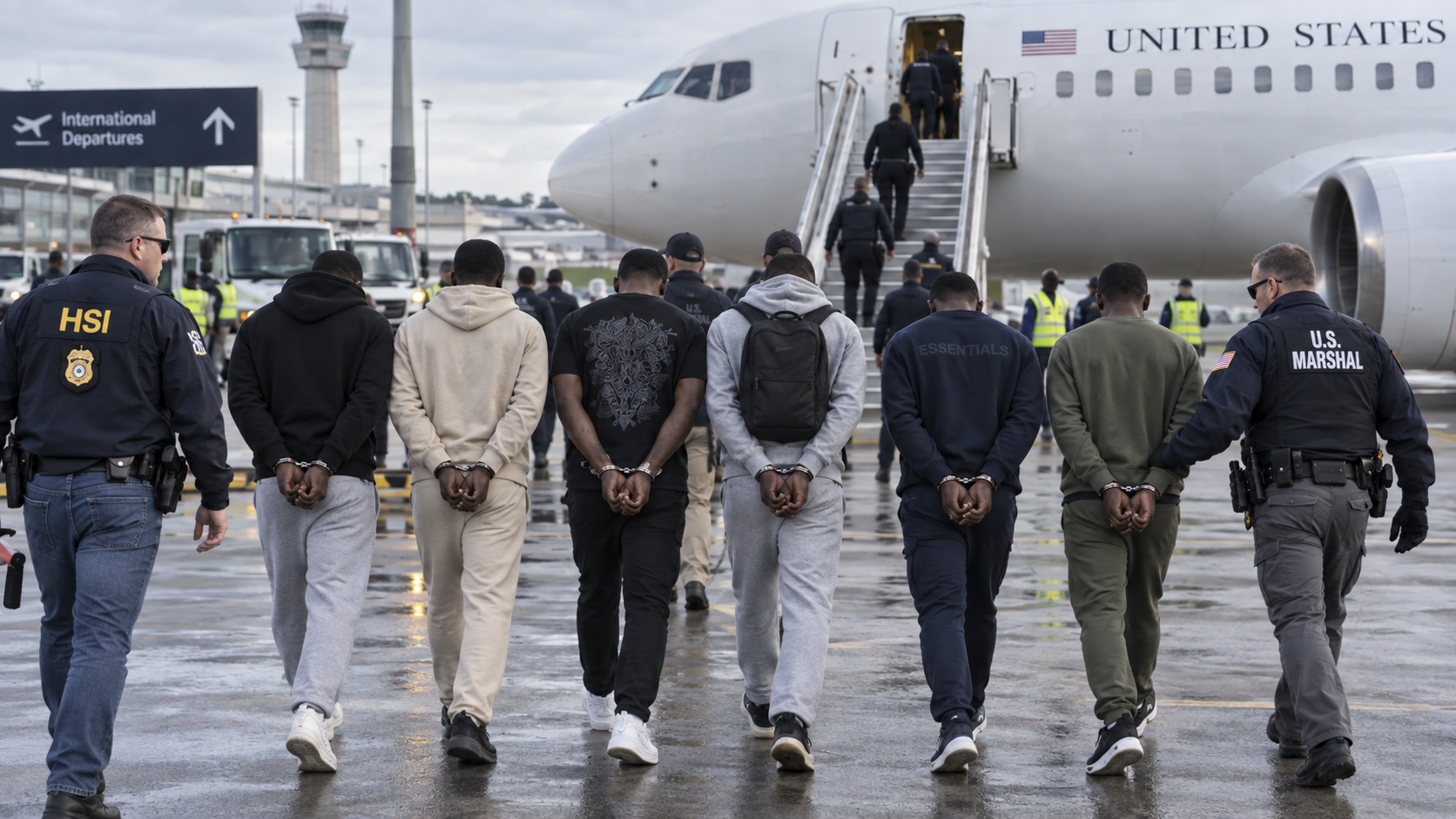
Six Nigerian nationals arrested in South Africa are being extradited to the United States to face charges tied to an alleged online romance scam operation that authorities say cost American women more than $6 million. According to the Associated Press, South African authorities said the men were scheduled to be transferred to U.S. officials Friday after spending years in custody following their 2021 arrests in Cape Town. The Black Axe case centers on allegations of wire fraud, money laundering and an international network that investigators say used fake relationships to gain victims’ trust.
The suspects are accused of having connections to an organization known as Black Axe, also referred to in U.S. court records as the Neo Black Movement of Africa. According to the U.S. Justice Department, federal prosecutors charged members of the group’s Cape Town operation in 2021 with participating in internet fraud schemes and laundering criminal proceeds. Prosecutors alleged that members operated from South Africa while using online dating platforms, social media accounts, aliases, and internet-based telephone services to communicate with people in the United States.
According to the Associated Press, South African police said the six men now being extradited allegedly targeted more than 100 women across the United States through romance or love scams, with reported losses exceeding $6 million. Authorities said some of the alleged victims were pensioners and businesspeople. The Black Axe case allegedly involved scammers developing convincing online relationships before obtaining money from victims who believed the relationships were legitimate.
South African police spokesperson Katlego Mogale described how authorities planned to transfer the suspects into U.S. custody. According to the Associated Press, Mogale said, “Through the coordination of Interpol South Africa, the six will today be transported from a correctional facility in Cape Town to Cape Town International Airport, where they will be handed over to officials from the FBI and the United States Secret Service, who arrived in South Africa this morning.”
The extradition is connected to a federal prosecution that has been developing for years. According to the Justice Department’s Black Axe case records, defendants in the Cape Town investigation were charged with conspiracy to commit wire fraud and conspiracy to commit money laundering, while several defendants also faced additional wire fraud and aggravated identity theft counts. Prosecutors alleged that money generated through romance scams, advance fee schemes, and business email compromise fraud was moved to the Cape Town area for the benefit of participants in the operation. The charges remain allegations unless proven in court.
Federal prosecutors have also described how the alleged romance scams worked. According to the Justice Department, conspirators allegedly used fake identities to persuade victims that they were involved in genuine romantic relationships. Prosecutors said some alleged schemes involved fabricated emergencies or business problems in South Africa, followed by requests for money or valuables. Authorities also alleged that conspirators sometimes used U.S. financial accounts to move proceeds overseas. Those allegations form part of the broader Black Axe case prosecutors have pursued in federal court.
The extradition comes as international law enforcement agencies continue targeting West African organized crime networks connected to cyber fraud. According to Interpol, Operation Jackal IV ran from November 2025 through June 2026 and brought together authorities from 23 countries across six continents. Interpol said the operation resulted in 58 arrests and the identification of 263 suspects while focusing on money laundering, high-value targets, asset seizures, and prosecutions associated with organized crime networks.
Interpol also reported significant enforcement activity in South Africa during that operation. According to the international police organization, authorities raided seven Johannesburg locations linked to a syndicate accused of running romance and investment scams targeting retirees in English-speaking countries. Interpol said officers arrested 39 people, seized $2.67 million, and blocked 257 bank accounts. The agency has identified romance scams, cryptocurrency fraud, investment schemes, and business email compromise as major forms of cyber-enabled financial crime associated with some West African criminal networks.
For the six Nigerian nationals now being transferred from South Africa, the Black Axe case is moving from a lengthy extradition process into the U.S. federal court system. According to the Associated Press, the men are expected to face wire fraud and money laundering charges after being handed over to FBI and U.S. Secret Service officials. Their extradition marks the latest development in an international investigation that authorities allege stretched across borders, online platforms and more than 100 American victims.
