

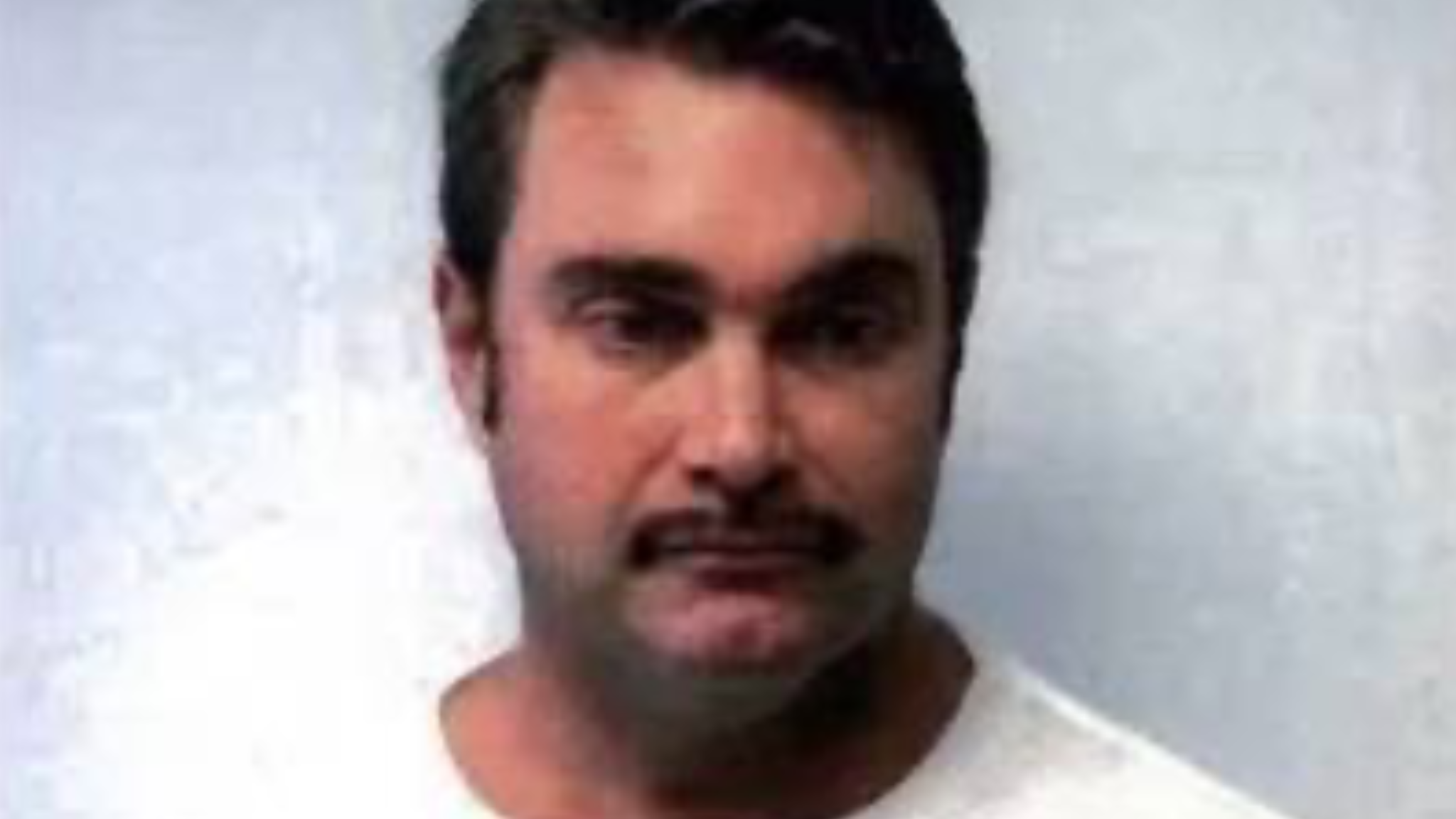
Andrew Luster, the Max Factor cosmetics heir convicted of drugging and raping three women, was released from a California prison on October 11 after serving more than two decades of a sentence that was once 124 years.
Luster, 62, is now on parole and living in Glendora, east of Los Angeles. The state’s Megan’s Law sex offender registry confirms his address there. Glendora Mayor David Fredendall said he was outraged by the release, and Assemblywoman Blanca Rubio, who represents the area, called it “disgusting and unacceptable.” Rubio said she is working with local officials and law enforcement to track the conditions of his parole and how residents will be protected.
Luster is the great-grandson of Max Factor Sr., the founder of the makeup empire. In the 1990s, he targeted young women in bars, including along State Street in Santa Barbara. Prosecutors said he drugged women until they were unconscious, then sexually assaulted them. He recorded the assaults in two of the cases.
In 2003, a jury convicted Luster of 86 felony counts. But he wasn’t in the courtroom to hear it. Luster fled to Mexico in the middle of his trial, and he was convicted in his absence. Months later, bounty hunter Duane “Dog” Chapman tracked him down in Puerto Vallarta, and Luster was returned to the U.S. A judge sentenced him to 124 years.
That sentence did not last. Luster challenged it, and in 2012 a judge agreed that the sentence had been handled improperly. His convictions stood, but in 2013 he was resentenced to 50 years.
Then came Proposition 57. In 2016, California voters passed the measure, which let people convicted of nonviolent felonies come up for parole earlier. The problem was how the state defined “violent.” Under California law at the time, raping someone who was drugged or unconscious was not on the list of violent felonies. Because of that, Luster qualified.
Critics raised that exact concern before the vote. Then Gov. Jerry Brown responded by telling a county sheriff that Luster was a registered sex offender who “would not be getting out.” His administration later said sex offenders would not be eligible for early parole under Prop 57. Luster’s release proved otherwise.
California finally added the rape of an intoxicated or unconscious person to its list of violent felonies in 2025. That change did not apply to people already sentenced.
“Our office fought at every opportunity to preserve Andrew Luster’s original 124-year prison sentence,” Ventura County District Attorney Erik Nasarenko said. “Unfortunately, it comes too late to affect Luster’s sentence. This change only occurred in 2025, long after Luster was sentenced and re-sentenced.”
Luster became eligible for parole in 2024. A two-member parole panel approved his release that year, but the full parole board reversed the decision after Nasarenko’s office argued it was based on “significant errors of fact” about his crimes. Prosecutors kept fighting at hearings after that, with a senior deputy district attorney saying Luster had “played Russian roulette with the lives of his victims.” This month, corrections officials released him under parole supervision after he completed the prison time required under his reduced sentence.
Luster also faces a financial reckoning. He was ordered to pay one of his victims about $20 million in a civil case, a judgment that has reportedly grown to more than $70 million with interest. He sold most of his property and declared bankruptcy years ago.
As a registered sex offender, Luster must report his address to law enforcement, and he remains under parole supervision.
