

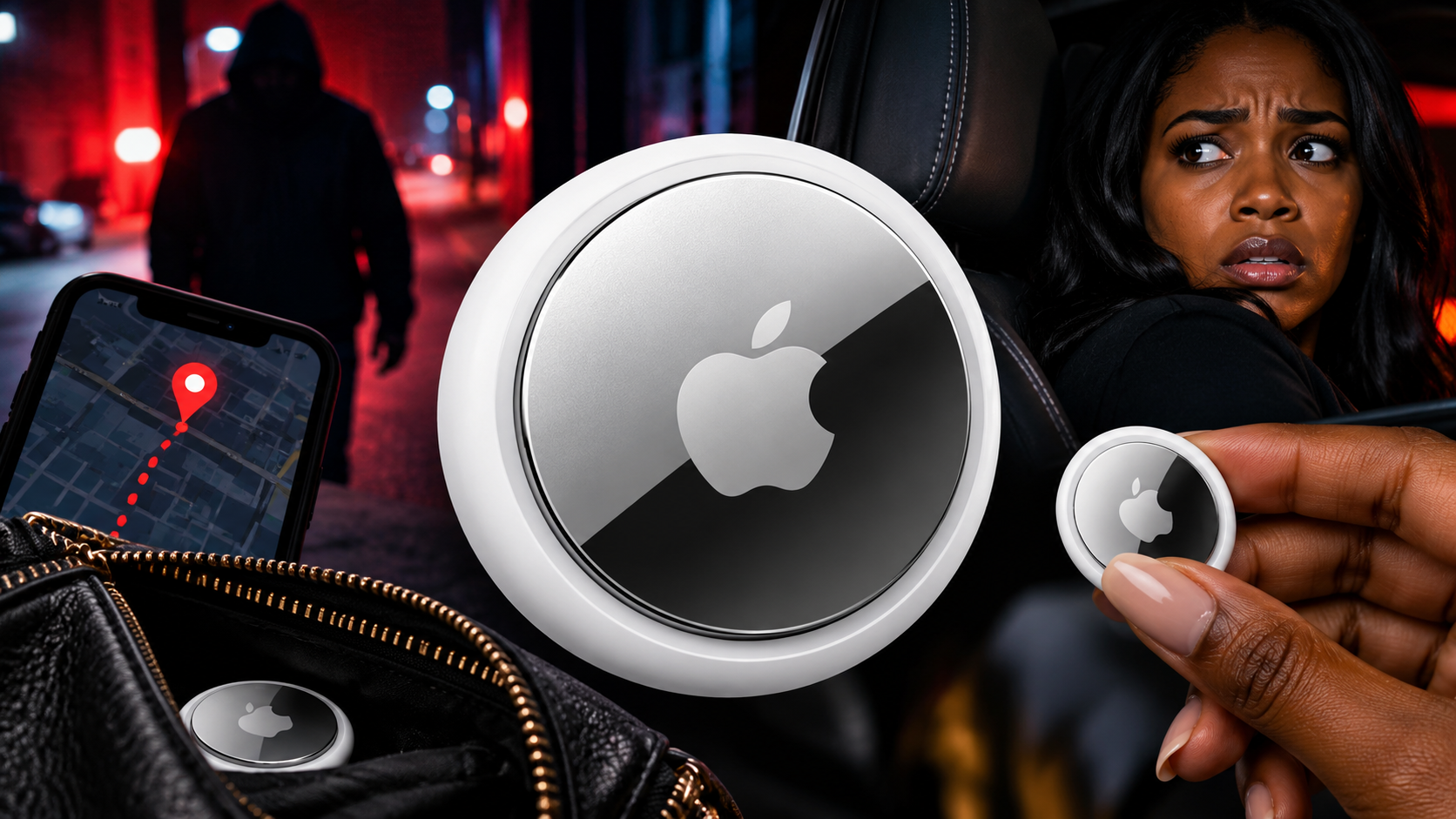
Elevation Lab is no longer selling a device designed to silence Apple’s AirTags after critics warned that the tool could make stalking harder to detect. The backlash over the AirTag Silencer has brought renewed attention to a frightening reality. The small tracking devices have already been connected to cases of harassment, domestic violence, and even murder.
The company introduced the AirTag Silencer on September 30, 2026, promoting it as a way to prevent AirTags from making sounds that could alert someone to their location. According to Elevation Lab’s original product announcement, the device was intended to help people recover stolen bicycles, camera bags, electronics, and other valuables without tipping off thieves.
The $9.99 accessory permanently disabled an AirTag’s built-in speaker while leaving its tracking capabilities functional. That meant an AirTag could continue reporting its location without making the audible warnings Apple designed to discourage unwanted tracking.
For stalking victims, that missing sound could be a critical safety concern.
Following criticism, Elevation Lab published an apology on October 13, acknowledging that the product could be misused.
“We have always made products we want for ourselves, and this was no different – we wanted it for AirTags on our bikes,” the company explained.
It also acknowledged the potential danger, stating, “In retrospect though, this also has the side effect of aiding someone with bad intentions to track someone that wouldn’t get phone notifications.”
Elevation Lab confirmed its decision to withdraw the product, adding, “We have removed the product and will use our patent on it to prevent anyone else from making one in the future.”
The response followed criticism from technology journalist Glenn Fleishman, who described the device as “appalling” in an October 1 article for Six Colors. Fleishman argued that making it easier to silence AirTags also made it easier for stalkers and domestic abusers to conceal their surveillance.
Importantly, the AirTag Silencer did not disable smartphone tracking notifications. Apple’s software can still identify an unfamiliar AirTag moving with someone. However, removing its speaker eliminates a separate warning and makes the tracker more difficult to locate by sound, particularly when someone does not receive a phone notification.
According to Apple’s official safety documentation, AirTags are designed to produce audible warnings when separated from their owners. Compatible iPhones and Android devices can also notify users about unfamiliar trackers traveling with them.
Those safeguards exist because unwanted AirTag tracking has already had devastating consequences.
In January 2022, Heidi Moon, a 43-year-old mother from Akron, Ohio, was killed by her former boyfriend hours after discovering that someone had been monitoring her movements.
According to News 5 Cleveland, Moon contacted a private investigator after her ex-boyfriend, Nick Mima, sent messages indicating he knew where she had been staying. Investigators discovered an Apple AirTag hidden inside her vehicle.
Approximately four hours later, Mima fatally shot Moon outside her home before shooting himself. Her death demonstrated how technology-enabled surveillance can become part of a much larger pattern of threatening behavior.
Another devastating case unfolded in July 2023, when 21-year-old Jailene Flores was fatally shot at a Mariano’s grocery store in Evergreen Park, Illinois.
According to FOX 32 Chicago’s reporting on court documents, Flores’ brother discovered an AirTag hidden in her car. Investigators said the device was connected to Armoni Henry, a man Flores had previously dated.
Prosecutors alleged that Henry confronted Flores after the AirTag was removed. On the morning of her death, he reportedly sent her 124 text messages, including threats against her life.
Henry was subsequently charged with first-degree murder. The case illustrated how discovering and removing a tracking device does not necessarily end the danger when an abusive person is determined to maintain control.
AirTag tracking was also involved in the June 2022 killing of 26-year-old Andre Smith in Indianapolis.
According to WRTV’s court reporting, Gaylyn Morris used a tracking device to locate Smith at a bar after suspecting he was seeing another woman.
Following a confrontation, Morris repeatedly struck Smith with her vehicle, killing him. She was convicted of voluntary manslaughter in August 2023 and sentenced to 18 years in prison that September.
The risks extend beyond fatal incidents.
In Miami, a police officer was arrested in 2022 after allegedly using AirTags to track his former girlfriend. According to Local 10 News, investigators accused Javier Magarin of secretly placing tracking devices in her vehicle following their breakup.
The woman reportedly discovered the surveillance after receiving warnings and later found another concealed tracker. Police said the alleged harassment included threatening behavior and unauthorized interference with her travel plans. Magarin was charged with stalking and illegal use of a tracking device.
More recently, the Miami Herald reported that Steven Colon Sr. received supervised probation in 2026 after pleading no contest to illegally tracking a woman’s vehicle with an AirTag in Florida.
These incidents explain why the AirTag Silencer controversy has generated such concern. Tracking technology can provide someone with information about another person’s movements, including locations that person may be trying to keep private.
Apple has continued strengthening its safeguards. In January 2026, the company introduced its second-generation AirTag with a speaker 50 percent louder than the original. Apple also maintains cross-platform unwanted tracking alerts.
For anyone who receives an unfamiliar AirTag notification, Apple’s safety guidance recommends reviewing the tracking alert, attempting to locate the device, and following instructions to disable it. Anyone who feels threatened should consider contacting law enforcement and preserving relevant evidence.
Elevation Lab’s decision to pull the AirTag Silencer removes one commercially marketed tool for disabling those audible protections, although other methods of tampering still exist.
The larger concern remains unchanged. A product intended to help someone recover a stolen bike could also make it easier for an abuser to follow a person who is desperately trying to stay safe.
