

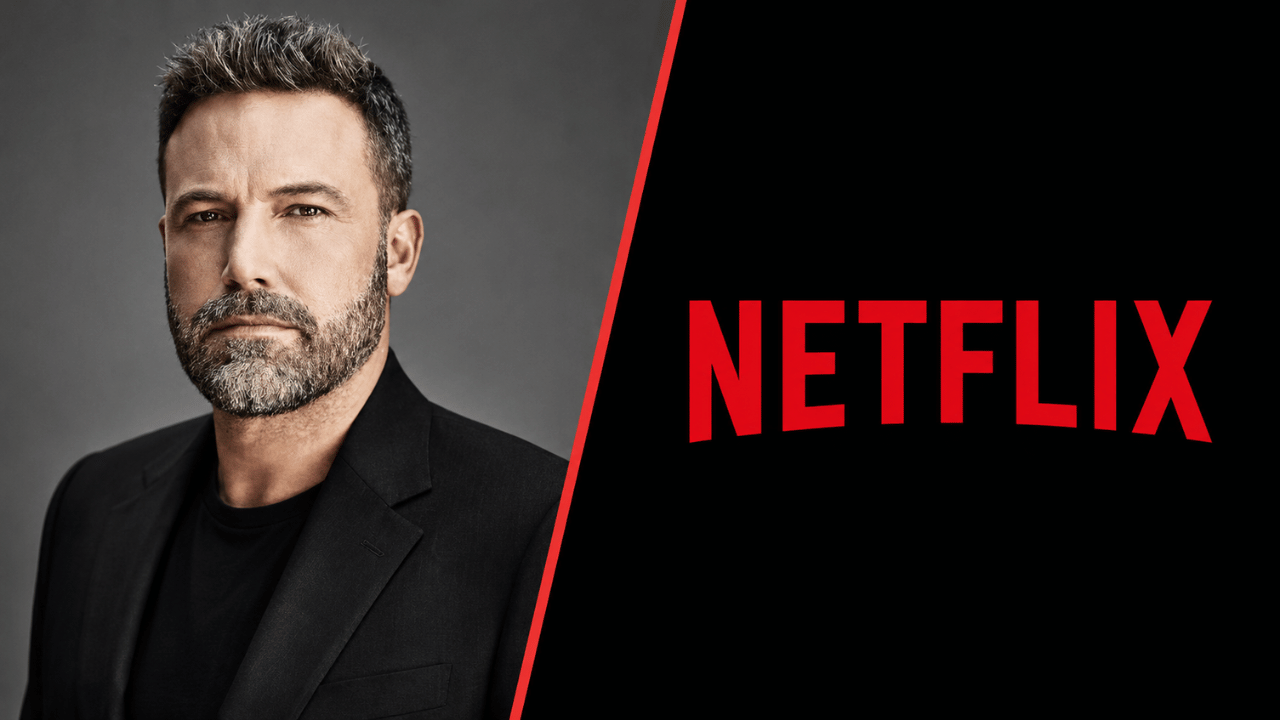
The Netflix AI deal is no longer another vague Hollywood technology announcement. According to several reports, the streamer paid approximately $587 million in cash for InterPositive, the filmmaking technology company founded by Ben Affleck. Netflix initially announced the acquisition in March without revealing its financial terms. A later Securities and Exchange Commission filing confirmed that the company completed a March acquisition for roughly $587 million in cash. That price transforms the story from an experimental AI partnership into a serious infrastructure investment.
The size of the check becomes even clearer when placed beside Netflix’s quarterly financial results. According to the same SEC filing, Netflix generated approximately $12.56 billion in second quarter revenue, $4.19 billion in operating income, and spent just over $1 billion on technology and development during the quarter. The $587 million purchase price equals about 4.7 percent of quarterly revenue, 14 percent of quarterly operating income, and 58 percent of one quarter’s technology spending. Those comparisons are not accounting equivalents, but they reveal how aggressively Netflix valued the technology.
According to Netflix’s official announcement, InterPositive is not primarily designed to generate entire movies from a text prompt. Affleck said the company developed smaller models focused on filmmaking techniques rather than human performances. Its technology was built to understand visual logic, editorial consistency, lighting, lens behavior, and production problems such as missing shots and background replacements. Netflix also said the InterPositive team would join the company, while Affleck would serve as a senior advisor.
That distinction is essential to understanding the new deal. The company appears to be betting on tools that can work with footage filmmakers have already created instead of replacing the entire production process. A director who discovers a continuity problem, an unusable background, an incorrect lighting setup, or a missing transition may eventually have more options than arranging an expensive reshoot. For independent filmmakers and creators, that could mean stretching a limited production budget further without automatically sacrificing visual ambition.
Netflix is also buying this technology after AI has already moved into its production pipeline. According to the company’s second quarter shareholder letter, generative AI workflows were used in roughly 300 Netflix titles during 2026, with most of the work concentrated in post-production. Netflix identified enhanced crowds, historical battle sequences, and large world-building shots as examples. The company said some productions could have eliminated major shots without access to generative AI tools.
For creators, the opportunity behind the Netflix AI deal is not simply faster editing. It is the possibility that work once reserved for productions with large visual effects budgets could become available to smaller teams. A music video director might build a more expansive environment. A documentary producer could repair a difficult archival sequence. An independent filmmaker could improve a scene that would otherwise require another location day. A digital creator moving from social media into longer programming could potentially deliver studio-level polish with fewer resources.
Access, however, remains the unanswered question. According to Netflix, Affleck expressed interest in eventually giving the broader creative community access to the technology. Netflix has not publicly detailed a release date, an outside licensing model, a creator subscription price, or a process for independent filmmakers to use the tools. Until that happens, the biggest immediate advantage may belong to Netflix productions rather than creators working outside its ecosystem.
The labor rules surrounding AI film projects also matter. According to SAG AFTRA, its 2026 television and theatrical agreement strengthens protections for digital replicas and synthetic performers. Producers must bargain with the union before using synthetics, and the agreement favors human performances while requiring a synthetic to add significant additional value. According to the Directors Guild of America, its 2026 agreement established director control over AI-generated footage.
Writers have their own protections. According to the Writers Guild of America West, AI cannot be treated as a writer under its current agreement. Companies cannot require a writer to use AI, and they must disclose when material given to a writer contains AI-generated content. Those rules suggest that studios may pursue efficiency, but they cannot assume technology automatically eliminates contractual obligations involving credit, consent, compensation, and creative authority.
Ownership presents another major concern. According to the United States Copyright Office, generative AI output can receive copyright protection when a human author determines sufficient expressive elements through original material, creative arrangement, or meaningful modification. Providing prompts alone is not enough. Creators developing AI film projects will therefore need to document their human contributions and carefully negotiate who owns the footage, project data, trained models, voices, likenesses, edits, and future uses.
Ultimately, the acquisition spells out where major entertainment companies believe the real value of filmmaking AI may live. The prize is not necessarily a machine that invents a movie from nothing. It is a controlled production system that can understand existing footage, solve expensive problems, and reduce the distance between an ambitious idea and a finished project. For creators, that can open doors, but only when access, ownership, consent, credit, and compensation remain part of the conversation.
