

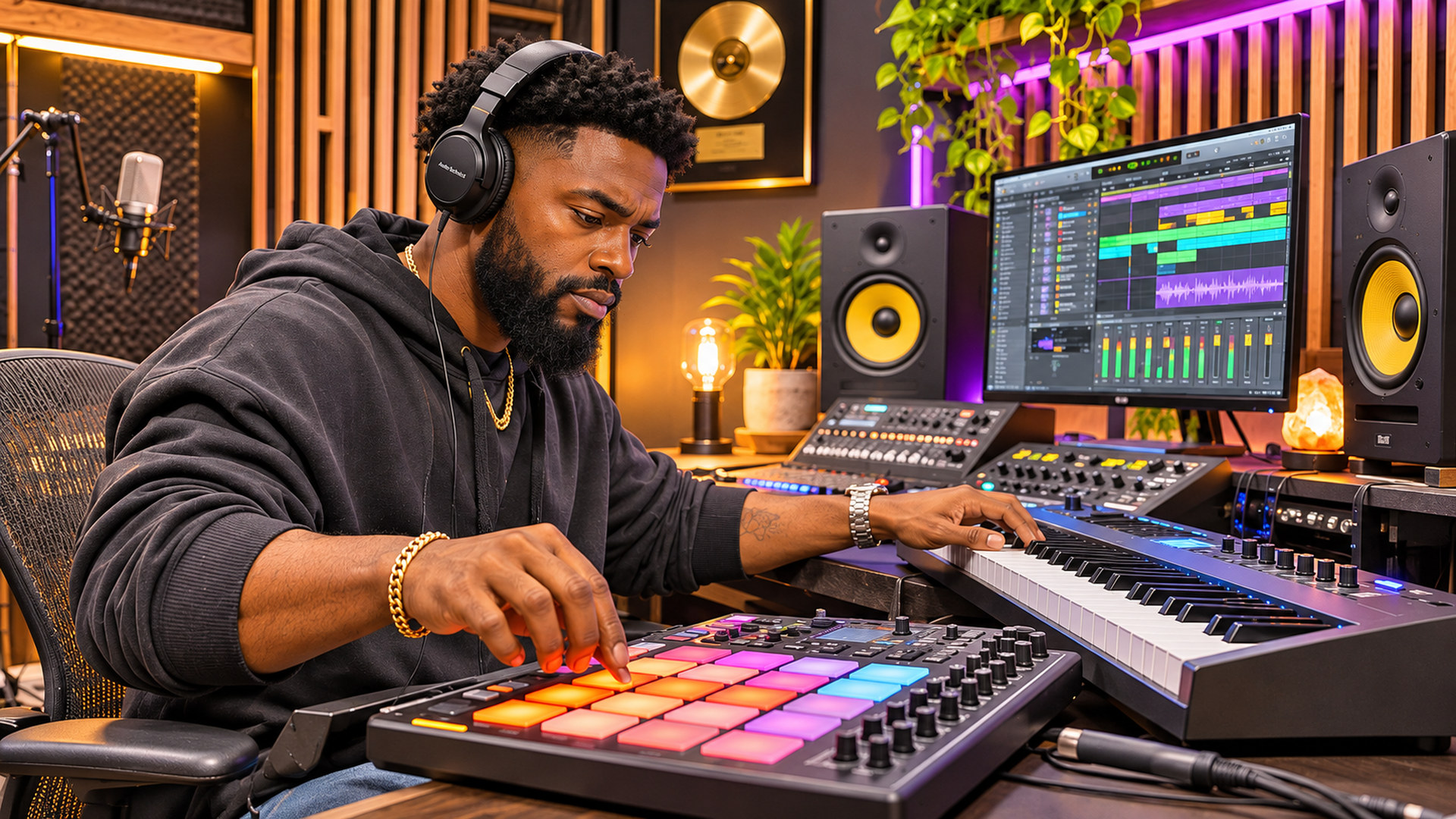
Beat licensing can let two rappers legally release different songs built on the exact same instrumental, even when both paid for it. An artist might discover that familiar bassline after recording vocals, paying for studio time, and announcing a release. The surprise does not automatically mean the producer cheated anyone. What each buyer received depends on the license attached to the purchase.
When an artist buys a nonexclusive license, often called a beat lease, the producer typically keeps ownership and permission to license the instrumental to other customers. The artist gets the right to record and release music using the beat, but only within agreed limits. BeatStars and Airbit, two marketplaces used by producers, both describe this basic arrangement.
With beat licensing, one instrumental could support two entirely different songs. One rapper might record a breakup track while another turns the same production into a party anthem. Their lyrics, vocal performances, and finished recordings can differ even though the backing music is recognizable. A valid nonexclusive license does not promise that nobody else will use the instrumental.
Beat licensing agreements also control how far an artist can take a release. Some set limits on streams, downloads, music videos, or paid performances. Others restrict how long the license lasts. A package labeled premium or unlimited may offer greater flexibility without giving the buyer exclusive rights. Airbit specifically identifies its unlimited tier as nonexclusive, so the product name alone is not enough.
Exclusive beat licensing works differently. It generally prevents the producer from granting new licenses for the same beat after the exclusive sale. Depending on the agreement, the transaction can also transfer certain copyright ownership rights. But exclusive does not necessarily mean the buyer receives every possible right, including all publishing interests. The contract needs to identify what is transferred and what the producer retains.
Here is where things get complicated: an exclusive buyer might still hear another artist using the beat. BeatStars says its earlier nonexclusive licenses remain valid after an exclusive sale under its standard terms, although producers can customize contracts. Airbit similarly says earlier license holders can keep using the instrumental within their agreements. Exclusivity may stop future sales without undoing authorized uses from the past.
Imagine an artist signing a nonexclusive beat licensing agreement in January, then a second artist purchasing exclusive rights in June. If the January license remains valid, the first artist may still be able to release or promote their song as the agreement permits. The June buyer cannot assume the instrumental has never been licensed before. Anyone paying extra for exclusivity should ask the producer about earlier leases before signing.


Made to order and shipped to your door.
There is another layer to buying beats: owning a recording is not the same as owning the underlying composition. The U.S. Copyright Office treats musical works and sound recordings as separate protected creations. Depending on the deal, a producer may retain songwriting or publishing interests even when an artist controls the final recording. Agreeing on credits, splits, and royalty obligations before release can prevent disputes when money starts coming in.
Beat licensing can also create confusion around automated copyright claims. YouTube’s Content ID system can identify matching audio and trigger a claim that affects monetization or availability. Yet YouTube says material licensed nonexclusively cannot be used as a Content ID reference by someone who lacks exclusive rights to it. A claim does not automatically prove an artist used the beat without permission. Keep the license available to help resolve mistakes.
Before purchasing, read the agreement rather than relying on a storefront description. Check whether commercial releases are permitted, whether there is a stream ceiling or expiration date, whether music videos and paid performances are covered, and whether a producer credit is required. Ask if the beat contains samples that need separate clearance. Save the license, receipt, and messages with the producer.
