


BET Digital’s shift toward video has now raised a much bigger question about what happens to years of Black journalism when a media company redesigns its future.
HuffPost deputy editor Philip Lewis reported Friday that BET Digital removed its written news archive from BET.com as part of the brand’s move away from text-based publishing. Lewis wrote, “BET Digital has permanently removed all its digital news articles from its website to ‘prioritize video content,’ I’m told. Years of news articles are now gone forever. Some writers were able to save their stories; some weren’t.”

The claim quickly sparked concern among journalists, former contributors, and readers who viewed BET’s digital archive as more than a collection of entertainment posts. Over the years, BET.com published reporting on politics, race, music, television, sports, celebrity culture, social justice, health, and major events affecting Black communities.
BET had already made its new direction public weeks earlier. On August 18, the company announced a complete relaunch of BET.com, describing the site as a “video-first destination.” BET said it was moving away from what it called the traditional standalone publisher model and instead turning the website into a distribution hub that points audiences toward BET content on YouTube, social platforms, Paramount+, and the television network.
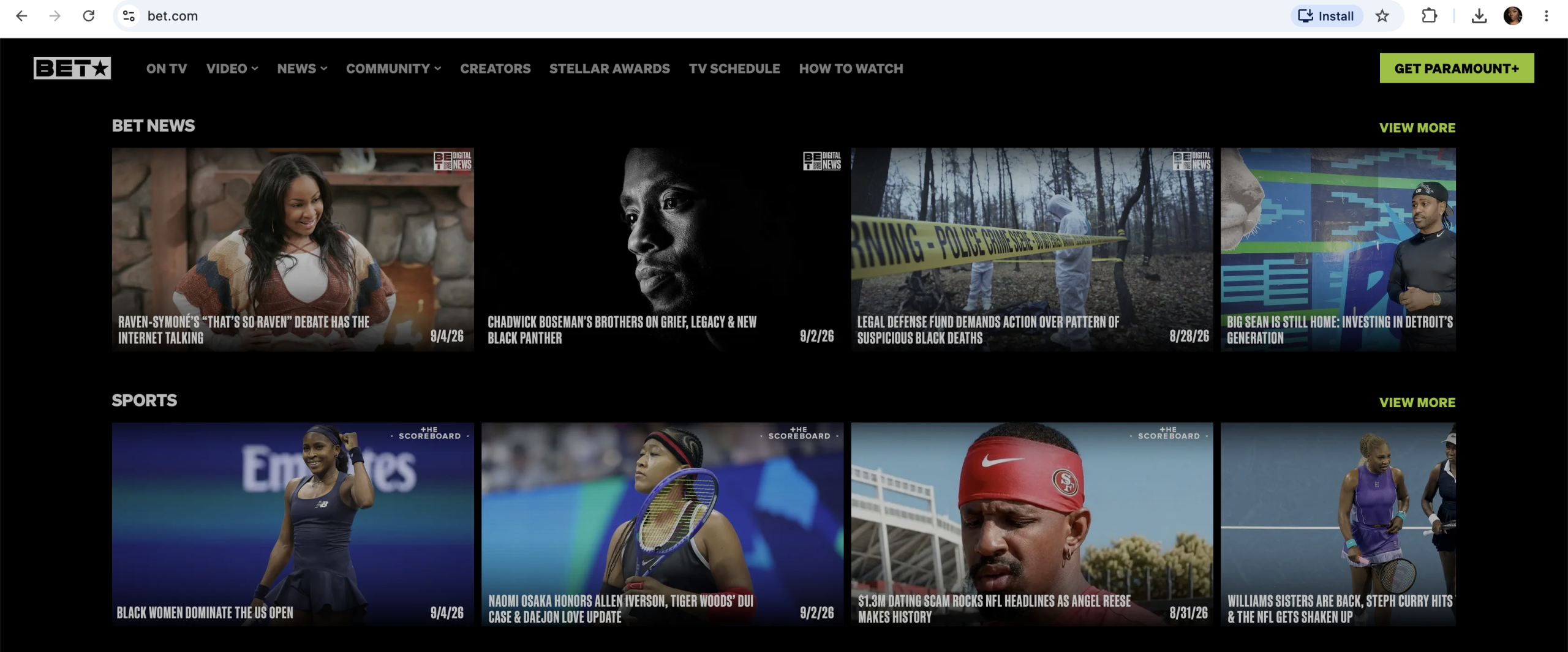
Orchid Richardson, BET’s senior vice president of digital, said at the time, “We’re leading with video, and we’re putting community storytellers at the center of BET News.”
The current BET.com homepage reflects that strategy. Its BET News section directs users to YouTube, while much of the page promotes video series, television programming, Paramount+ titles, and digital shows. BET’s August announcement also promised less scrolling through text and faster access to video, event coverage, premiere information, and social content.
What the company did not explain in that announcement was what would happen to years of previously published reporting.
That distinction is now at the center of the backlash. Moving forward with a video-first strategy is one thing. Removing a searchable archive of journalism is another, especially when those stories contain writers’ work, historical reporting, interviews, cultural criticism, and documentation of events that may not exist anywhere else in the same form.
The concern is especially significant for Black media. BET launched in 1980 and has spent more than four decades building its identity around Black entertainment and culture. Its digital newsroom later expanded that mission by documenting stories that often received limited attention elsewhere. When those pages disappear, the loss can affect researchers, readers, journalists, and the writers who relied on published links as part of their professional portfolios.
Lewis’ report also suggests the transition did not affect every writer equally. Some contributors reportedly managed to preserve copies of their work before the articles disappeared, while others did not.
BET has not publicly said in its relaunch materials whether the removed stories remain stored internally, whether an archive will eventually return, or whether writers will be given access to their old work. The company’s public announcement focused instead on its new content model.
One day after unveiling the new BET.com, BET Digital announced a Community Reporting Initiative designed to recruit multimedia journalists in cities including New York, Los Angeles, Memphis, Atlanta, Washington, D.C., Houston, and communities in Kentucky. The program is focused on original video and multimedia reporting from journalists embedded in the communities they cover.
That strategy is not happening in isolation. The Reuters Institute’s 2026 Digital News Report found that social media and video networks became the most widely used way of accessing online news globally for the first time, reaching 54 percent of respondents compared with 51 percent for news organizations’ own websites and apps. The same report found that 77 percent of respondents watched online news video weekly.
Those numbers help explain why publishers are chasing video audiences. They do not erase the archival question.
BET may be betting that its audience wants news where it already spends time, particularly YouTube and social media. But the disappearance of years of written reporting shows the potential cost of that pivot. A website can change formats overnight. Rebuilding an erased record of Black culture, history, and journalism is much harder.
