

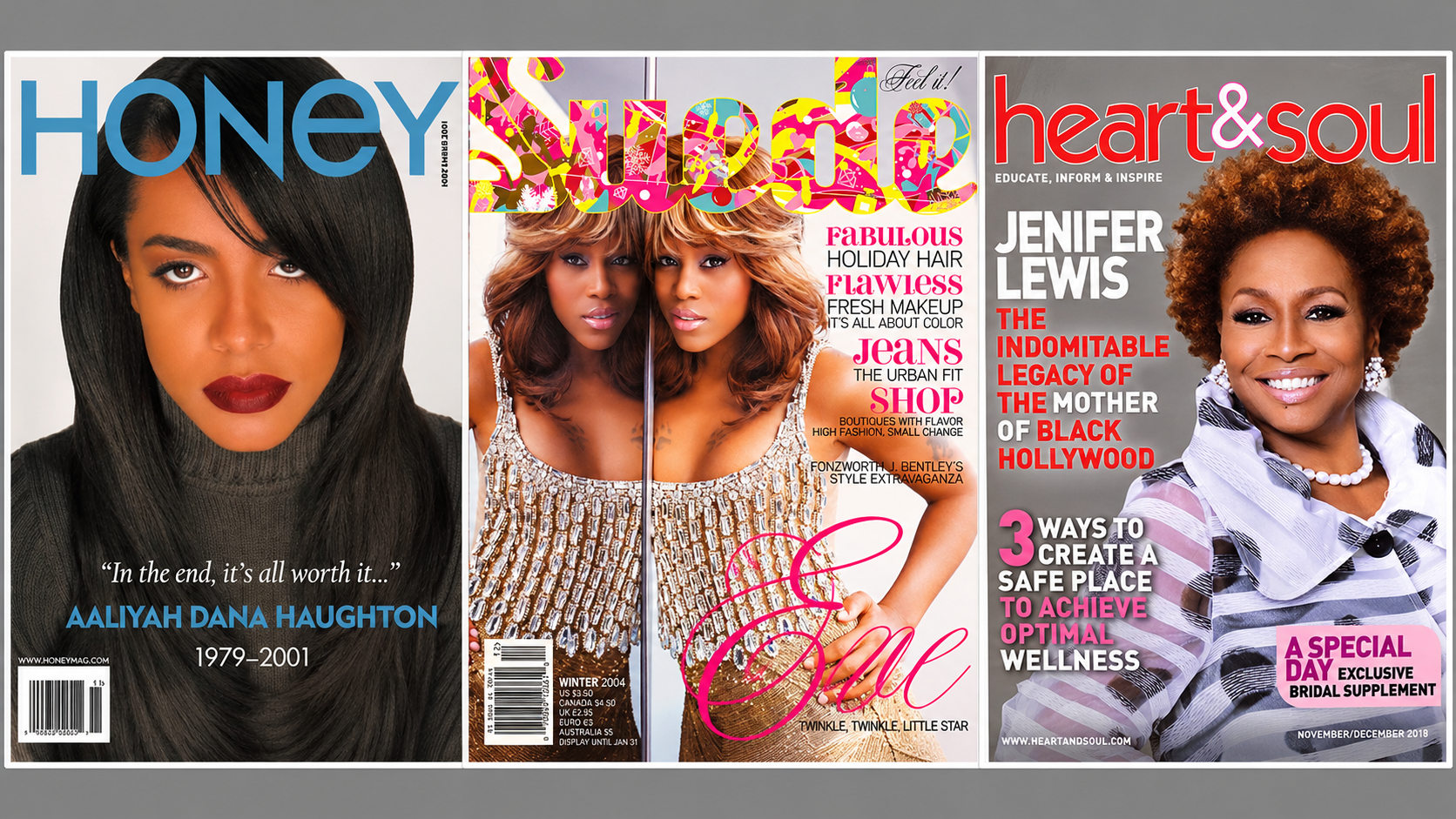
Black lifestyle magazines once held a powerful place in publishing, shaping how generations experienced fashion, beauty, music, health, relationships, and culture before several influential titles disappeared from newsstands. From Honey and Suede to Savoy and Vibe Vixen, these publications gave readers representation, original storytelling, and a sense of community that mainstream media often struggled to provide.
The history of these magazines has gained renewed relevance following news that Oprah Winfrey’s Oprah Daily will shut down at the end of 2026, concluding a publishing partnership with Hearst Magazines that began in 2000 with O, The Oprah Magazine.
While the circumstances behind each closure were different, the publications shared an important legacy. They created spaces where Black professionals, entertainers, entrepreneurs, and everyday readers could see their experiences reflected in magazines built around their interests.
Honey Magazine became one of the defining lifestyle publications for young Black women during the late 1990s and early 2000s. Known for its blend of celebrity interviews, fashion spreads, beauty advice, relationship advice, and entertainment coverage, Honey offered an alternative to mainstream women’s magazines that often overlooked Black audiences.
The magazine’s appeal came from its ability to connect emerging music and entertainment trends with the everyday lives of its readers. Hip-hop, R&B, personal style, and candid conversations about adulthood all had a place in its pages. Honey also helped establish an editorial aesthetic that reflected young Black women’s influence on popular culture.
Despite building a recognizable identity and substantial readership, Honey became a casualty of Vanguarde Media’s financial collapse. The publisher filed for bankruptcy in November 2003, ending the original operation, with corporate records identifying 2004 as the year Honey ceased publishing. The brand’s trademark was subsequently acquired through bankruptcy proceedings, but its original magazine era had ended.
Suede Magazine arrived in 2004 with a different approach to fashion publishing. Developed through Essence Communications and Time Inc., Suede was designed to reach style-conscious women interested in adventurous fashion, beauty, photography, and contemporary culture.


Made to order and shipped to your door.
Rather than following the traditional formula of women’s service magazines, Suede emphasized editorial creativity, bold visual presentation, and a younger fashion perspective. It treated Black beauty and style as central to the conversation rather than as occasional additions to mainstream coverage.
The publication attracted attention for its distinctive creative direction but struggled to establish a sustainable business. In 2005, Essence Communications announced that Suede would cease publication after only four issues, citing the high cost of producing the magazine. Its brief existence remains a reminder that strong creative ideas do not always receive enough financial backing to survive.
Savoy Magazine occupied a different corner of the lifestyle market. Launched by Vanguarde Media in 2001, Savoy focused on successful Black professionals, luxury, business, politics, entertainment and the lifestyles of an emerging generation of influential executives and entrepreneurs.
The publication presented an aspirational perspective that went beyond celebrity coverage. Its pages explored financial achievement, career advancement, leadership, travel and the changing expectations of professional life.
Savoy was among the titles affected when Vanguarde Media collapsed in 2003. Unlike some defunct publications, however, Savoy’s story did not end there. The magazine was subsequently revived under different ownership, including another relaunch in 2010. Its history demonstrates how a recognizable editorial brand can survive even after the company that originally published it disappears.
Heart & Soul Magazine established itself as a health, fitness, and wellness publication serving Black women during the 1990s. At a time when mainstream health magazines did not consistently address their experiences, Heart & Soul offered coverage of nutrition, physical fitness, emotional well-being, relationships, and preventive health.
The magazine approached wellness as more than exercise or appearance. It explored how personal health connects with family responsibilities, work, self-esteem, and the challenges women encounter throughout different stages of life.
Heart & Soul was another casualty of Vanguarde Media’s bankruptcy in 2003, but the publication later found new ownership. Entrepreneur Edwin Avent acquired the title in 2004 and moved its operations to Baltimore. The brand changed hands again in subsequent years, giving it a history of interruption and revival rather than a single permanent shutdown.
Emerge Magazine brought a more serious journalistic focus to the publishing landscape. Founded in 1989, the magazine became known for its reporting on politics, racial justice, civil rights, public policy, and issues affecting African Americans.
Under editor George E. Curry, Emerge developed a reputation for forceful journalism that challenged political institutions and examined stories that did not always receive substantial attention from mainstream news organizations.
Its coverage distinguished it from fashion and entertainment publications, but it served a similarly important purpose by giving readers reporting centered on their communities and political concerns.
In May 2000, Vanguarde Media suspended Emerge’s publication. Although there were discussions about a possible successor, the original magazine did not return. Its closure ended an influential chapter in Black political journalism and reduced the number of national publications dedicated to examining those issues in depth.
Vibe Vixen Magazine brought together music, celebrity culture, fashion, beauty, and relationships for a generation growing up alongside hip-hop’s expanding influence on entertainment and style.
Introduced as an extension of Vibe during the mid-2000s, Vibe Vixen positioned women at the center of a media landscape where hip-hop journalism frequently prioritized male performers and audiences.
Its pages featured entertainers, fashion trends, beauty coverage, and lifestyle conversations that connected music with the everyday interests of young women. The publication also demonstrated how a successful entertainment brand could attempt to expand into a more specialized lifestyle category.
However, Vibe Vixen’s original print run ended in 2007, amid circulation and business challenges. The name later continued through digital publishing, but its disappearance from newsstands marked the end of a distinctive print product.
The transformation of Black publishing extends beyond these six magazines. Jet Magazine, founded in 1951, ended its print edition in June 2014 and transitioned to digital after decades of documenting entertainment, civil rights, and everyday life. Ebony Magazine, which launched in 1945, suspended regular print publication in 2019 before returning digitally under new ownership in 2021. Meanwhile, Vibe Magazine, founded in 1993 with Quincy Jones, shut down in 2009 before being acquired and relaunched, eventually moving away from its original print model. Together, these publications reveal a complicated history of closures, ownership changes, reinventions, and interrupted publishing runs. The magazines that disappeared left behind more than memorable covers and celebrity interviews.
They helped build careers, documented cultural history, introduced influential voices, and gave generations of readers publications that reflected their ambitions, experiences, and identities. Their archives remain evidence of an era when magazines were not simply sources of information, but institutions that helped shape culture.
