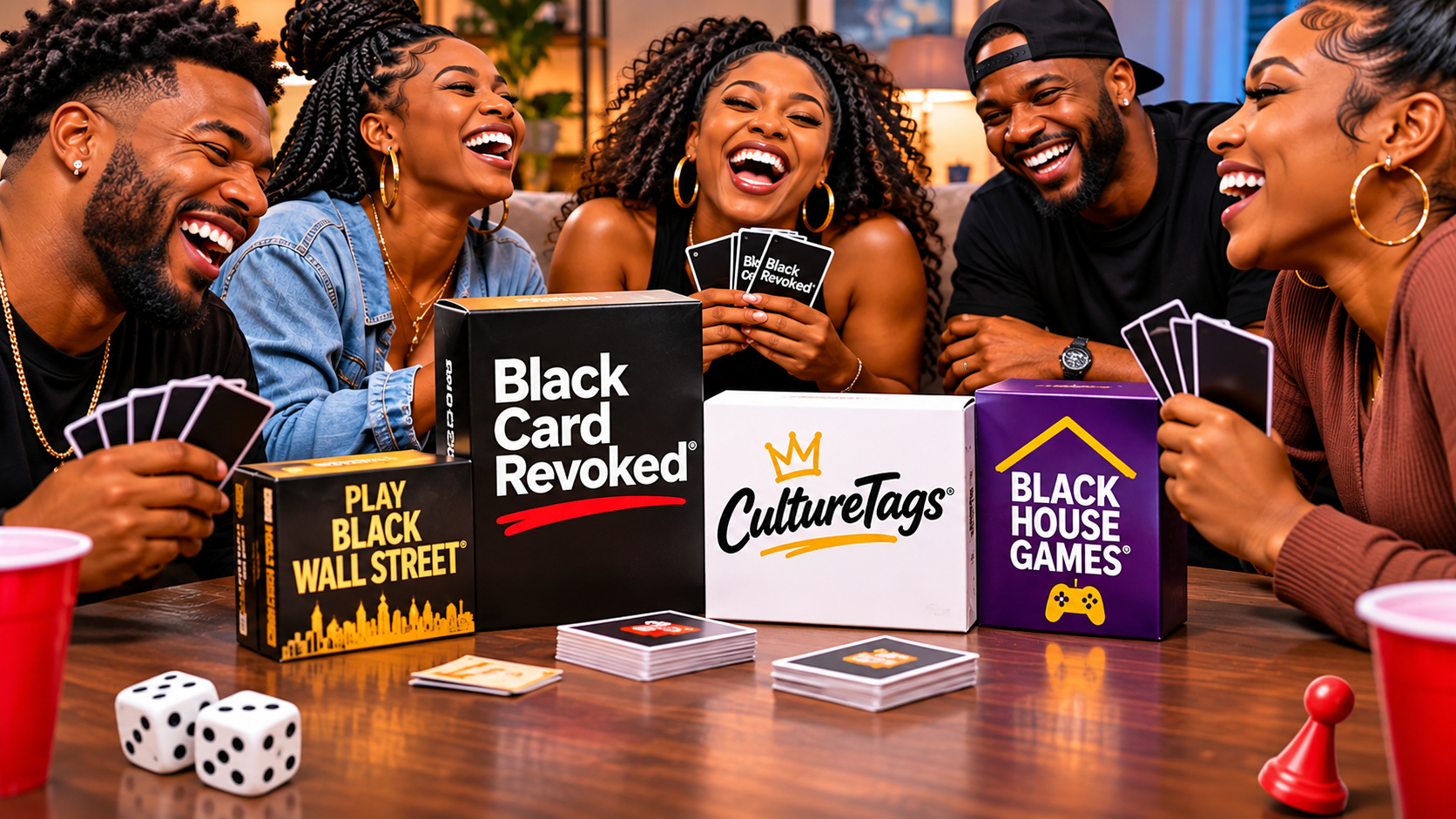
Black folks have been arguing over Spades, getting competitive during Uno, and turning family game night into a full-blown event for generations. Now, Black entrepreneurs are taking those same cultural experiences and turning them into businesses that reach far beyond the living room.
From Black Card Revoked to CultureTags, Black-owned game companies are proving that familiar jokes, childhood memories, music, and shared experiences can become products people are willing to pay for.
And some of these creators are making serious money.
One of the biggest success stories is Black Card Revoked, created in 2015 by entrepreneurs Latesha Williams and Jay Bobo.
The trivia-based card game challenges players on Black movies, music, traditions, history, and everyday experiences. Get enough questions wrong, and somebody at the table might jokingly question whether you deserve your Black card.
But behind the laughs is a multimillion-dollar business.
According to a 2021 Black Enterprise interview, the founders sold 800 games on their first day and generated approximately $250,000 in presales within 72 hours. The company brought in more than $500,000 during its first six months.


Made to order and shipped to your door.
Williams explained the importance of understanding the audience behind the product.
“We are Black people and know what the experience is like,” she said.
The company’s success eventually led to national retail distribution and a BET game show. Today, its parent company, Cards For All People, also sells themed editions and other party games.
Another entrepreneur who recognized the opportunity was Eunique Jones Gibson, founder of CultureTags.
Her game challenges players to decode acronyms inspired by Black culture, including familiar sayings, television references, music, church experiences, and social media conversations.
Gibson launched a Kickstarter campaign in 2020 seeking $15,000. More than 400 supporters ultimately contributed over $35,000, helping finance the product’s launch.
Within nine months, CultureTags expanded into Target stores nationwide.
The game also demonstrated how social media could help entrepreneurs market products without relying entirely on traditional advertising.
Gibson hosted virtual game nights, encouraged supporters to share their experiences, and used online conversations to build interest before landing major distribution.
Speaking with Shoppe Black, she explained how the campaign helped create early brand loyalty.
“I went the crowdsourcing route because I wanted to make this like one big group project,” Gibson said.
That community support helped turn a cultural idea into a physical product.
But Black-owned gaming isn’t limited to trivia and party arguments.
Black Owned Games, founded by a husband-and-wife team in 2021, develops games centered on experiences familiar to Black audiences. Its catalog includes Tabu for the Culture and Ain’t No Telling, a charades-style game.
Black House Games is another company listed in the Black in Toys directory of Black-owned brands, reflecting the growing variety of businesses entering the space.
Meanwhile, Play Black Wall Street, founded by De’Von Truvel and Sinclair, uses board games to introduce players to Black entrepreneurship and financial history.
Its founders developed the concept after discovering that young students were unfamiliar with Tulsa’s historic Black Wall Street community.
Rather than delivering another lecture, they turned the subject into an interactive learning experience.
The business now combines games with workshops and mentorship programs, showing how entrepreneurs can create additional opportunities beyond selling products.
However, getting a game into customers’ hands involves more than designing a deck of cards.
Creators must consider printing, packaging, manufacturing, shipping, product testing, inventory, and marketing. Large retailers also require businesses to meet distribution expectations, maintain reliable inventory, and accept wholesale pricing.
That means a game selling for $25 at a major retailer doesn’t put $25 into the creator’s pocket.
Manufacturing expenses, shipping costs, retail margins, advertising, and other operating expenses can significantly reduce the final profit.
Protecting the idea is another challenge.
According to the American Bar Association, copyright law generally doesn’t protect the basic mechanics of a game. However, original written content and artwork may qualify for protection, while trademarks can protect distinctive game names and branding.
That distinction matters for Black entrepreneurs creating original products inspired by cultural experiences.
As their games grow in popularity, protecting their intellectual property becomes an important part of protecting the business itself.
Some founders are already expanding beyond physical products.
CultureTags introduced an online word game called IYKYK in 2022, while Black Card Revoked demonstrated how a card game could become televised entertainment.
These expansions open possibilities involving digital products, licensing, educational partnerships, corporate events, and merchandise.
More importantly, the popularity of these games challenges the idea that products centered on Black experiences have limited commercial appeal.
Black culture has always helped shape American entertainment, from music and comedy to fashion and television. Now entrepreneurs are building businesses around the experiences that bring Black families together.