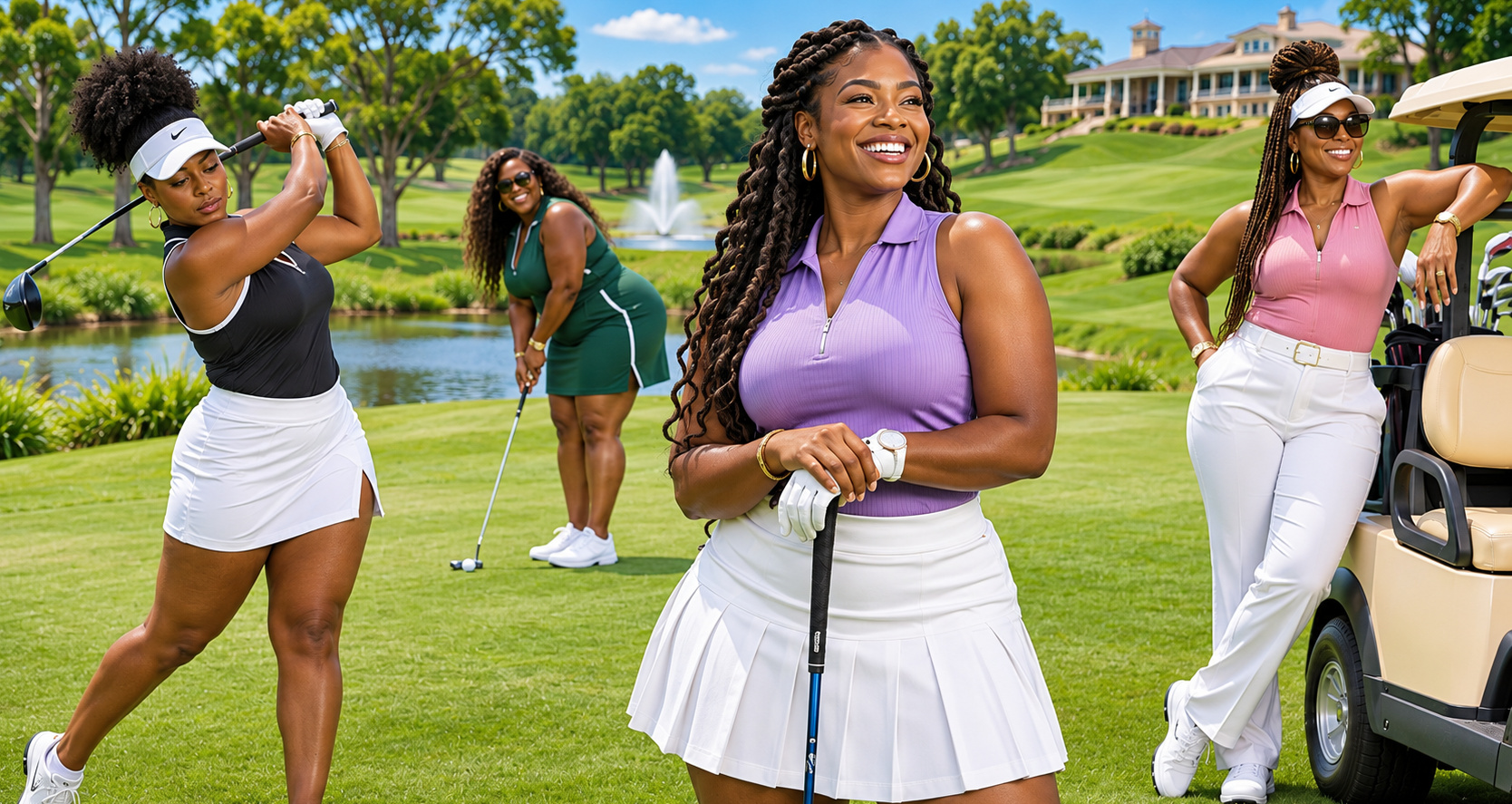
Golf has spent decades looking like a sport reserved for wealthy white men with expensive memberships, perfectly pressed polos, and business connections. But Black women are making it clear that the fairway belongs to them, too.
From professional tournaments to community golf clubs, more Black women are picking up clubs, building networks, and creating opportunities in a sport that historically made it difficult for them to participate. However, getting through the country club gates is only part of the challenge.
The real question is whether golf is becoming more accessible or simply attracting a more diverse crowd while keeping some of its old barriers intact.
According to the National Golf Foundation’s 2026 research, a record 8.1 million women and girls played golf on U.S. courses in 2025, representing 28% of on-course golfers. That’s a 46% increase in female participation since 2019.
Racial diversity is growing, too. The organization reported 7.7 million Black, Asian, and Hispanic golfers in 2025, accounting for 26% of traditional golfers.
Those numbers represent separate, overlapping groups and do not establish how many Black women currently play. Still, they show that the sport’s traditional audience is changing.
But Black women haven’t just discovered golf.


Made to order and shipped to your door.
The history goes back generations, including pioneers like Althea Gibson, who became the first Black woman to compete on the LPGA Tour during the 1960s. Renee Powell followed in 1967, becoming the second Black woman to play professionally on the tour.
Their accomplishments came with discrimination that went beyond competition.
In a personal account published by the United States Golf Association, Powell recalled being denied hotel accommodations during her playing career because of racism. Fellow golfer Kathy Whitworth intervened, telling the hotel staff, “Either we all stay, or we all check out.”
That history helps explain why today’s Black women golfers are building their own opportunities instead of waiting for invitations.
One major example is the Sapphire Golf Tour, a developmental professional circuit created to provide more competitive opportunities for Black and Latina women.
Founded by Tarek DeLavallade, the tour addresses a serious representation gap. Organizers say only eight Black women earned full-time LPGA Tour membership during the organization’s first 75 years.
During its 2026 season, Sapphire hosted competitions in cities including Memphis, Denver, Chicago, Atlanta, and Washington, D.C.
Its September championship at historic Langston Golf Course featured ten golfers competing for a $10,000 purse, including $4,000 for the winner.
The tour also provides visibility, player development, and opportunities for younger golfers to learn from professionals.
Speaking with Colorado Public Radio, DeLavallade explained the bigger mission.
“We want young girls to see this,” he said.
But professional competition isn’t the only place Black women are changing the game.
Tiffany Mack Fitzgerald founded Black Girls Golf in 2013 to help African American women learn the sport and build community. The organization creates opportunities for women to develop their skills, connect with other golfers, and feel comfortable in spaces where they may otherwise feel isolated.
In Florida, Clemmie Perry launched Women of Color Golf and Girls on the Green Tee in 2014.
The organization reports introducing more than 2,500 minority women and girls to golf through lessons, partnerships, and community programming.
These organizations matter because learning golf isn’t always as simple as showing up.
Clubs, lessons, transportation, practice sessions, and course fees can become expensive. The National Golf Foundation reported that the average 18-hole green fee at public municipal and daily-fee courses was approximately $41 in 2026, with fees rising roughly 27% since 2019.
And that’s before purchasing equipment or paying an instructor.
Private country clubs can bring additional costs and membership requirements, creating another hurdle for people without established golf connections.
There’s also a financial reason Black women are increasingly interested in the sport.
Golf has long been a place where executives build relationships, discuss business, and create professional opportunities.
A 2023 CBS News report highlighted research showing that women who don’t play golf can miss networking opportunities that help their careers.
For Black women navigating workplaces where leadership positions remain difficult to access, knowing how to play can create another route into professional circles.
However, learning the game shouldn’t be a requirement for getting access to influential people.
That’s what makes organizations centered on Black women so important. They’re creating spaces where women can play, connect, and develop business relationships without feeling like outsiders.
The shift also challenges the idea that golfers must fit one particular image.
Black women are bringing their own personalities, fashion, friendships, and community experiences onto the course while taking the game seriously.
And the movement has deeper roots than today’s participation numbers suggest.
The Wake-Robin Golf Club, established in Washington, D.C., in 1937, is recognized as the country’s oldest Black women’s golf club. Its members challenged segregation and fought for access to public golf facilities long before diversity became an industry talking point.
Nearly nine decades later, that legacy continues.
Golf may finally be attracting a broader audience, but participation alone doesn’t guarantee equal opportunities, affordable access, or professional advancement.
Black women are proving they belong on the course, in competitive tournaments, and in the business conversations happening around the game.
The bigger challenge is making sure they’re not just allowed to play, but given the same opportunities to win, build wealth, and help shape golf’s future.