

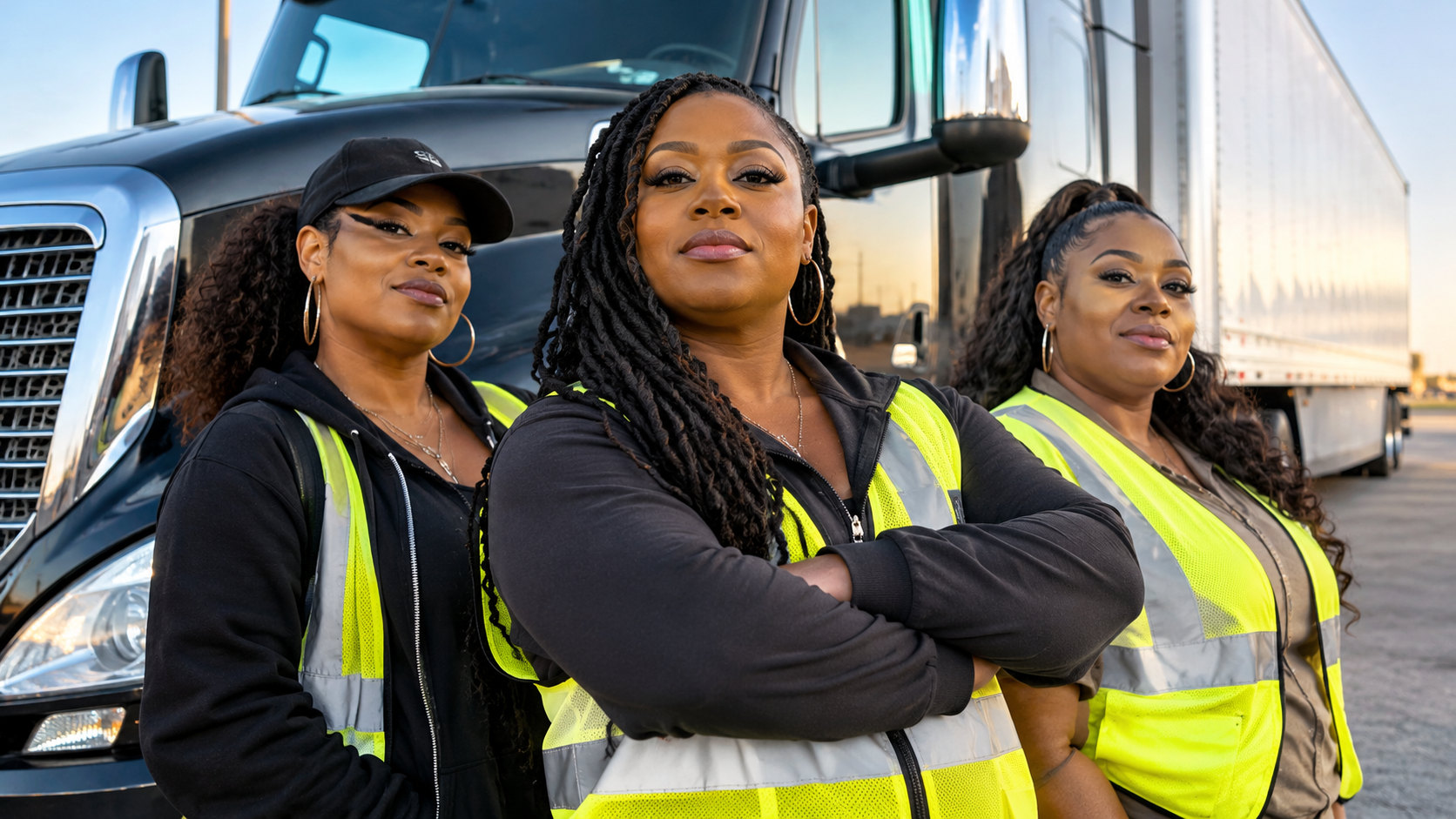
Black women are getting behind the wheels of 18-wheelers, hauling freight across the country, and finding new ways to make money in an industry that has traditionally been dominated by men. But while trucking can offer a solid paycheck without a four-year college degree, the road comes with expenses and safety concerns that don’t always make it into the recruitment pitch.
We’re talking about long nights in unfamiliar parking lots, limited access to clean bathrooms, sexual harassment, expensive equipment, and the financial risks of owning a truck.
The money is real, but so are the problems.
According to the U.S. Bureau of Labor Statistics, heavy and tractor-trailer truck drivers earned a median annual wage of $58,640 in May 2025. The highest-paid 10% earned more than $79,380.
Those numbers make trucking attractive to workers looking for careers outside traditional office jobs.
However, women remain a small part of the workforce. In March 2026, the American Trucking Associations reported that women accounted for approximately 8.1% of truck drivers, despite representing nearly half of America’s labor force.
Black women are among the drivers challenging that imbalance.


Made to order and shipped to your door.
Sharae Moore, founder of S.H.E. Trucking, has spent years helping women navigate the industry through mentorship, training resources, and community support.
In an interview with Uber Freight, Moore explained how trucking changed her life.
“Trucking saved me. It’s an escape,” she said.
But she also acknowledged the challenges women face on the road.
“As a woman, you can’t just park anywhere.”
Getting started requires money before the first paycheck arrives.
Most tractor-trailer drivers need a Class A commercial driver’s license, commonly called a CDL. Federal regulations require new applicants to complete qualifying entry-level training through an approved provider.
Training isn’t necessarily cheap.
For example, Pima Community College lists an estimated $4,094 cost for its 2026–27 Class A program. Cuyahoga Community College lists $5,800 in tuition, plus a $200 administrative fee.
Some trucking companies offer tuition assistance or company-sponsored training. However, applicants should examine repayment requirements and employment commitments before accepting an offer.
And getting licensed doesn’t mean every trucking job pays the same.
Company drivers generally operate equipment provided by their employers and receive mileage-based wages, salaries, or other compensation. Many trucking companies cover truck maintenance, fuel, and insurance.
Owner-operators, meanwhile, operate their own trucking businesses. They may collect more revenue from each load, but they’re also responsible for expenses that can eat through those earnings.
The American Transportation Research Institute’s 2026 report found the trucking industry’s average operating cost reached $2.336 per mile in 2025.
That figure represents an industry benchmark, not an individual driver’s take-home earnings. It highlights the importance of accounting for fuel, repairs, equipment, insurance, and other operating costs.
The ownership dream can become even riskier through certain lease-purchase agreements.
A federal Truck Leasing Task Force report issued in January 2025 found that some arrangements left drivers facing significant debt, unfair deductions, and limited opportunities to actually own their trucks.
But financial risk is only part of the story.
A 2024 study from the American Transportation Research Institute identified harassment, discrimination, inadequate parking, and limited restroom access among the biggest challenges for women truck drivers.
Approximately one in six female drivers surveyed reported experiencing harassment or discrimination daily.
The research covered women across racial backgrounds, rather than Black women specifically. Still, it provides important context for concerns raised by women working in a heavily male-dominated industry.
Finding somewhere safe to park is another serious problem.
According to the study, more than 41% of surveyed women drivers experienced limited truck parking daily, while nearly 40% reported daily difficulties accessing restrooms.
That means something as basic as stopping to use the bathroom can become a logistical problem.
Drivers cannot simply pull an 18-wheeler into any parking lot. Trucks require designated spaces, and those locations are not always available when drivers need them.
Federal hours-of-service regulations generally limit property-carrying drivers to 11 hours of driving within a 14-hour duty window after 10 consecutive hours off duty.
When safe parking is unavailable, finding somewhere to rest becomes another source of stress.
For women traveling alone, the concerns can be especially serious when truck stops lack adequate lighting, security, or accessible bathrooms.
The Department of Transportation has acknowledged that inadequate parking can push drivers toward unsafe locations, including highway shoulders and entrance ramps.
Meanwhile, spending days or weeks away from home can complicate childcare, family relationships, medical appointments, and everyday responsibilities.
Organizations including S.H.E. Trucking have worked to make the industry more welcoming, while federal advisory groups have recommended better harassment protections, training standards, mentorship, and safer facilities.
For Black women considering the career, the opportunity is worth examining, but so is the fine print.
Understanding employment contracts, comparing company-driver and owner-operator earnings, researching training programs, and evaluating safety policies can help prevent expensive mistakes.
Black women are proving they can handle the big rigs and build careers in trucking. But making room for them requires more than recruitment promises. It requires safe parking, proper facilities, fair compensation, and a workplace where women can earn their money without putting their dignity or personal safety on the line.
