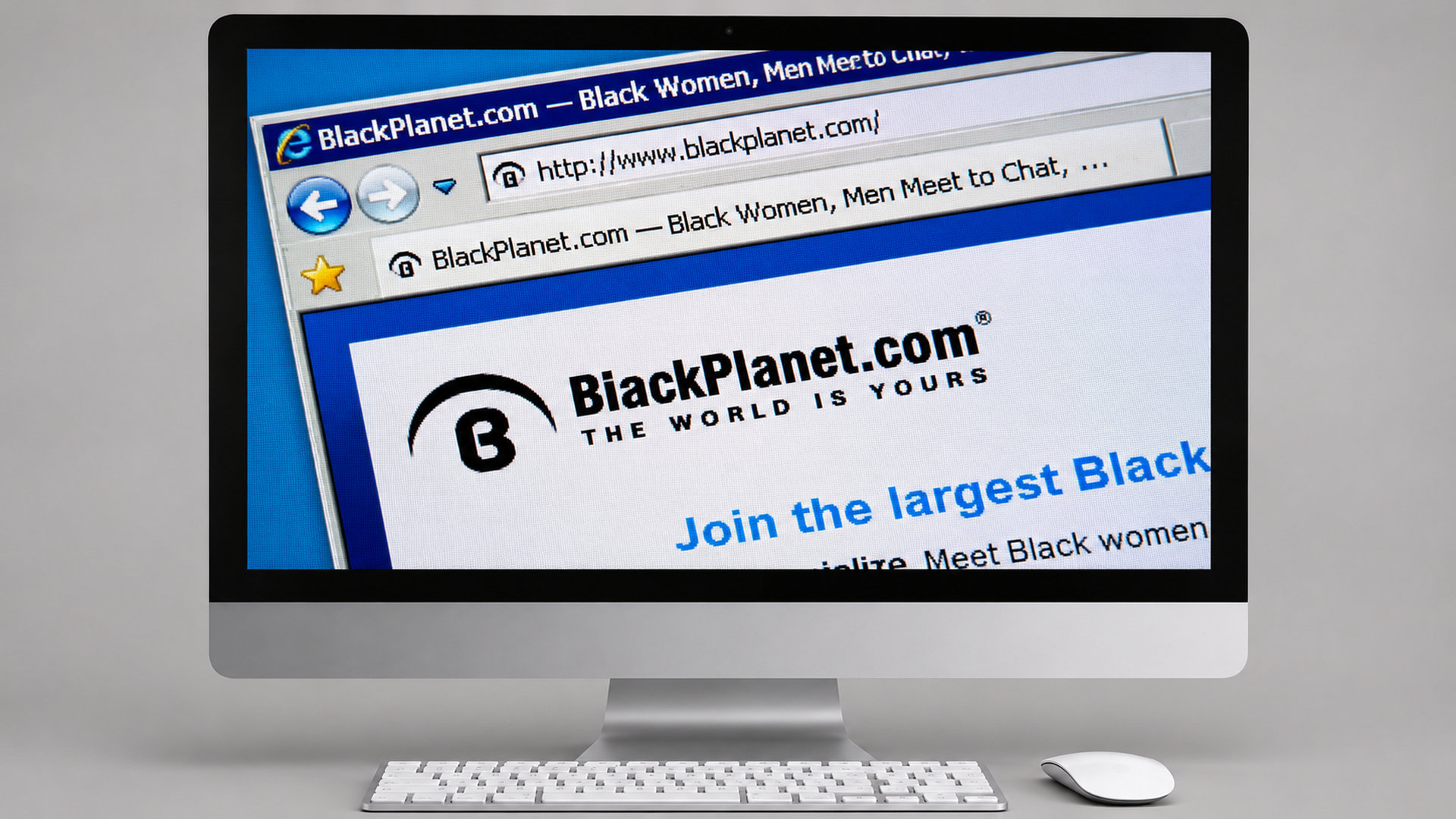
Before Instagram models, Tinder matches, and fire emojis underneath somebody’s selfie, Black folks were logging onto BlackPlanet, signing guestbooks, sending private messages, and hoping the person with the cute profile picture lived somewhere nearby.
For a generation of Black millennials and Gen Xers, BlackPlanet was the ultimate online hangout. You could flirt, make friends, debate hip-hop, promote your business, and potentially find your future spouse without leaving the house.
Long before social media became a multibillion-dollar industry, BlackPlanet demonstrated just how powerful Black digital communities could be.
Launched in September 1999 by technology entrepreneurs Omar Wasow and Benjamin Sun through Community Connect, BlackPlanet arrived four years before MySpace and five years before Facebook. Its creators recognized an opportunity to build an online community centered on the experiences and interests of Black people.
At the time, disparities in internet access between Black and white households contributed to skepticism about whether a website targeting African Americans could attract a substantial audience. BlackPlanet quickly proved the doubters wrong.
According to The Atlantic, approximately one million people joined within its first year. By May 2001, the platform had surpassed 2.5 million registered users.
Getting your BlackPlanet page together was practically an assignment. Users customized their profiles with colorful backgrounds, flashing graphics, photographs, and music selections that reflected their personalities. Some even learned HTML coding to make their pages stand out.


Made to order and shipped to your door.
Your profile was your introduction before anybody decided whether you were worth getting to know. Having a good picture certainly helped, but a creative page and a solid music selection could also earn you some attention.
And plenty of people were logging on specifically to find romance.
BlackPlanet introduced a dedicated dating service in 2001. While basic membership was free, users could pay approximately $20 per month to access additional matchmaking features, including finding out who had expressed romantic interest in them.
This was an era when meeting somebody online still carried a certain stigma. BlackPlanet helped normalize digital dating within the Black community, and some of those virtual connections turned into marriages.
In a 2004 Stanford Magazine feature, Maryland resident Qabbani Goodwyn revealed that he had met his wife through the website. At the time, the publication reported that thousands of couples who connected on BlackPlanet were dating offline, with dozens having tied the knot.
“Being able to date from a pool of people who share your experiences is much more likely to produce success,” Wasow explained.
However, BlackPlanet’s influence extended far beyond finding somebody to spend Friday night with.
Its discussion boards became gathering places for conversations about racism, relationships, entertainment, and Black identity. Members could network professionally, search for employment, and connect with people across the country.
By January 2007, BlackPlanet’s homepage reported 15.8 million registered users, according to research published in the Journal of Computer-Mediated Communication.
Even MySpace co-founder Tom Anderson acknowledged studying BlackPlanet and other early networking websites before developing his own platform.
But as MySpace, Facebook, and Twitter attracted larger audiences, BlackPlanet faced increasingly stiff competition.
In April 2008, Radio One, now known as Urban One, acquired BlackPlanet’s parent company, Community Connect, for $38 million. The acquisition also included AsianAvenue and MiGente.
The industry’s transition toward mobile-first social media, combined with better-funded competitors and technical limitations, contributed to BlackPlanet losing its cultural dominance.
Still, BlackPlanet wasn’t completely forgotten.
In February 2019, Solange Knowles sent longtime users down memory lane when she utilized the platform to promote her fourth studio album, “When I Get Home.” Her takeover featured photographs, artistic visuals, and promotional content, briefly putting the pioneering website back at the center of cultural conversations.
BlackPlanet’s legacy can be seen in everything from Black Twitter to modern dating apps. It demonstrated the commercial potential of Black online audiences while giving everyday people the tools to express themselves, build communities, and establish relationships beyond their neighborhoods.
Today’s singles might have dating algorithms, Instagram DMs, and endless options at their fingertips, but BlackPlanet had an entire generation shooting their shot with nothing more than a screen name, a profile picture, and a little game.
And for some lucky couples, that was all it took.