

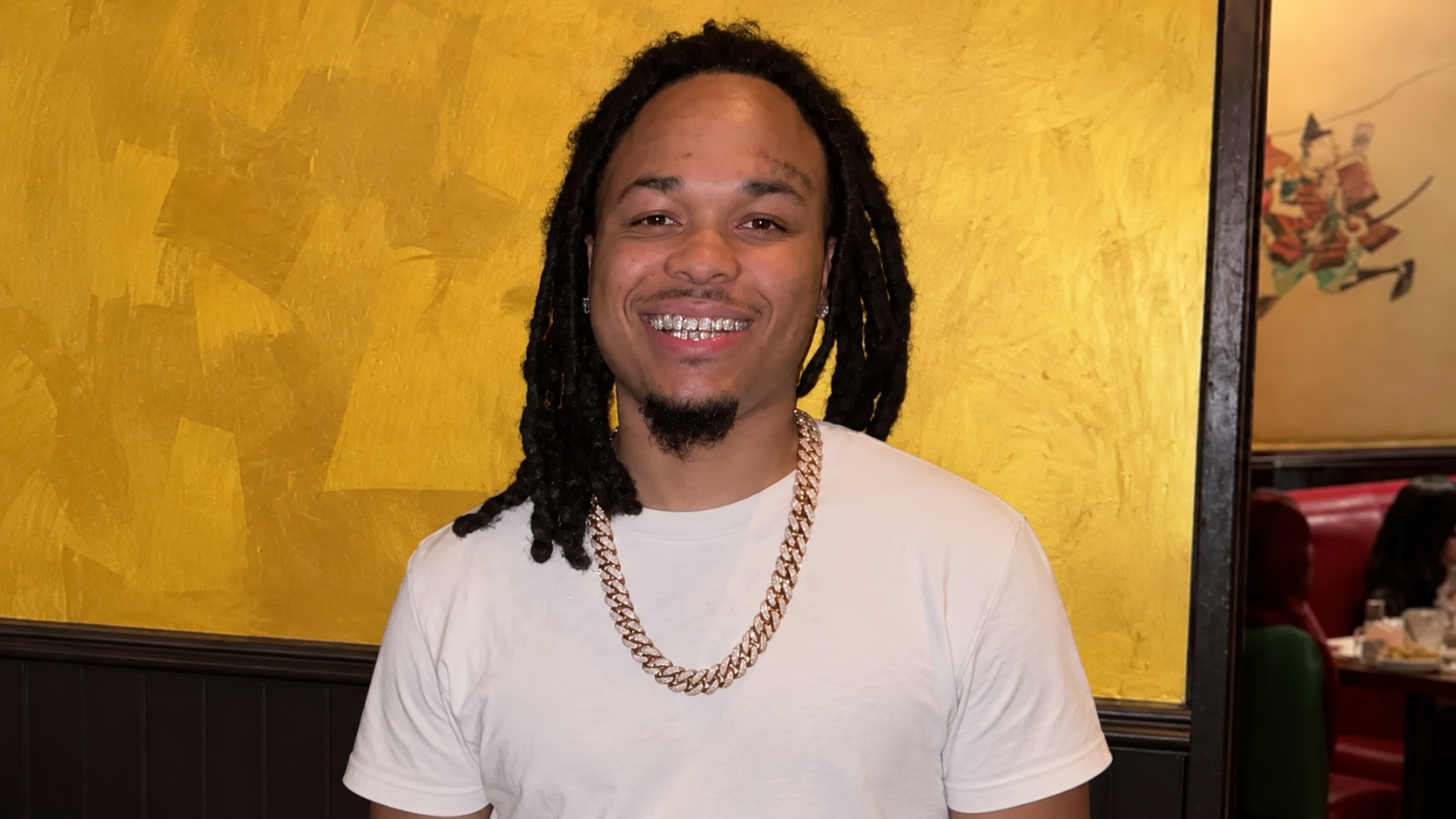
The horrifying killing of Chicago rapper BloodHound Q50 has triggered another conversation beyond the violence captured on surveillance footage: why didn’t the Tesla move?
Video
BloodHound Q50, whose real name was Mikquale Cooper, was killed September 13 at a BP gas station in Chicago’s Fuller Park neighborhood. Chicago police said the 22-year-old was sitting in the driver’s seat when multiple attackers opened fire after arriving in two vehicles. Cooper suffered gunshot wounds to his chest and shoulder and was pronounced dead. No arrests had been announced as of September 16.But as surveillance footage spread online, the Tesla safety features inside Cooper’s vehicle quickly became part of the conversation.
A woman who said she was inside the Tesla claimed online that she had noticed suspicious people around the vehicle while Cooper was inside the gas station. According to her account, which was highlighted by the New York Post, she told Cooper to hurry and leave when he returned, but said the vehicle would not immediately move because his seat belt was not fastened while he attempted to put it in Drive. That explanation has not been independently confirmed by Chicago police or Tesla.
That distinction matters because Tesla’s own documentation paints a more complicated picture than either side of the viral debate.
Tesla’s current Model 3 manual says the vehicle can automatically shift into Park at low speeds when the driver unbuckles the seat belt or opens the driver’s door. Tesla describes the system as protection against a vehicle rolling away when it believes the driver may be leaving. The company instructs drivers to remove any charging cable, buckle the seat belt, and close the door before shifting out of Park.
However, that does not mean every Tesla universally becomes impossible to drive simply because the driver is unbuckled.
One major distinction involves Auto Shift out of Park. On equipped vehicles with that feature enabled, Tesla says the car automatically selects Drive or Reverse after the brake is pressed only when the driver’s door is closed and the driver’s seat belt is buckled. A driver can otherwise manually select a drive mode through the vehicle’s controls, depending on the model and configuration.
Older Model 3 documentation also confirms that the vehicle can automatically shift into Park at low speeds when a driver unbuckles or opens the door.
That nuance has fueled a wave of real-world demonstrations online. Former Division I athlete and professional dunker Tony Crosby II posted a video titled “Tesla Start Up Faster Than Any Gas Car & No Pin or Keycard is Required,” demonstrating his own vehicle as the debate spread. Other circulating demonstrations have similarly focused on whether an unbuckled driver, open door, or security setting can delay departure, although vehicle year, model, software version, and individual settings can change the result.
Comedian Lil Duval also jumped into the conversation with a video aimed at younger Tesla drivers. In the clip, Duval urged “YNs” to learn how to use Tesla’s remote vehicle features, suggesting that having the car come to them could potentially throw off someone watching or waiting for them.
Then there is PIN to Drive, another feature drawing attention.
Tesla confirms PIN to Drive is optional. When activated, the owner creates a four-digit code that must be entered before the vehicle can be driven. If it is not enabled, there is no PIN requirement.
Authentication can also stop a Tesla from driving. According to Tesla, a Model 3 may display “Drive Disabled – Requires Authentication” when it cannot detect an authorized key. That can happen when a phone key is not detected or the authentication period after using a key card has expired.
A connected charging cable provides another hard stop. Tesla says a Model 3 will not shift out of Park when a charging cable is connected, and the vehicle may also remain in Park if it cannot determine whether a charging cable is plugged in.
The online conversation has even reached Tesla’s remote-driving technology.
Tesla’s Actually Smart Summon can move certain equipped vehicles toward the owner’s phone location while nobody is sitting behind the wheel. But Tesla does not describe Summon as an emergency escape feature. Availability depends on hardware, software, configuration, and purchased options, and Tesla specifically tells users to monitor the vehicle and maintain a clear line of sight. Summon can also stop if a door opens, someone interacts with the controls, connectivity is lost, or the vehicle detects a safety risk.
So the viral question has no clean one-size-fits-all answer.
Tesla absolutely has systems capable of keeping a vehicle in Park or automatically returning it to Park. An enabled PIN to Drive, failed key authentication, a connected charger, and certain combinations involving an open door or unbuckled seat belt can affect whether and how a Tesla moves. Auto Shift specifically requires a buckled driver and closed doors.
What has not been established is whether any of those features prevented Cooper from escaping.
Investigators have not publicly identified a Tesla malfunction or safety feature as a factor in his death. Without knowing the exact model year, software configuration, vehicle settings, authentication status, and what appeared on the touchscreen in those final seconds, declaring that “the Tesla got him killed” goes beyond the available evidence.
What is clear is that a brutal killing has unexpectedly turned into a crash course in how modern cars make decisions for their drivers. In an ordinary situation, features designed to prevent rollaways, theft, or unauthorized driving can provide additional protection.
After BloodHound Q50’s murder, however, people are asking a much darker question: what happens when every second counts?
