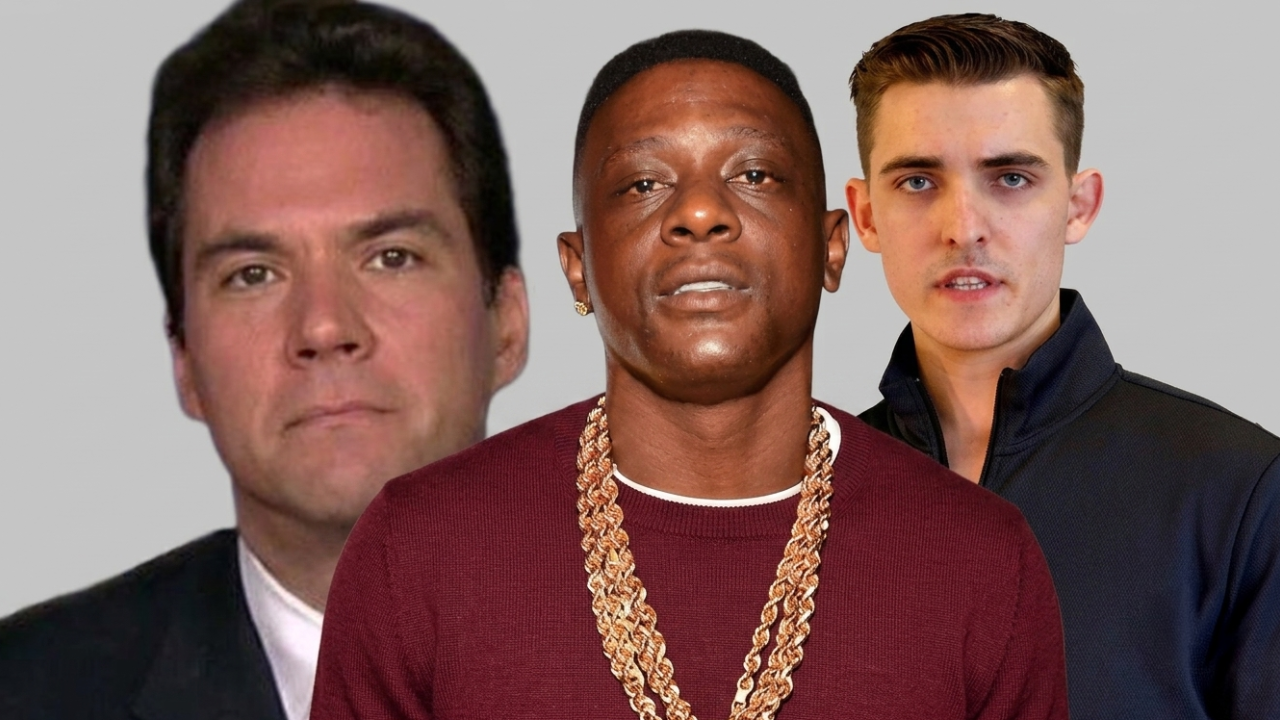
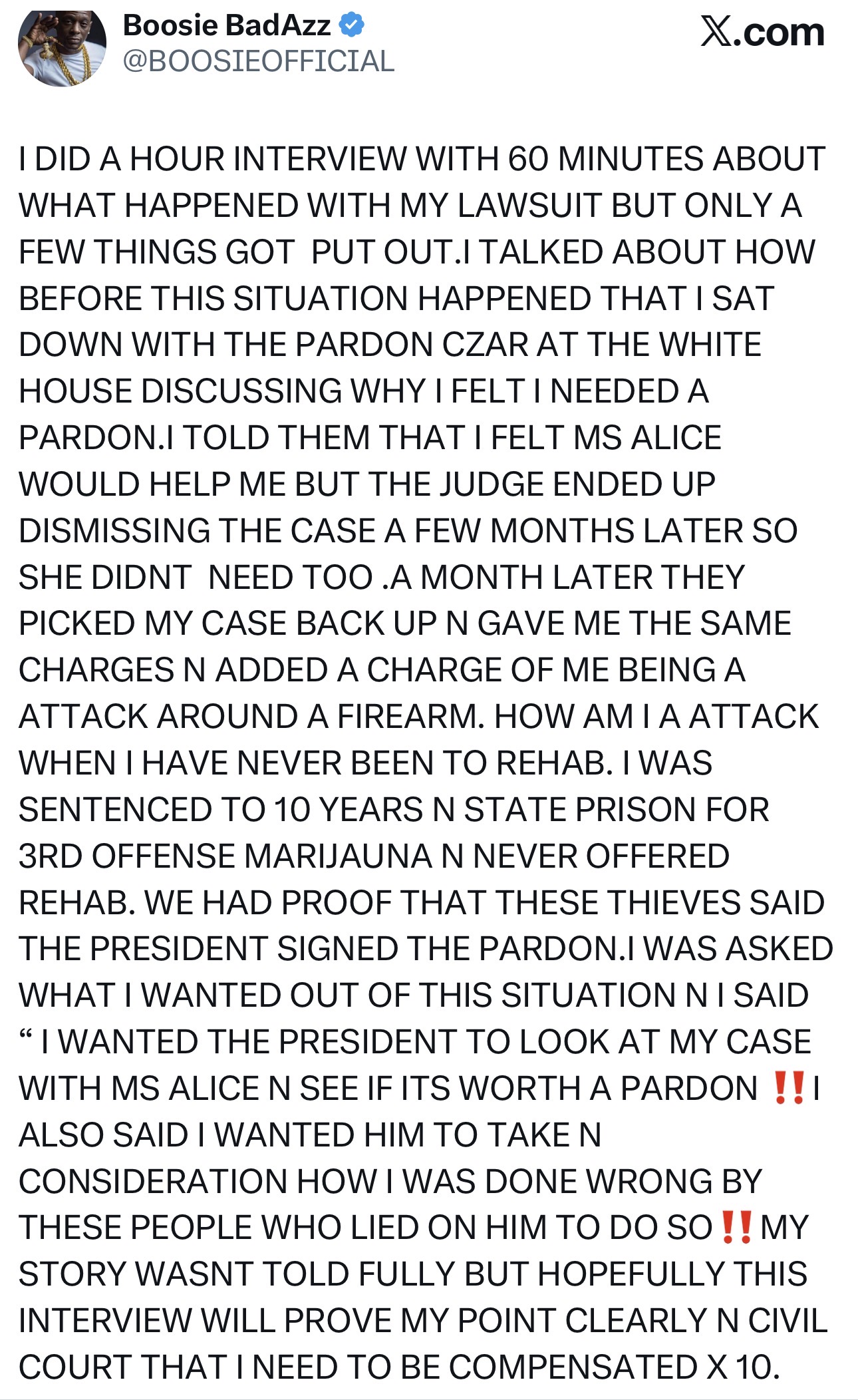
Boosie BadAzz says the 60 Minutes segment that aired Sunday night used only a fraction of what he told them. The Baton Rouge rapper, born Torrence Hatch Jr., posted on X that he sat for an hour with CBS about his lawsuit and that most of it was cut, including his account of meeting the pardon czar at the White House and explaining in person why he believed he needed a pardon.
The segment that did air featured Lesley Stahl walking through his lawsuit against Jacob Wohl and Jack Burkman of JM Burkman & Associates. Boosie says he paid the two men $600,000 on the understanding that they would secure him a presidential pardon through influencers and people close to Trump. He told Stahl that was what he was led to believe, that bringing the money meant getting the pardon, and that he assumed this was simply how the process worked. He said he was paying them and expected them to make it happen.
Stahl showed text messages the two allegedly sent Boosie’s attorney, Meghan Blanco. One included a list of people said to have endorsed his pardon, among them Laura Loomer, Erika Kirk and House Speaker Mike Johnson. The messages also indicated his application would be routed through Trump’s executive assistant, who would supposedly hand it to Trump directly. Boosie’s contract allowed him to request $300,000 back if no pardon came through by close of business on January 31, 2026. None came. The firm refused to refund anything and denied sending the messages about the people they claimed to know, saying in a July statement that no agreement to return half the fee was ever actually made.
What Boosie says got left out is the part that explains why any of this mattered to him. In his post he describes sitting down with the pardon czar at the White House and telling them he believed Alice Marie Johnson would help him. Johnson is the woman Trump appointed as pardon czar after commuting her own life sentence for a nonviolent drug offense. Boosie says a judge dismissed his case a few months after that meeting, so he no longer needed her help, and then prosecutors picked the case back up and filed the same charges plus one more.
The court record tracks with the shape of that story. A federal judge in San Diego dismissed his felony gun possession case in July 2024 after a Ninth Circuit ruling found it unconstitutional to bar people convicted of nonviolent drug offenses from owning firearms. Boosie left the courthouse in tears and celebrated publicly. Prosecutors refiled less than two weeks later, and the new indictment carried two counts: possession of a firearm as a convicted felon, and knowingly possessing a firearm while using controlled substances. A larger Ninth Circuit panel then reversed the ruling that had freed him.
That second count is what he is arguing about. The charge treats him as a drug user who had a gun, and his response is that he has never been to rehab and was never offered it. He points to his Louisiana marijuana conviction, saying he was sentenced to 10 years in state prison on a third marijuana offense and that nobody ever sent him to treatment. His argument is that the system was willing to call him an addict when it helped build a case against him and never once treated him like one when treatment was the option on the table.
He also says his side had proof that the men who took his money told people Trump had signed the pardon. Asked during the interview what he actually wanted out of all this, Boosie says he answered that he wanted Trump to look at his case alongside Johnson and decide whether it was worth a pardon, and to take into account that he was wronged by people who lied on Trump’s name to do it.
There was never a pardon. Boosie pleaded guilty in August 2025, saying at the time that he was tired of fighting. In January 2026 he was sentenced to time served, three years of supervised release and 300 hours of community service. He avoided prison, and he is out $600,000.
He closed his post saying his story was not told fully and that he hopes the interview proves his point in civil court, where he says he needs to be compensated ten times over.