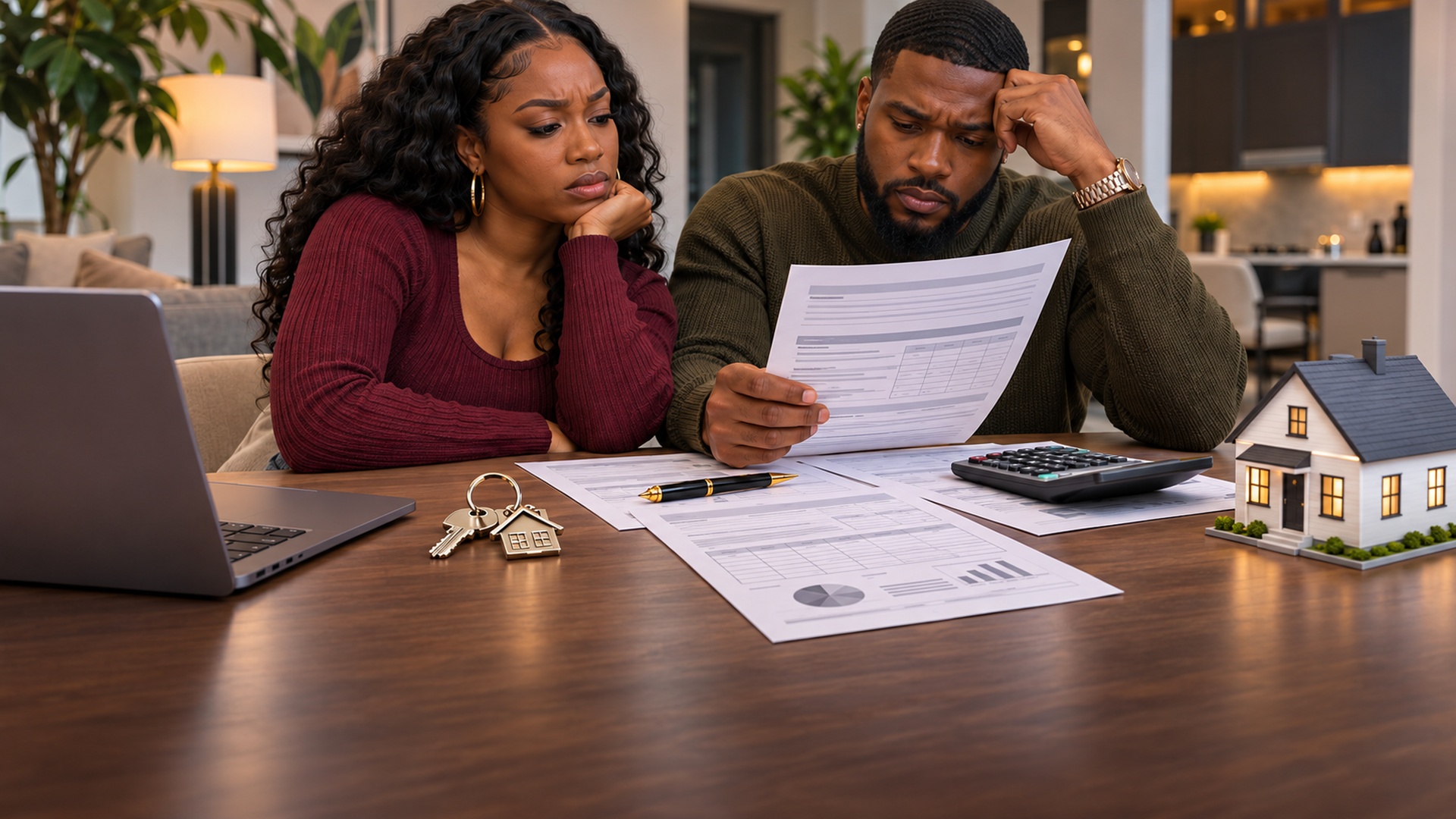
Buying a house with someone you’re not married to could leave you fighting over hundreds of thousands of dollars, struggling to qualify for another mortgage, or paying for a property you no longer live in if the relationship ends.
Between expensive rent and the cost of homeownership, combining two incomes to purchase a property makes financial sense for many couples. You can potentially qualify for a larger mortgage, split household expenses, and start building equity instead of paying somebody else’s mortgage.
But while couples spend months discussing neighborhoods, kitchen renovations, and how many bedrooms they want, some never have a serious conversation about what happens to the house if they break up.
Marriage comes with legal protections and an established process for dividing assets through divorce. Unmarried couples generally don’t have access to that same process. Instead, resolving property disputes often depends on how the home is titled, existing contracts, and state property laws.
Family law attorney Jenny Bradley of Cary, North Carolina, addressed the importance of protecting both partners in an interview with Homes.com.
“Buying a home together can absolutely be a positive step, but it works best when couples treat it as both a legal and relationship decision,” Bradley said.
One of the biggest mistakes couples make when buying a house is failing to understand the difference between the mortgage loan and the deed.


Made to order and shipped to your door.
The mortgage loan determines who is responsible for repaying the borrowed money. The deed establishes who legally owns the property. Having your name on the loan doesn’t automatically mean you own part of the house.
Imagine helping your partner purchase a $400,000 home. You contribute $30,000 toward the down payment, help cover the closing costs, and spend the next five years paying half the mortgage. However, your partner is the only person listed on the deed.
When the relationship ends, you discover that your financial contributions don’t automatically entitle you to a percentage of the property. Depending on state law and any agreements between you, recovering that money could require a costly legal battle.
Even when both names are on the deed, things can get complicated.
Let’s say you contribute $50,000 toward a down payment while your partner contributes $10,000. You agree to equal ownership without establishing how your original investments will be reimbursed if the house is sold.
Several years later, the property is worth $500,000, and you still owe $310,000 on the mortgage. Assuming $30,000 in selling expenses, you’re left with $160,000 to divide.
Under a simple equal split, each person would receive $80,000. Your partner walks away with the same amount despite contributing $40,000 less toward the original purchase.
Had you established an agreement requiring each person’s initial down payment to be returned before splitting the remaining proceeds, you could receive $100,000 while your partner receives $60,000.
That’s a $20,000 difference in what you personally walk away with, depending on how the arrangement was structured.
Of course, actual settlements can also account for mortgage contributions, improvements and other expenses.
Then there’s the financial damage that can happen when one person decides they’re done paying.
When two people sign a joint mortgage loan, both are generally responsible for the entire debt. The bank doesn’t care that your boyfriend promised to cover half or that your girlfriend moved out after an argument.
If your monthly mortgage payment is $3,200 and your former partner stops contributing their $1,600, you’re still responsible for making sure the full payment reaches the lender.
Missed payments could damage both borrowers’ credit, making it harder to qualify for another home, finance a vehicle, or secure favorable interest rates.
You could break up in January, move into your own apartment in February, and still be financially tied to your ex years later.
Even if your former partner agrees to continue paying the mortgage, having that debt on your credit report could affect your ability to qualify for another property. A future lender may count the existing mortgage when calculating how much additional debt you can afford, although certain lending guidelines allow exceptions.
Buying a house together also creates an uncomfortable situation when one person wants to keep the property.
Suppose you secured a $350,000 mortgage at a 3% interest rate. After breaking up, your partner agrees to buy you out but needs to refinance the remaining balance into their name alone.
If their new mortgage carries a 6.5% interest rate, the monthly principal and interest payment on a new 30-year loan of the same amount would increase from approximately $1,476 to $2,212.
That’s nearly $9,000 more annually, before property taxes and homeowners insurance.
Your former partner might not earn enough to qualify for that new loan, especially if both incomes were necessary to purchase the house originally.
Some mortgages allow an assumption, which can let one borrower retain the existing loan terms while taking over responsibility. However, eligibility varies, and the departing borrower needs confirmation that the lender has released them from the debt.
Simply signing paperwork giving your ex ownership of the house won’t accomplish that.
What happens when neither person can afford to buy the other out, but one refuses to sell?
Depending on state law, a property owner may need to file what’s known as a partition lawsuit. This asks a court to resolve the ownership dispute, potentially by ordering the property sold.
Now you’re paying attorney fees, potentially dealing with court costs and spending months or longer trying to separate yourself financially from a relationship that’s already over.
Another risk that unmarried couples frequently overlook is what happens if one partner dies.
Imagine spending 15 years building a life with someone, only to discover after their death that their children or relatives have inherited their share of your house.
Unmarried partners generally don’t have the automatic inheritance rights available to legal spouses.
One way to address that risk is through joint tenancy with right of survivorship, which generally allows the surviving owner to receive the deceased owner’s interest automatically.
Another ownership arrangement, called tenancy in common, allows each person to hold a specific percentage of the property. Those percentages don’t have to be equal, and each person’s ownership interest can generally be passed through their estate.
If your partner owns 50% of the house as a tenant in common and dies without an appropriate estate plan, you could end up sharing ownership with their legal heirs.
Those relatives might want to sell the property or receive payment for their inherited share, even if you’ve lived there for decades.
Life insurance can also provide financial protection by helping a surviving partner cover mortgage payments or purchase an inherited ownership interest.
Before buying a house with someone you’re not married to, consider having a real estate attorney prepare a co-ownership or cohabitation agreement.
The agreement should establish who owns what percentage of the property, how down payments will be reimbursed, who covers repairs, how mortgage payments are divided, and what happens when someone wants out.
It should also address whether money spent renovating the property increases someone’s ownership interest, how a buyout will be calculated, how long a partner has to refinance, and whether the house must be listed for sale if refinancing fails.
Discuss what happens if somebody loses their job, becomes disabled, files for bankruptcy, or can no longer contribute financially. One owner’s financial problems could complicate the other owner’s ability to keep or sell the property.
Couples should also keep documentation of their contributions, including bank transfers, receipts, renovation expenses, and mortgage payments. Years later, those records could become important evidence in a financial dispute.
There is nothing wrong with buying property with someone you love before getting married. Plenty of couples successfully build wealth together without ever walking down the aisle.
But you shouldn’t have to lose your life savings because you lost your relationship.