

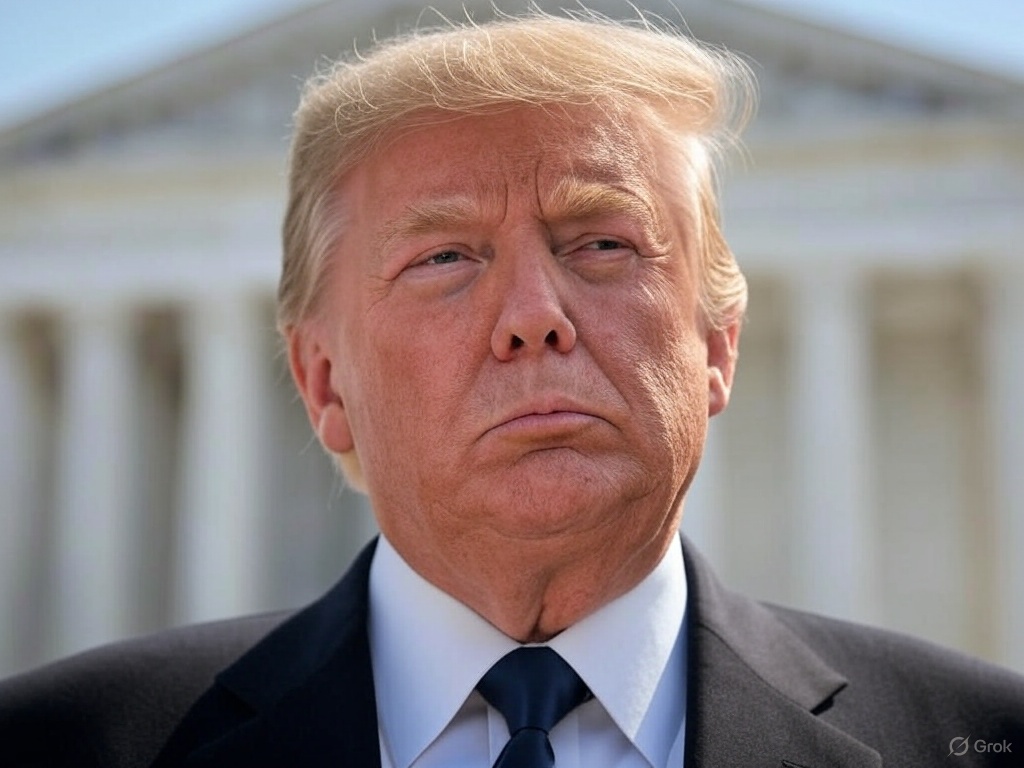
Iran war powers returned to the center of the national debate Thursday after the House narrowly approved a measure directing Trump to end United States military operations against Iran unless Congress authorizes the conflict. The resolution passed 214 to 208 as Republican Representatives Tom Barrett of Michigan, Brian Fitzpatrick of Pennsylvania, Warren Davidson of Ohio, and Thomas Massie of Kentucky joined Democrats in supporting it.
The measure, known as House Concurrent Resolution 89, was introduced by Democratic Representative Pramila Jayapal of Washington. Per the official resolution published by the United States Government Publishing Office, it directs Trump to remove United States forces from hostilities with Iran under Section 5(c) of the War Powers Resolution. The language allows military personnel needed to defend the United States, its forces, or American allies from an imminent attack to remain involved.
This is the second House vote in less than two months seeking to restrict Trump’s ability to continue the war without lawmakers formally approving it. According to the United States Senate’s official roll call records, the House passed a similar resolution in June, and the Senate approved that measure 50 to 48 on June 23. Military operations continued after those votes, setting up another confrontation over whether Iran war powers belong primarily to Congress or the executive branch.
Jayapal argued that lawmakers have not received an acceptable explanation of how the conflict ends. According to the Associated Press, she described the war as having “no clear mission, no strategy, no end goal.” The narrow margin suggests that most Republican lawmakers remain behind Trump’s military campaign, but the four defections were enough to help Democrats pass another public rebuke through the Republican controlled chamber.
The resolution’s legal impact remains fiercely disputed. Concurrent resolutions are not sent to Trump for a signature or veto and generally do not carry the force of law. Supporters of the measure argue that war powers legislation occupies a different legal category. In a statement following the June vote, the Democratic staff of the House Foreign Affairs Committee maintained that the resolution was binding because Congress acted under the War Powers Resolution.
That disagreement traces back to constitutional requirements governing legislation. The Legal Information Institute at Cornell Law School notes that measures requiring agreement from both chambers generally must be presented for approval or veto before taking legal effect. Some lawmakers contend that courts have not definitively resolved how that requirement applies when Congress invokes the specific withdrawal mechanism written into the War Powers Resolution. That uncertainty means the Iran war powers vote carries immediate political weight even as its ability to force military withdrawal remains contested.
The Senate scheduled its own test for Thursday morning. According to the official United States Senate Daily Press Gallery, senators were expected to vote at approximately 11:30 a.m. Eastern on whether to discharge Senate Joint Resolution 180 from the Foreign Relations Committee. Democratic Senator Chris Van Hollen of Maryland is leading that effort. As of 11:47 a.m. Eastern on July 23, the Senate’s official roll call page had not posted a result.
The new votes arrive as the conflict has moved into another dangerous phase. An interim truce intended to stop the fighting effectively collapsed roughly two weeks before the House vote. American forces resumed nightly airstrikes, while Iran fired at United States bases in neighboring countries. Trump also threatened “major military punishment” after Houthi forces attacked two Saudi oil tankers in the Red Sea.
The fighting is also producing visible human and financial costs. House Foreign Affairs Committee Chairman Brian Mast read the names of 18 American service members killed since the war began. It was also reported that the remains of four service members arrived at Dover Air Force Base on Wednesday. Defense Secretary Pete Hegseth told senators that United States spending on the conflict had reached $37.5 billion.
Energy markets and household expenses are becoming part of the political pressure surrounding Iran war powers as well. According to the Associated Press, continued attacks and disputes over the Strait of Hormuz have disrupted a route that is critical to global energy shipments. The renewed fighting has contributed to higher fuel prices as the United States approaches the 2026 midterm elections. The same report cited July polling from The Washington Post and Ipsos showing that most Americans disapproved of Trump’s handling of Iran and that relatively few believed the war had been worth fighting.
Congress passed the War Powers Resolution in 1973 in an effort to limit prolonged military action undertaken without legislative approval. According to the federal statute published by the Legal Information Institute, the use of United States forces in hostilities is supposed to rest on a declaration of war, specific congressional authorization, or a national emergency created by an attack against the country, its territories, or its armed forces. The continuing dispute is not simply about Iran. It is also about whether those limits can still restrain a modern military campaign once it is underway.
The House resolution does not immediately stop the strikes, but the repeated votes, Republican defections, rising financial burden, and growing number of American casualties are turning the Iran war powers fight into a larger test of how long Trump can sustain military action without clear and enforceable approval from Congress.
