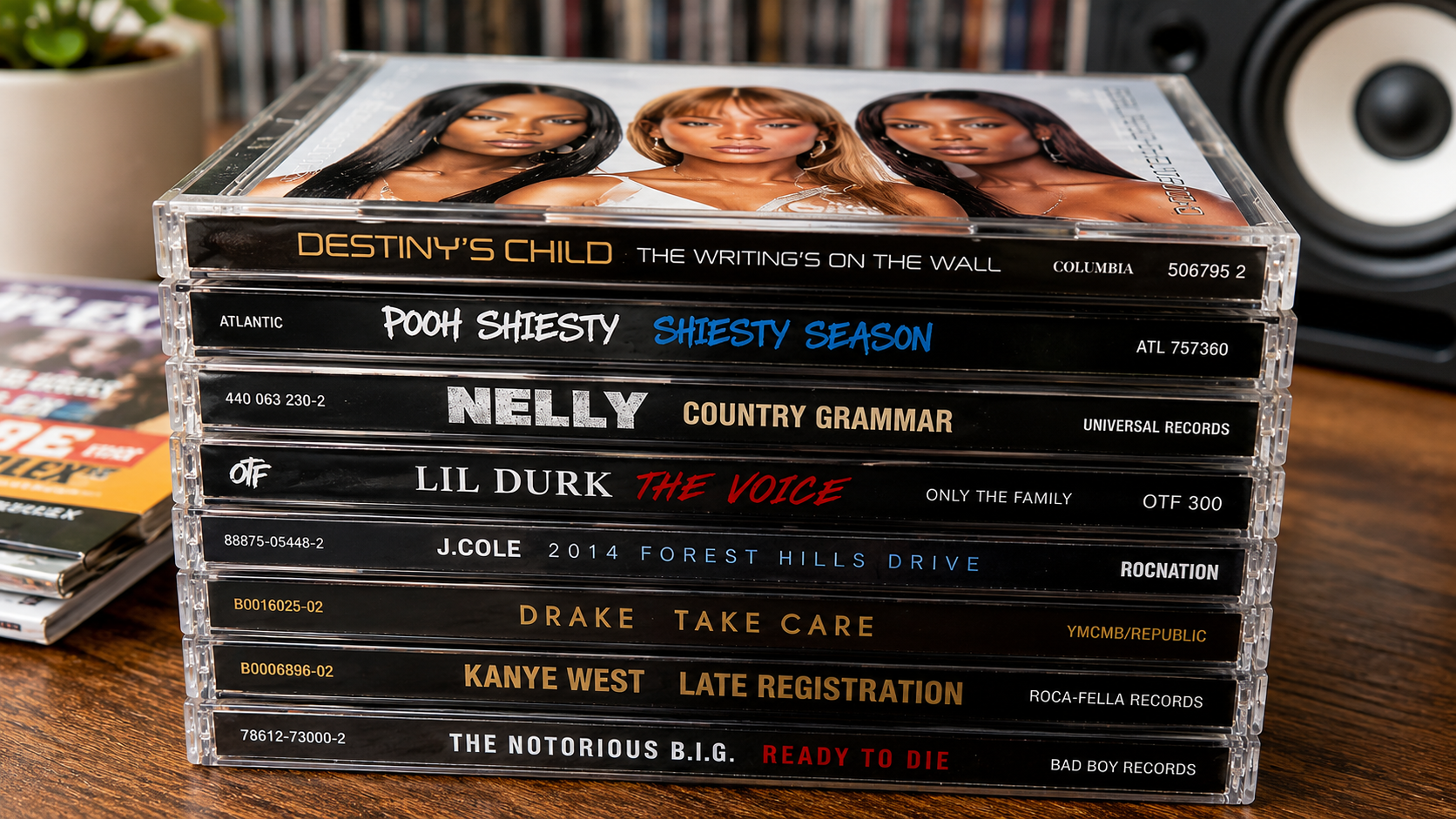
For years, the CD looked like another piece of technology the internet had permanently sent to the retirement home. Now, music fans are apparently digging through that retirement home and bringing the discs back with them. The CD sales comeback is becoming difficult to dismiss, with new 2026 industry data showing one of physical music’s most written-off formats suddenly posting eye-popping growth. The Recording Industry Association of America reported Tuesday that U.S. recorded music revenue reached nearly $6 billion during the first half of 2026, up 6.9 percent compared with the same period last year. Streaming remains firmly in control, accounting for 82 percent of recorded music revenue and generating roughly $4.9 billion. Still, the much smaller physical business is moving fast enough to demand attention.
Physical music revenue jumped 25.9 percent to approximately $731.5 million during the first six months of the year. Vinyl revenue climbed 17.7 percent to $543.8 million. But CDs delivered the surprise. According to the RIAA, CD revenue soared 58.6 percent year over year to $171.1 million, while reported CD units increased 45.7 percent.
In other words, vinyl may still be the fashionable face of physical music, but CDs just walked back into the conversation without asking permission.
RIAA CEO Mitch Glazier credited the broader industry’s growth to stronger relationships between artists, fans, and music platforms.
“As U.S. music revenues continue to grow across formats, labels are strengthening connections between artists, fans, and the platforms delivering creative work,” Glazier said. “That partnership is driving engagement in new and expanding ways to create opportunities that will lift up the entire music community for years to come.”
The numbers also raise a bigger question: Why would people start buying CDs again when tens of millions of songs are already sitting inside the phone in their pocket?
Part of the answer may be that streaming solved convenience so completely that physical music can now serve an entirely different purpose. A CD does not have to beat Spotify or Apple Music at instant access. Instead, it can function as merchandise, memorabilia, artwork, and proof of fandom all at once. For listeners who care deeply about an artist, pressing play may no longer be the only way they want to participate.
That distinction becomes especially clear inside K-pop fandom. Luminate reported earlier this year that K-pop artists occupied seven of the top 10 U.S. CD albums of 2025. Those releases frequently arrive in multiple versions containing photo books, alternate artwork, and other collectibles, giving fans reasons to buy physical copies even when they primarily listen digitally. Luminate also found that 27 percent of U.S. K-pop fans surveyed said they purchased a CD in 2025, compared with 19 percent of general music listeners.
And K-pop is not carrying the entire comeback by itself. Luminate’s 2026 midyear research found U.S. CD sales were still up 6.7 percent after removing K-pop sales from its measurement. The company also reported that younger listeners are heavily represented among highly engaged music fans, with Gen Z and millennials accounting for a combined 63 percent of engagement-based superfans.
That matters because the modern CD buyer does not necessarily look like someone trying to recreate 1998.
For younger consumers, CDs can be retro objects from an era they barely experienced firsthand. Jewel cases, liner notes, booklets, and dedicated players offer something streaming cannot reproduce on a touchscreen. Meanwhile, older listeners already know the ritual: buying an album, opening the packaging, reading the credits, and keeping it on a shelf long after release week disappears from the timeline.
Price may help too. Vinyl has built a huge collector market, but new records can be expensive. CDs generally offer a cheaper route into physical collecting while taking up far less space. That makes buying several albums, editions, or artists easier for fans who want something tangible without turning their apartment into a record warehouse.
Then there is ownership itself.
Streaming provides access, but access and possession are not identical. Catalogs can change, licensing agreements can expire, and individual releases can move between services. A physical disc sitting in someone’s collection does not depend on a monthly subscription or a platform continuing to carry it. That permanence can feel increasingly valuable in a world where entertainment has steadily shifted from things consumers own to services they rent.
Interestingly, streaming is not being replaced as CDs rise. It is growing alongside them. Luminate previously found that physical music buyers are actually more likely than average listeners to pay for music streaming subscriptions, suggesting these formats can complement each other instead of competing for the same job.
That may be the biggest twist in the CD comeback.
Consumers are not necessarily choosing between the convenience of streaming and the physical experience of owning music. Increasingly, the most invested fans appear willing to do both. They can stream an album on the way to work, buy the collectible edition afterward, and place it on a shelf when they get home.
The CD may never return to the position it held before streaming reshaped the industry, and streaming remains overwhelmingly larger by revenue. Still, a 58.6 percent revenue jump is a reminder that supposedly obsolete formats can find new lives when the reason for buying them changes.
The future of music may be digital. Apparently, that does not mean fans are ready to give up something they can hold.