

Understanding why starts with how net worth gets calculated in the first place. A financial analysis of celebrity wealth found that for stars with major real estate holdings or private company stakes, the gap between reported net worth and true liquidity often exceeds 50 percent. That means more than half of a celebrity’s public net worth figure may not be accessible as cash without a significant financial event, like a sale, a public offering, or a buyout. A mansion might be worth 30 million dollars on paper, but selling it takes months, generates transaction costs, and often closes below the listed price.
A private stake in a growing company might be valued at hundreds of millions, but that value only becomes real cash when an actual buyer steps in.
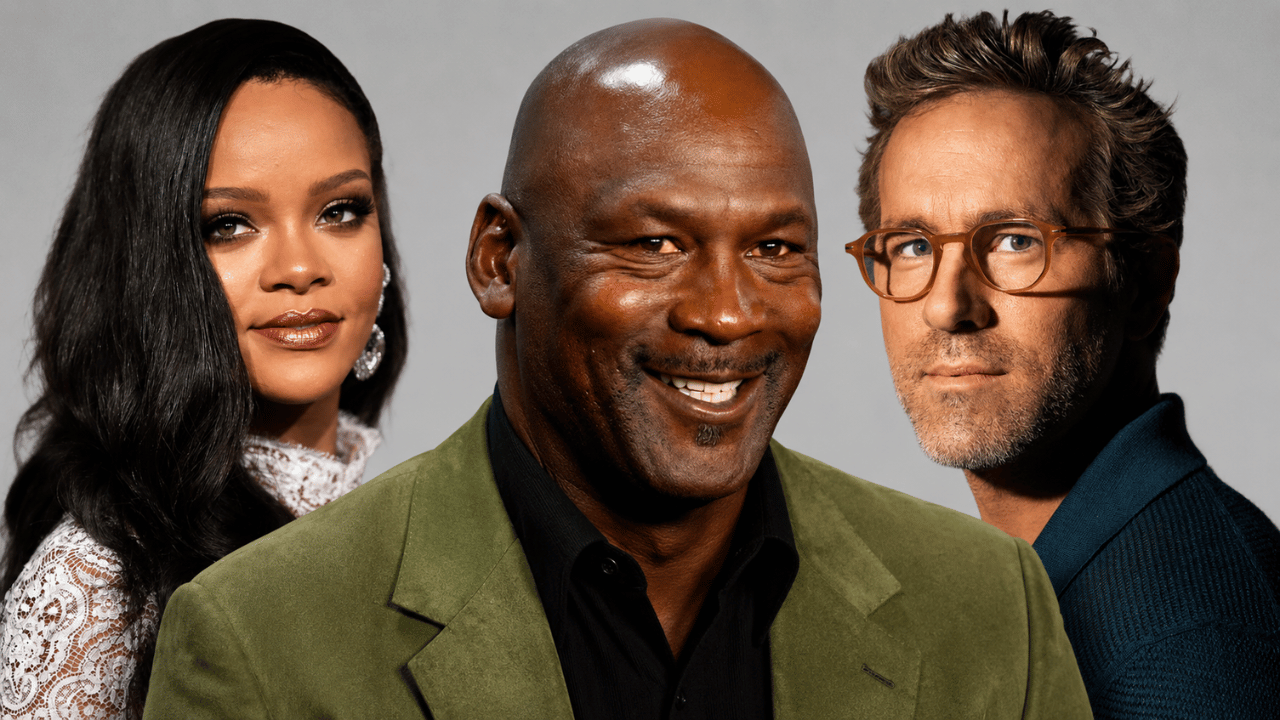
Rihanna’s Fenty Beauty stake is a useful example of exactly this dynamic. Her 50 percent ownership in the company has been valued anywhere between $1 and $2.8 billion depending on the market and the year, and that valuation is the primary driver behind her estimated $1.4 billion net worth. But that value has stayed largely on paper. LVMH, which owns the other half, has been exploring a sale of its stake, with reports this year showing Jay-Z’s investment firm in active talks to acquire it. Until a transaction like that actually closes, Rihanna’s stake remains a number on a spreadsheet rather than money she can move freely. It is real wealth, but it is not liquid wealth, and those are two very different things.
The same pattern shows up constantly across entertainment and sports. Michael Jordan’s Jordan Brand partnership with Nike reportedly generates more than $100 million annually in royalties, a massive and reliable income stream, yet a large share of Jordan’s overall net worth still sits in real estate and long term holdings rather than cash sitting idle. Athletes and entertainers who build wealth through ownership stakes, brand equity, or property are choosing long term growth over short term accessibility, and that tradeoff is intentional. Holding onto appreciating assets usually builds more wealth over time than converting everything to cash early, but it also means the headline number and the checking account balance can look nothing alike.
Liquidity events, the moments when illiquid wealth actually converts into cash, tend to be what separate celebrities who can access their fortune from those who technically have one on paper but cannot use it. When a private company gets sold or a brand gets acquired, the payout can be enormous. Ryan Reynolds is a strong example outside the traditional celebrity mold. His Aviation American Gin was acquired by Diageo in a deal reportedly worth up to $610 million, and his Mint Mobile was acquired by T-Mobile for up to $1.35 billion in cash and stock. Before those deals closed, both brands represented paper wealth built on equity and brand value. After the deals closed, that value became real, spendable money. The size of the number did not change nearly as much as its accessibility did.
Taxes complicate the picture even further. When a celebrity sells an asset or exits a business, capital gains taxes typically claim between 20 and 37 percent of the profit depending on income level and how long the asset was held. That means a celebrity whose net worth includes $200 million in appreciated assets might only walk away with $130 to $160 million after taxes if they sold everything at once. Pre tax valuations get repeated in headlines constantly, but they rarely reflect what actually lands in someone’s account once the deal is done.
None of this means illiquid wealth is somehow less real or less impressive. Real estate, brand equity, and private company stakes are often where the biggest long term gains actually happen, and plenty of financially savvy celebrities choose to stay illiquid on purpose because holding onto growing assets outperforms cashing out early. The point is simply that a net worth headline was never designed to describe someone’s checking account. It describes total value across everything they own, whether that value is sitting in a house, a brand, or a company that has not sold yet. The next time a celebrity’s fortune gets reduced to a single number, the more interesting question is not how big that number is, but how much of it they could actually spend tomorrow if they needed to.
