

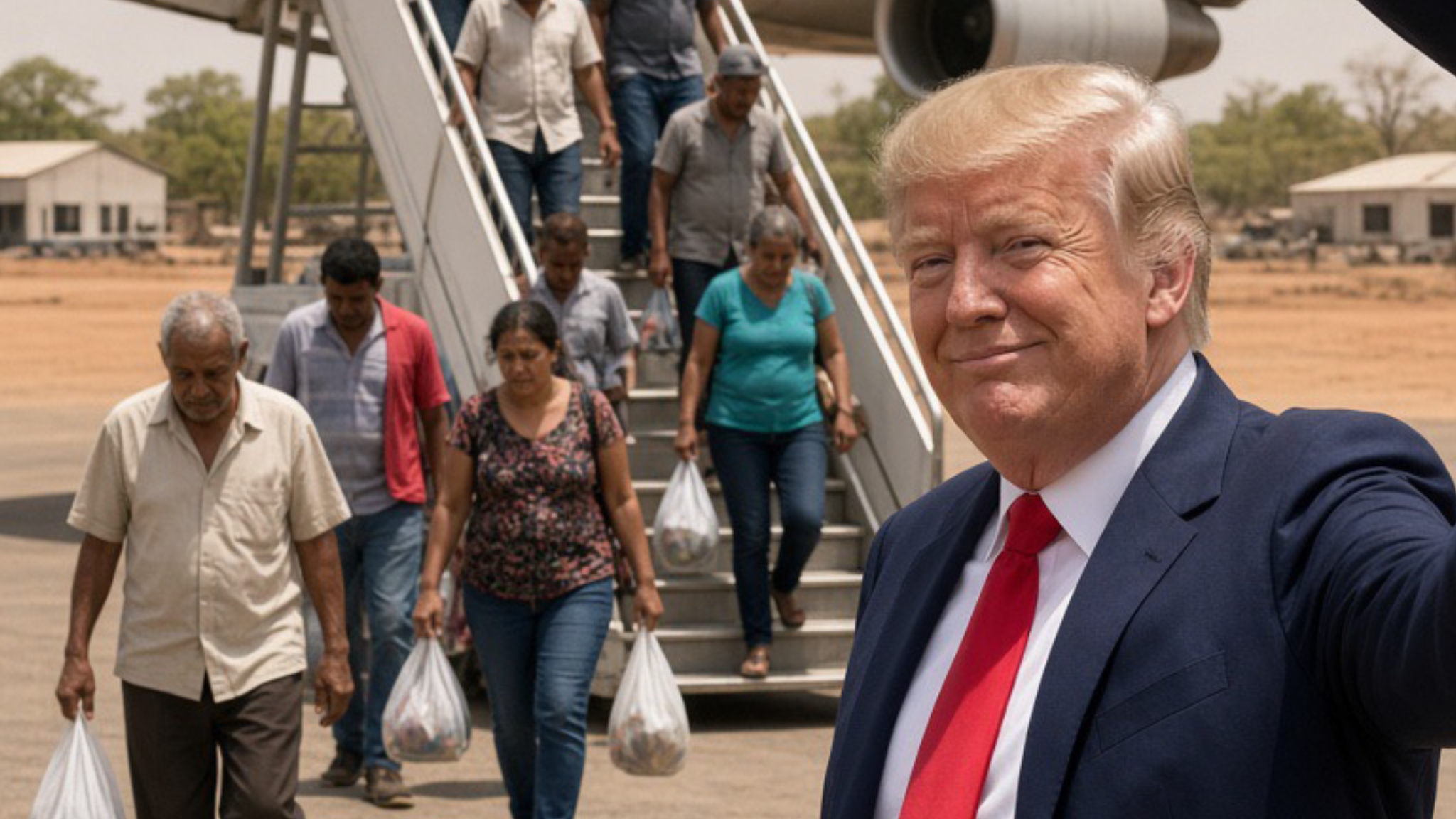
The Trump administration says the Central African Republic is a safe place to send deported Cubans, even though the U.S. State Department tells Americans not to travel there for any reason.
The Department of Homeland Security told ABC News this week that a group of Latin American men deported there this summer, including Cubans who lived in South Florida, “were deported to a safe country.” The agency added, “We are applying the law as written.”
The State Department sees the Central African Republic differently. The country is rated Level 4, “Do Not Travel,” the highest warning the U.S. government issues, because of unrest, violent crime, kidnapping, landmines, health risks, and terrorism.
Yasmany Moreno de Armas, 32, is one of the men caught in that contradiction. He left Cuba on a raft and reached the Florida Keys in 2016, when the policy known as “wet foot, dry foot” still let Cubans who made it to U.S. soil stay and pursue legal residency. He built a life in Miami with his family and worked at a meatpacking plant. Immigration agents detained him in May 2025 while he was trying to get legal status through asylum after other options were denied.
After more than a year of being moved between detention centers, he was put on a plane he assumed was just another transfer. Hours into the flight, he says, an officer told him the plane was headed to Africa. He thought it was a joke.
“This is a country that has been at war for 50 years, where the United States does not allow its American citizens to enter,” Moreno de Armas told ABC News. “And every day we are at risk.”
The Tampa Bay Times reported that he was one of 36 deportees flown to Bangui, the capital. The group is staying at a modest hotel with no passports and no word on what comes next. Moreno de Armas told the paper that local authorities said they may have to leave within 90 days, and he started an online fundraiser to help the group start over.
Aristides Fernandez Garcia, 37, another Cuban who lived in South Florida, spent seven months in immigration detention before landing in the Central African Republic. “We don’t have a visa here or any papers; we are illegal,” he told ABC News. We’re prisoners here; they won’t let us leave or go anywhere.” He summed it up simply: “I feel kidnapped.
Another Cuban deportee, Daniel Fuentes, who is transgender, told the Tampa Bay Times that security guards warned her it is not safe for her to go outside.
What is happening to these men is called a third-country deportation. Instead of sending someone back to the country where they are a citizen, the government sends them to a different country where they have no citizenship and no personal ties. Federal law allows it in certain cases, such as when a person could face persecution at home or when their home country will not take them back. South Florida immigration attorney Morella Aguado told CBS News Miami the administration has been using these removals for migrants who cannot be returned to their home countries, including Cubans.
Immigration lawyers say these removals used to be rare. The administration now has deals with nearly three dozen countries, including Liberia, Ghana, Sierra Leone and the Central African Republic. Human Rights First, an immigrant rights group, estimates that roughly 25,000 people have been deported to third countries and says the U.S. has spent nearly $50 million on these deals.
Aguado says the men sent to Africa were never ordered there by an immigration judge. “There is no legal basis for sending him to Africa,” she said of Fernandez Garcia.
DHS has defended the flights. The agency told the Tampa Bay Times it is using “all lawful options” to carry out what it called “the largest deportation operation in history.” It added, “When an individual is no longer in ICE custody, then ICE will no longer be responsible for them. This is common sense.”
The International Organization for Migration, a United Nations agency, says it is providing food, health care and counseling to deportees who choose to stay in the Central African Republic.
There may be movement on the men’s cases. In Instagram videos posted earlier this month, Moreno de Armas and Fernandez Garcia said judges had reopened their cases, and their lawyers had shared good news. That has not been independently confirmed. For now, both men remain in Bangui.
