

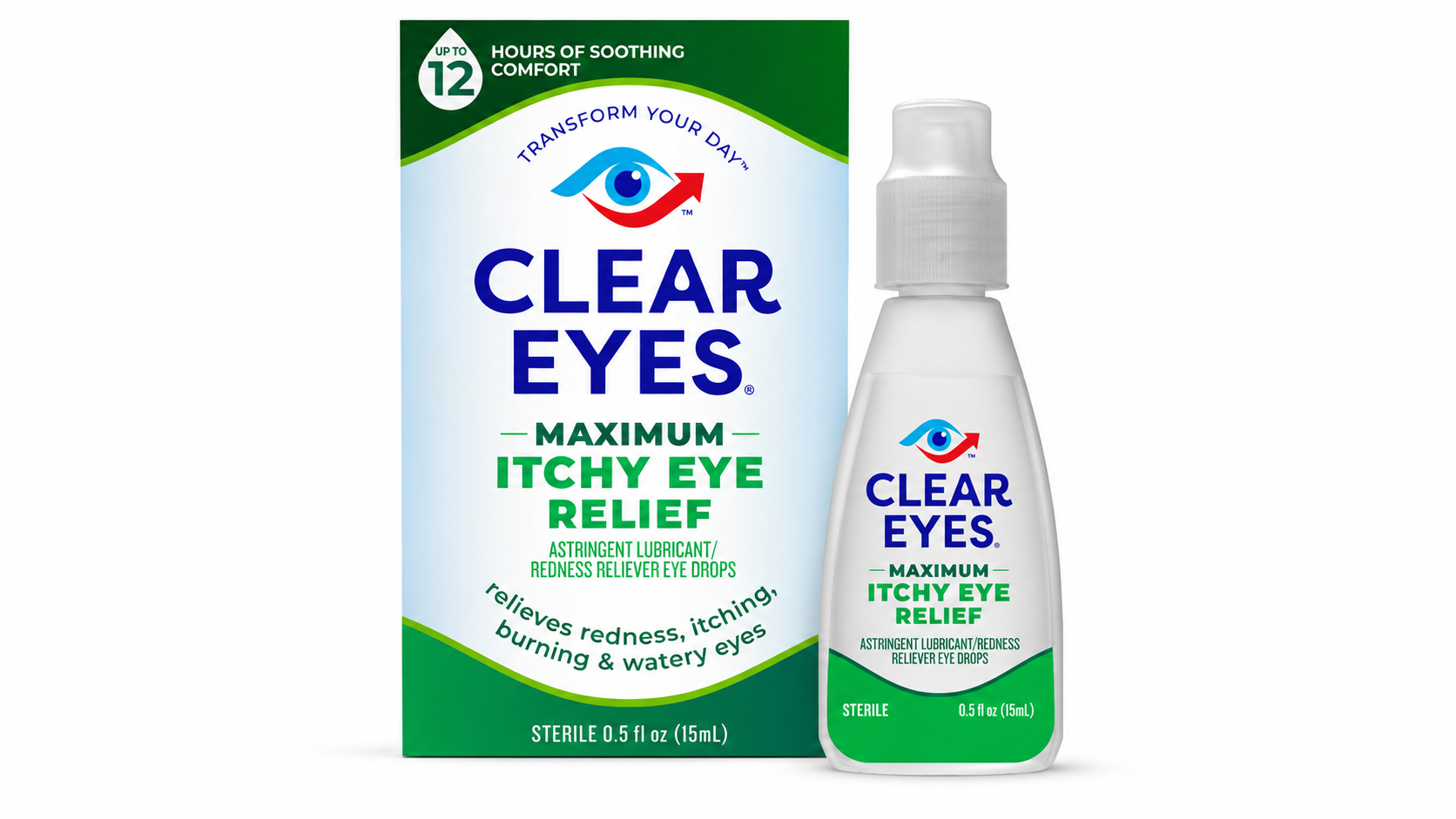
A familiar eye care product found in medicine cabinets across the country is being pulled after federal regulators flagged concerns that one lot may not be sterile. According to the U.S. Food and Drug Administration recall database and reporting from CBS News, Prestige Consumer Healthcare initiated a nationwide Clear Eyes recall involving nearly 40,000 bottles of Clear Eyes Maximum Itchy Eye Relief. The company began the recall on July 29, 2026, because of a “lack of assurance of sterility.”
The FDA notice identifies the affected product as a 15 mL bottle of Maximum Itchy Eye Relief distributed nationwide. According to CBS News, the specific Clear Eyes recall involves lot code 2552A, with an expiration date of September 30, 2027, and recall number D 0766 2026. The FDA notice states, “The recall is due to potential contamination.” Those identifiers matter because the available recall information points to a specific lot rather than every Clear Eyes product currently on the market.
Clear Eyes describes Maximum Itchy Eye Relief as a product designed to relieve redness, dryness, burning, and irritation. According to the Clear Eyes product information page, consumers are directed to place one or two drops into an affected eye up to four times daily. The federal DailyMed listing for the product identifies glycerin, naphazoline hydrochloride, and zinc sulfate as its active ingredients and instructs users not to allow the bottle tip to touch surfaces in order to avoid contamination.
The FDA classified the Clear Eyes recall as Class II. Under the agency’s official recall definitions, that designation applies when use of or exposure to a product may cause “temporary or medically reversible adverse health consequences” or when the probability of serious adverse consequences is considered remote. Class II sits below the agency’s Class I category, which is reserved for recalls carrying a reasonable probability of serious health consequences or death.
Sterility takes on particular importance with products placed directly into the eyes. On its updated consumer guidance page, the FDA explains that eye drops pose a heightened potential for harm because medications applied to the eye bypass some of the body’s natural defenses. The agency says ophthalmic drugs are required to be sterile to reduce infection risks. The FDA also notes that previous safety actions involving eye drops have been connected to contamination concerns, infections, partial vision loss, and blindness.
The current Clear Eyes recall also arrives after other eye care products have faced similar scrutiny. In 2019, the FDA posted a nationwide recall from Altaire Pharmaceuticals covering multiple over-the-counter ophthalmic products sold through several companies, including Prestige. Clear Eyes Redness Relief was among the products listed. The FDA said the action was initiated because of concerns involving quality assurance controls at the manufacturing facility, which the agency determined created a lack of sterility assurance.
A much broader warning followed in 2023. According to the FDA’s October 2023 eye drop safety warning, regulators advised consumers not to purchase and to immediately stop using 26 over-the-counter eye drop products marketed under brands including CVS Health, Leader, Rugby, Rite Aid, Target Up & Up and Velocity Pharma. FDA investigators reported insanitary conditions at the manufacturing facility along with positive bacterial findings from environmental samples taken in critical production areas. The agency warned at the time that infections connected to contaminated products could potentially lead to partial vision loss or blindness.
The 2023 eye drop crisis also included an outbreak associated with artificial tears manufactured by Global Pharma Healthcare. According to the Centers for Disease Control and Prevention, public health officials identified 81 patients across 18 states with a rare, extensively drug-resistant strain of Pseudomonas aeruginosa as of May 15, 2023. EzriCare Artificial Tears was the most commonly reported artificial tears product among affected patients, while federal officials also advised against using Delsam Pharma Artificial Tears and Delsam Pharma Artificial Ointment. The CDC said FDA testing found bacterial contamination in unopened EzriCare bottles, while laboratory testing linked bacteria found in opened bottles to the outbreak strain.
Sterility concerns continued into 2024. The FDA published a recall announcement from Brassica Pharma involving Equate Lubricant Eye Ointment, Equate Stye Lubricant Eye Ointment, CVS Health Lubricant Eye Ointment and another lubricant ointment product. The company recalled the products after an FDA inspection raised concerns about sterility assurance at its facility. Brassica said at the time that it had not received reports of adverse events related to that recall through February 16, 2024.
Those earlier cases do not mean the current Clear Eyes recall carries the same circumstances, organisms, or level of risk. The FDA has classified the latest action as Class II, and the public notice cited by CBS identifies potential contamination and a lack of sterility assurance rather than describing the kind of documented outbreak seen in the 2023 EzriCare investigation. According to CBS News, Prestige Consumer Healthcare had not immediately responded to its request for comment when the outlet published its report on August 20.
For consumers checking bottles at home, the most important details in the current Clear Eyes recall remain straightforward: Maximum Itchy Eye Relief in the 15 mL size, lot code 2552A, expiration date September 30, 2027, and recall number D 0766 2026. The FDA’s broader eye drop guidance advises consumers to speak with a health care professional about safe and effective treatment for eye conditions and to report medication-related adverse events or quality problems through the agency’s MedWatch program.
