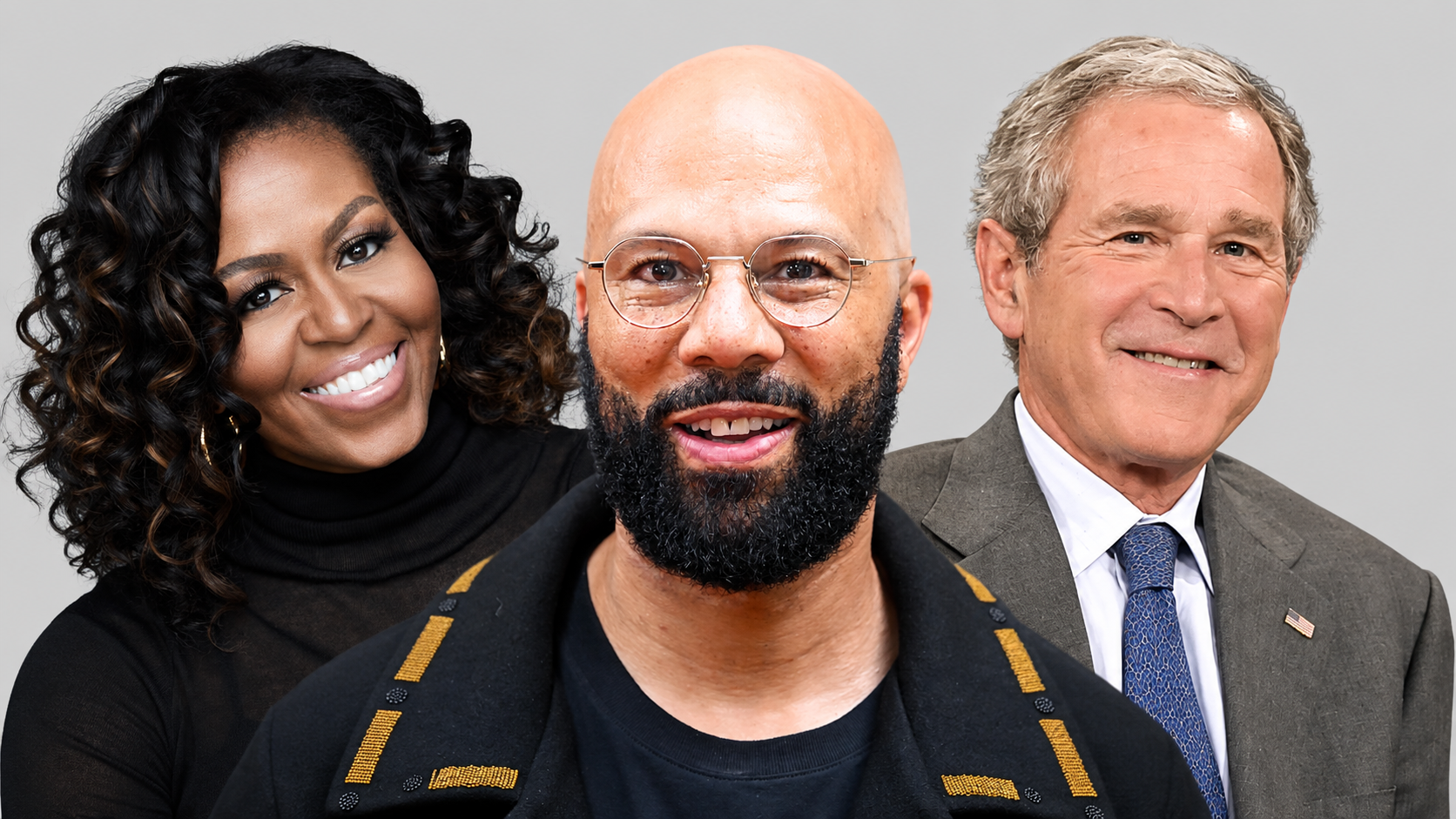
Common says Michelle Obama’s respectful treatment of George W. Bush changed the way he viewed the former U.S. leader.
The Chicago artist said watching Michelle Obama interact respectfully with George W. Bush changed how he viewed the former U.S. leader. During the August 5 episode of “Scene Stealers”, Common told host John Feitelberg that Michelle’s treatment of Bush at the Obama Presidential Center opening caused him to see Bush differently. The conversation begins near the 8:23 mark, as Common was discussing a shift in his personal perception, not claiming that Bush’s record had somehow changed.That distinction matters because Common had already acknowledged how unusual it felt for him to show Bush any public appreciation. During a separate appearance on “Late Night with Seth Meyers”, Common said, “George Bush wasn’t the person I normally would shout out, but I did though.” He went on to recognize Bush for attending the ceremony. The quote makes his starting position clear. Bush was not someone Common traditionally viewed with admiration, which is precisely why Michelle’s example stood out to him.
Common was not reacting to a carefully edited clip from home. He performed at the June 18 grand opening ceremony in Chicago, where Barack Obama, Michelle Obama, Bush, Bill Clinton and Joe Biden gathered for the occasion. Common was able to observe the interactions in the room while participating in an event carrying enormous significance for his hometown. His comments came from that firsthand experience.
Michelle’s own remarks that day provide necessary context for what Common witnessed. She told the audience, “Failing to see the humanity in all people puts us all on a slippery slope.” She later added that “being a decent human being is a choice.” Those statements were not directed solely at Bush. They were part of a broader argument about citizenship, equality and refusing to strip people of their humanity, even during a deeply divided political moment.
Michelle’s warmth toward Bush was also not created for the opening ceremony. The two have maintained an openly affectionate friendship for years despite belonging to different political parties. According to CBS News, Bush brought Michelle a tin of Altoids at the Chicago event, continuing a running joke that became public when he passed her a mint during John McCain’s 2018 funeral. Their exchanges have repeatedly gone viral because they show an ease that feels almost impossible in the current political climate.
That history explains what Common may have found moving, but it does not erase why the comments immediately feel more complicated than a story about kindness. Bush is not simply a retired public figure whose personality was misunderstood. He led the country during the invasion of Iraq, the federal response to Hurricane Katrina and a period that permanently shaped how millions of people judge American leadership. A pleasant interaction with Michelle cannot be separated from that record, even when Common is only speaking about his own feelings.
An official Government Accountability Office review states that American and coalition forces invaded Iraq in March 2003 and that the weapons of mass destruction stockpiles used to justify the war were not found. The same review documented failures in postwar planning and security. For people who associate Bush with the human and financial cost of that invasion, a warmer personal image will not outweigh the consequences of the decisions made by his administration.
Hurricane Katrina carries an equally serious weight, particularly for Black Americans who watched the disaster unfold in New Orleans. The bipartisan congressional committee that investigated the preparation and response titled its final report “A Failure of Initiative.” That title reflected the scale of the government breakdown examined by lawmakers. Any public reassessment of Bush, even one rooted in a private emotional response, will inevitably collide with memories of that failure.
This is where the comments deserve precision instead of outrage driven exaggeration. Common did not announce that he supported Bush’s policies. He did not ask the public to forgive an administration or forget its history. He said Michelle’s conduct changed how he saw the person. That is a narrower statement, though it still carries political meaning because powerful people are often rehabilitated through personality long before their records receive honest reconsideration.
Michelle appears able to separate her personal affection for Bush from her political values. Common saw that separation up close and admitted that it affected him.
The strongest reading of Common’s statement is not that Bush has been redeemed. It is that Michelle demonstrated a form of respect Common did not expect, and her example challenged him.