

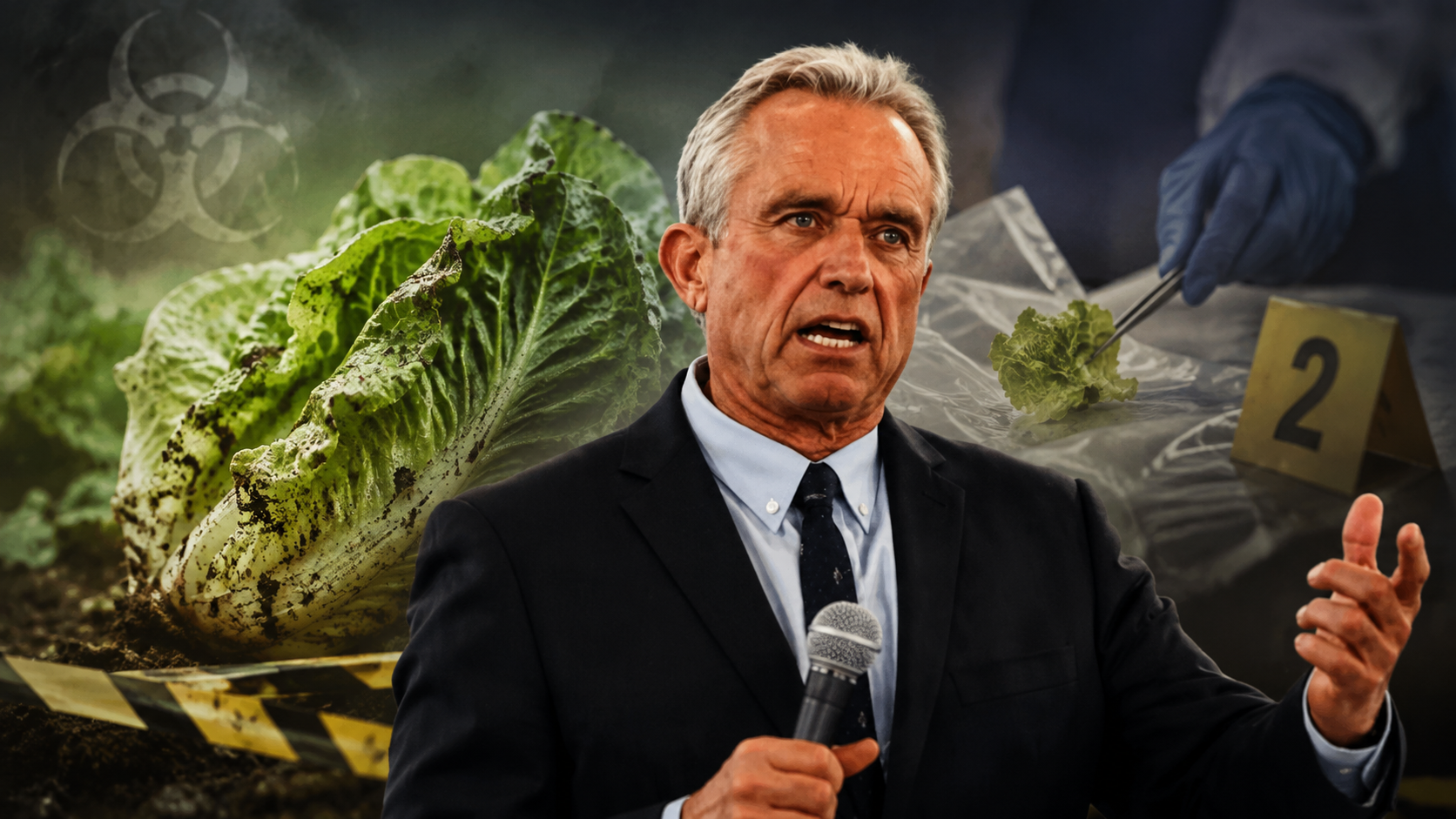
The Cyclospora outbreak tied to recalled iceberg lettuce has now sickened 11,458 people across 20 states, sent at least 495 to the hospital, and killed two people in Michigan, according to the CDC’s most recent update on August 27.
Cyclospora is a microscopic parasite that lives in contaminated food and water. You cannot see it, taste it, or smell it, and washing produce does not reliably get rid of it. Once it is in your system, it causes an intestinal illness called cyclosporiasis, and the main symptom is watery diarrhea that keeps coming back in waves. People also report cramping, bloating, nausea, loss of appetite, weight loss, and exhaustion. Symptoms usually show up about a week after you eat the contaminated food, and if you never get treated, the illness can drag on for weeks or even months. It is treatable with a prescription antibiotic, but you have to be diagnosed first, and diagnosis requires a stool test that most doctors do not order unless they are specifically looking for it.
That last part is why the numbers in this Cyclospora outbreak are almost certainly an undercount, and the CDC says so directly. Most people who get sick just ride it out at home and never get tested, so they never enter the count. On top of that, it takes about six weeks to determine whether any individual case belongs to this specific outbreak. The 11,458 figure only reflects laboratory-confirmed cases. The actual number of people who have been sick since June is higher, and nobody knows by how much.Federal investigators traced the source to iceberg lettuce processed by Taylor Farms de Mexico, a facility in central Mexico. The company recalled all iceberg lettuce sourced from that region on July 17.
The lettuce went to restaurants and grocery stores, including Marketside brand product sold at Walmart, though the cluster was first identified through people who had eaten at Taco Bell locations in Indiana, Kentucky, Michigan, Ohio, and West Virginia. Illnesses in the outbreak started on June 14, and new onset dates have continued through August 15. Georgia, Tennessee, and Texas were added to the list of affected states just last week.
Investigators confirmed the connection using genotyping, which is a lab technique that looks at specific genetic markers to figure out whether parasites from different sick people are related to each other. The samples matched, which is how officials know all of these illnesses came from the same source rather than from unrelated contamination events happening at once.
Here is where the federal response becomes the story. FoodNet is a joint program run by the CDC, FDA, and USDA that has historically done proactive surveillance on eight foodborne pathogens, meaning it actively went looking for cases rather than waiting for local health departments to report them. Under Health and Human Services Secretary Robert F. Kennedy Jr., that program was cut down from eight pathogens to two. Cyclospora was one of the six that got dropped.
Senator Jon Ossoff pressed Kennedy on exactly that, asking why Cyclospora tracking through FoodNet had been terminated and whether the CDC had restored it. Kennedy told ABC News that criticism of the federal response was “invalid,” and said there had been no cuts to surveillance, only to FoodNet, which he described as redundant. He also said in late July that the outbreak was under control. At that point, roughly 1,600 people were sick across five states. The count is now more than seven times that across 20 states, and two people have died.
The Michigan Department of Public Health said both people who died had significant underlying health conditions that may have been affected by the infection and the dehydration that comes with it. Both of them got sick before the July 17 recall. The FoodNet cuts were not the only reduction in capacity. The CDC’s Epidemic Intelligence Service, the unit that trains and deploys the epidemiologists who investigate outbreaks in the field, lost a substantial number of staff. Arthur Reingold, a professor of epidemiology at the University of California and a former disease detective himself, said the agency now has “a markedly reduced capacity” to run the kind of studies that make prevention possible in the first place.
There was also a public stumble in the middle of the investigation. The FDA announced that lettuce from the implicated supplier had tested positive for the parasite, then reversed itself days later and said the result was a false positive. Donald Schaffner, who chairs food science at Rutgers, said he had never seen a reversal like that and called it a “pretty big screw up.” Regulators still consider the lettuce the source, and the recall stands, but the reversal left consumers unsure whether the warning still applied.Senator Elizabeth Warren sent Kennedy a letter on August 13 raising a separate concern.
Citing Wall Street Journal reporting, the letter says that shortly after federal agencies identified Taylor Farms lettuce as a likely source, the company reached out to White House and FDA officials asking them to hold off on announcing a recall, requesting more proof and more time. That call was reportedly arranged by a former White House official who now lobbies for the company. Federal agencies have not confirmed that account, and the recall did go forward on July 17.
An HHS spokesperson said the agencies mounted a “robust, science-based response,” worked with health departments in all 50 states, and moved quickly to identify the source.Since May 1 of this year, the CDC has logged 15,716 laboratory-confirmed cases of cyclosporiasis acquired inside the United States. Over the same stretch of last year, that number was 1,180.
The recalled lettuce is past its best-by dates and should be out of stores and restaurants at this point. But if you have had unexplained stomach problems that started sometime after mid June and never fully cleared up, this Cyclospora outbreak is a reason to go get a stool test and ask your doctor about it specifically. The infection does not always resolve on its own, and the antibiotic that treats it only works if somebody knows to prescribe it.
