

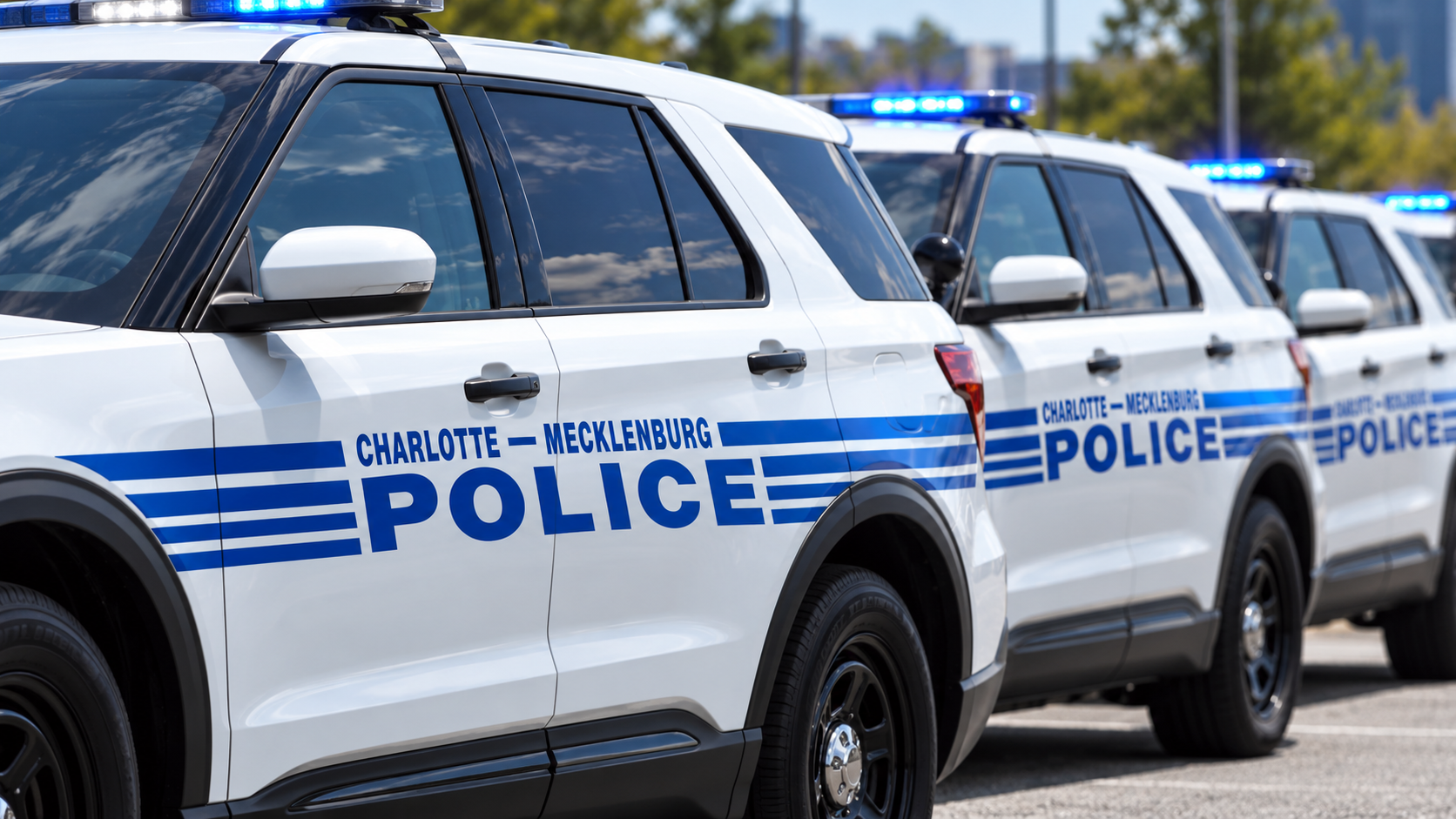
An internal investigation into racist text messages exchanged by Charlotte police officers has found no evidence that the conversations influenced traffic stops, arrests, or other enforcement actions. However, the findings have not stopped the Charlotte-Mecklenburg Police Department (CMPD) from pursuing disciplinary action against six officers involved in the scandal.
Police Chief Estella Patterson confirmed Thursday that investigators reviewed body camera footage, arrest records, traffic stop information, and citizen complaints involving the officers. So far, the department has not identified evidence showing they targeted residents because of their race.
“As of this point, we have not found any evidence of this,” Patterson said regarding possible discriminatory enforcement.
The finding marks a significant development in the CMPD racist texts investigation, which has raised concerns about racial profiling and police accountability in Charlotte. Still, finding no evidence of biased enforcement does not mean the officers’ conduct has been cleared or that every question surrounding their previous police work has been resolved.
As Baller Alert previously reported on October 14, six Charlotte officers became the focus of a growing controversy after investigators uncovered a group conversation allegedly involving racist language and discussions about competing to pull over Black drivers.
The earlier reporting also highlighted concerns about criminal cases connected to the officers and whether their alleged prejudice could undermine their credibility in court.
According to WBTV’s original investigation, anonymous sources described messages containing racial slurs, references to using force against Black residents, and an alleged competition involving traffic stops. Another message obtained by WCNC reportedly described the exchanges by saying “our texts sound like a clan rally.”
The CMPD racist texts surfaced during a separate investigation by the North Carolina State Bureau of Investigation involving former officer Seth Elliott and allegations that he improperly accessed law enforcement technology.
According to a July 29 statement from CMPD, Elliott was arrested on a misdemeanor charge of illegally accessing a government computer. Information obtained during the state investigation was subsequently shared with CMPD, leading to the discovery of the messages.
During Thursday’s briefing, Patterson confirmed that six officers from three different racial backgrounds participated in the conversations, which extended over several years. Four officers were members of the department’s 2024 recruit class.
According to WFAE’s coverage of the briefing, Patterson said the messages demonstrated racial, sexual, and religious biases.
She described her personal reaction as “one of disgust, anger, and frustration.”
“The allegations against them are serious, they’re deeply troubling, and frankly, I’m disappointed that we’re even having to talk about this today,” Patterson said. “As a Black woman who began my career here in this very department, it is especially painful and disheartening to hear concerns from our community about racism coming from within the ranks of this organization.”
Despite the absence of identified discriminatory enforcement, the department is moving forward with consequences for the officers involved.
“Specifically, the six, three of whom have resigned from the police department and the other three that I hope to soon refer to as former employees.”
Patterson confirmed that an independent chain-of-command review board unanimously recommended terminating the remaining three officers. She supports that decision, but Charlotte’s Civil Service Board has final authority over their termination.
The CMPD racist texts investigation could also carry consequences beyond employment.
“We will be pursuing as an organization the revocation of their North Carolina law enforcement certificates so that they cannot be an officer anywhere in our state,” Patterson said. “And I hope that they will not be an officer anywhere in this country.”
Patterson has also requested assistance from federal authorities, including the FBI and U.S. Attorney’s Office, to examine whether the circumstances warrant a civil rights investigation.
The issue of criminal cases remains important. As WBTV previously reported, defense attorneys have questioned whether evidence of racial bias could affect the credibility of officers involved in arrests and prosecutions. CMPD’s internal findings do not independently resolve those legal questions.
Meanwhile, Patterson outlined changes intended to detect misconduct before it escalates. Those efforts include proactive body camera reviews, improvements to an early intervention system, hiring and screening assessments, employee feedback teams, and ethics training.
According to WFAE, department leadership is also visiting officer roll calls to reinforce expectations while examining whether the conduct reflects a wider organizational problem.
Patterson emphasized that the scandal should not overshadow officers who serve the community appropriately.
“Now, while I have focused on the negative actions of a few, and we will hold any other employee to proper conduct, I want to underscore the point that the overwhelming majority of our employees do exceptional work every single day,” Patterson said. “They come to work to serve this community, and they demonstrate that in their actions… We will not allow the misconduct of a few to define the whole.”
For Charlotte residents, particularly Black drivers whose treatment was allegedly discussed in the messages, the absence of evidence linking the conversations to enforcement is an important finding. But the remaining disciplinary proceedings, potential federal review, and questions about the officers’ past cases will determine how much accountability follows the CMPD racist texts scandal.
