

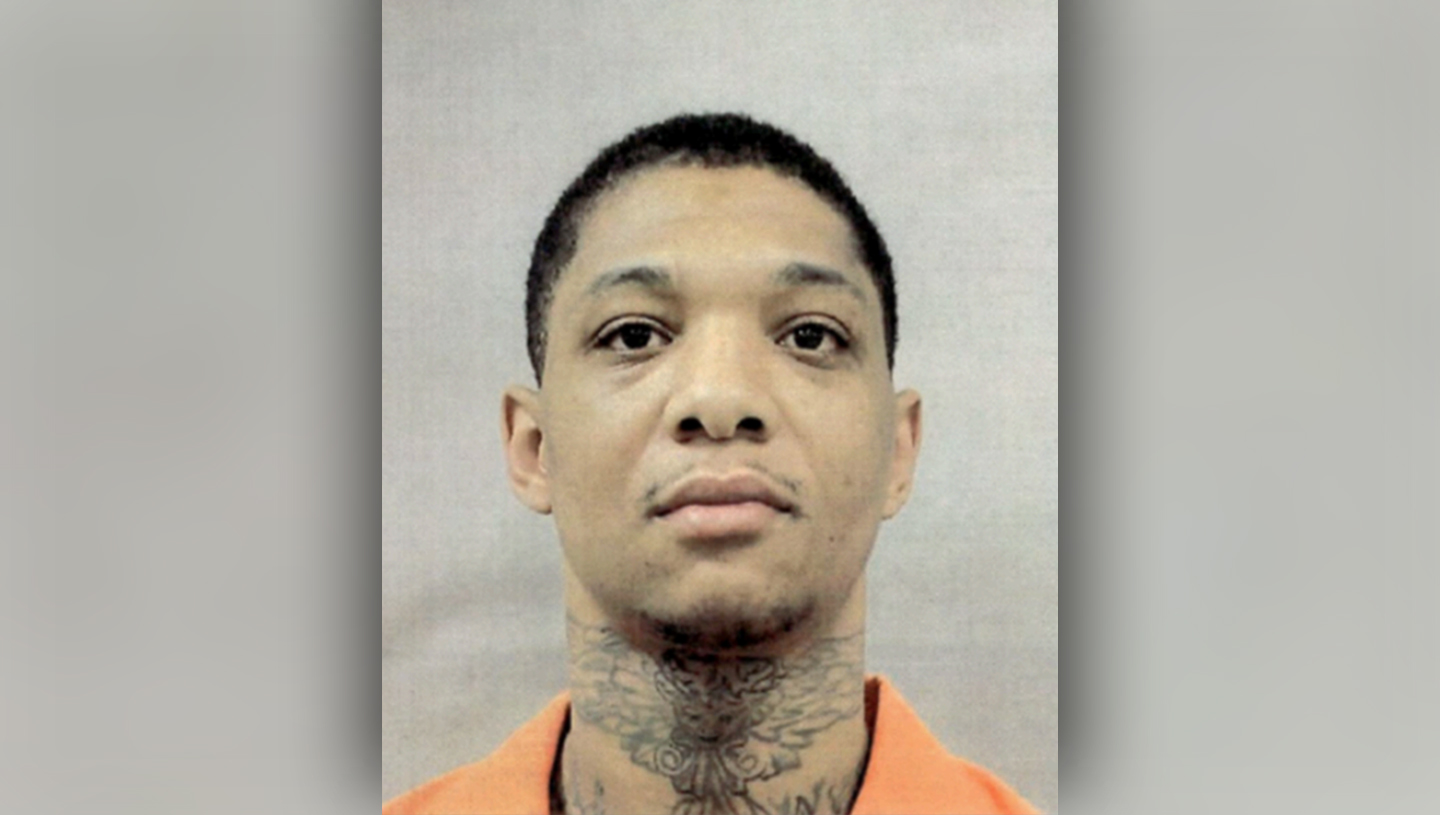
The final man captured after the shocking New Orleans jail escape has officially been sentenced, and the judge did not hold back. Derrick Groves, 28, was ordered to serve two life sentences on Friday for a 2018 double murder, with the court sharply criticizing the fear and disruption caused by his months on the run.
Groves stood before the court in shackles and an orange jumpsuit, just weeks after authorities located him hiding beneath a house in Atlanta. His capture closed the door on a May jailbreak that involved 10 inmates crawling through a hidden opening behind a jail toilet. Investigators said the escape was marked by taunting graffiti left behind reading, “To Easy LoL.”
A jury previously found Groves guilty of two counts of second-degree murder for the shooting deaths of Jamar Robinson and Byron Jackson at a Mardi Gras gathering in 2018. In a separate case, Groves also admitted guilt to manslaughter charges tied to two additional fatal shootings, bringing the total number of victims connected to him to four.
Orleans Parish Judge Dennis Waldron said Groves’ escape shook public confidence and strained the justice system. He described the situation as one that caused “concern, disappointment, frustration, and displeasure” across the city and within the court itself.
Waldron also addressed the painful history surrounding Groves’ family, referencing the 1994 killing of his grandmother, Kim Groves, who was murdered after reporting police misconduct. The judge said Groves chose a path that betrayed her memory.
“He chose to not honor the memory of his grandmother as she lay in that street in the Ninth Ward, shot to death,” Waldron said. “He made that conscious decision to go the other way and to kill, not once, not twice, not three times, but four times.”
Emotion filled the courtroom as Kadijah Jackson, sister of victim Byron Jackson, spoke about the permanent loss her family has endured. She shared that she regularly sends photos of her brother to his daughter so the child can show others that she once had a father.
Jackson also described the moment she found her brother dying in a car after Groves opened fire with an AK-style rifle.
“He lifted his head, but deep down, I knew he wasn’t going to make it,” she said through tears. “That moment shattered something inside me. Since that day, my life has felt like it is missing a piece that it felt it could never replace.”
As she spoke, Groves reacted from the defense table by smirking and nodding, later locking eyes with the victims’ families seated across the room. His demeanor drew visible reactions throughout the courtroom.
Groves’ attorney, Peter Freiberg, told the court that his client continues to maintain his innocence and plans to appeal the convictions, while also offering sympathy to the families affected by the violence.
Judge Waldron said Groves showed no remorse and made it clear that society would be safer with him imprisoned for life. Along with the two life sentences, Groves also received two additional 50-year sentences for attempted murder after injuring others during the 2018 shooting. The judge ordered those sentences to be added on top of the life terms.
The court also referenced footage from Groves’ capture in Georgia, showing him smiling and blowing kisses while being escorted by law enforcement.
“It is almost as if Mr. Groves thought he were a guest at a presidential motorcade as opposed to a captured fugitive, riding in a police SWAT convoy,” Waldron said. “These actions may be considered a final act of defiance.”
With sentencing complete, the case brings an end to one of the city’s most troubling jailbreaks, while leaving behind families still carrying the weight of lives lost.
