

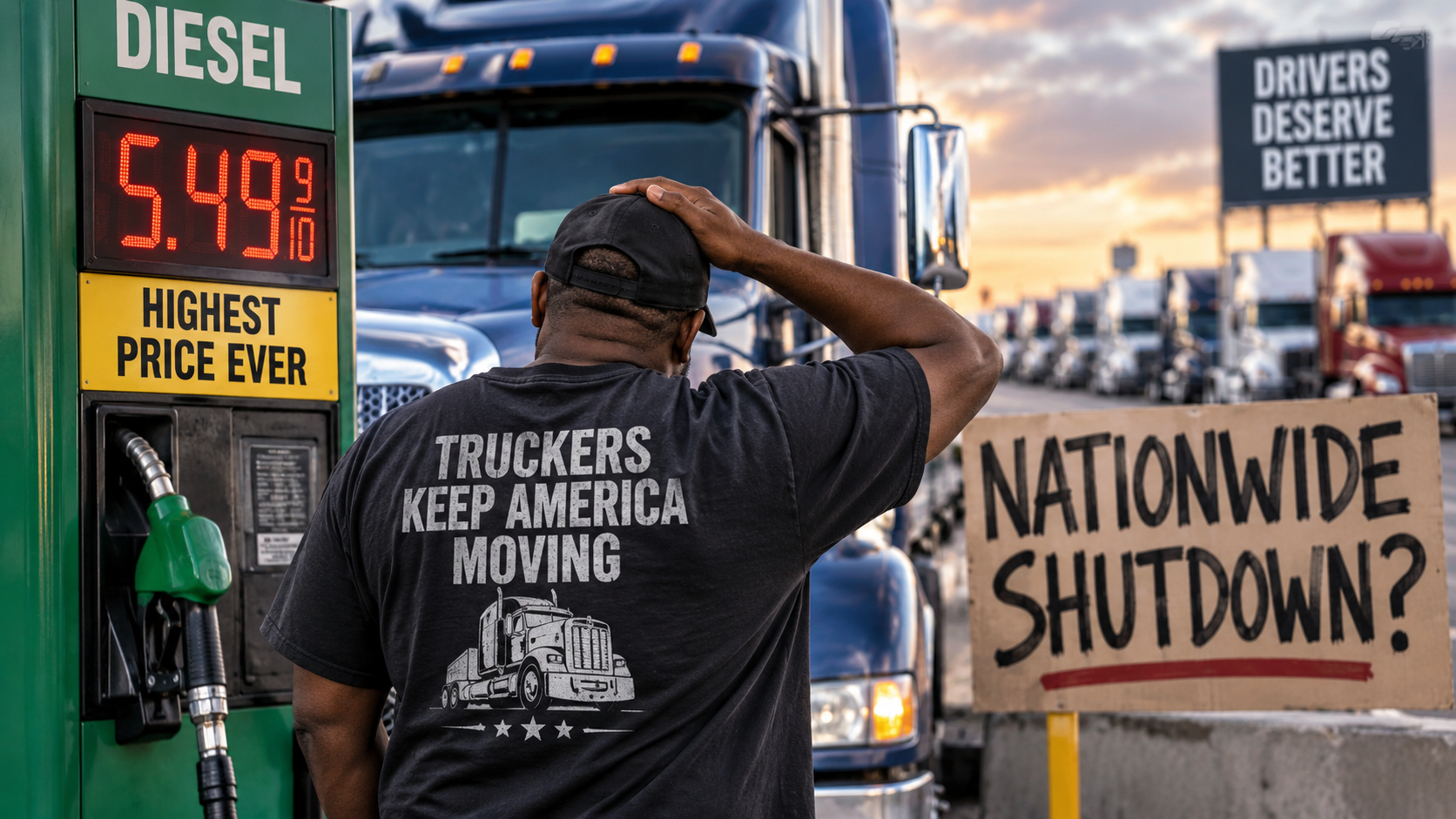
Truck drivers across the country say soaring diesel costs are eating into their pay, and some are openly floating a nationwide shutdown as fuel prices climb to the highest level ever recorded.
The national average for diesel hit $6.31 a gallon on Sept. 16, according to GasBuddy, breaking the all time record. A year ago, the national average was about $3.70. GasBuddy analyst Patrick De Haan said the price could reach $6.65 by the end of the weekend. California is already past $8 a gallon, and in Fresno the average sits at $8.31, up from $5.22 a year earlier.
The hit lands hardest on owner operators. These are drivers who own their trucks and run their own small businesses, so every gallon comes straight out of their pockets. Company drivers, who work for a trucking firm, generally do not pay for their own fuel.
Yahathan, an owner operator with 28 years behind the wheel, told WALB in Albany, Georgia, that he now spends more than $2,000 a week on fuel. A truck only makes money when it is moving, and moving burns diesel, so he has started turning down loads because the long hauls cost too much to run.
Terrance Nunn, an owner operator out of the Bronx, laid out the math on a cross country run to California for NEWS10. The 3,000 mile trip costs him $3,300 in fuel on a $7,000 load. After paying 12% to his company, he said he clears about $2,500. “I have to run harder, drive longer, take loads I don’t want to take,” Nunn said.
Christopher Jackson, who drives a 26 foot box truck in Georgia, said a day’s load that used to cost him $100 in fuel now runs $300. He described watching every expense climb while his pay stays flat. Asked whether drivers had hit their breaking point, he answered without hesitation. “We’re there now. I’m there now,” Jackson said, adding that he reached his limit when diesel was still $5.
Michael Chase, an independent driver in North Carolina, told WJZY that diesel in Texas was around $4 a gallon two months ago. This week he paid $6.25 there.
That squeeze is where the strike talk comes in. Posts urging truckers to park their rigs on October 1 have spread across Facebook, and commenters under local news coverage have argued the country is about to learn who really keeps it running. No union, trucking association, or named organizer has publicly called for a shutdown on that date, and it remains unclear how many drivers would actually take part.
A nationwide trucker strike is harder to pull off than it sounds. Most truck drivers are not in a union, and owner operators are legally independent businesses rather than employees. OOIDA, the largest trade group for independent truckers, has warned in the past that coordinated shutdowns by independent businesses could be treated as a violation of federal antitrust laws, which are the rules that bar companies from teaming up to control prices. The group has also argued that most small carriers cannot afford to sit idle long enough for a strike to force change.
Truckers have tried this before. In December 1973, during the oil embargo, a Kansas driver known on the CB radio as River Rat stopped his rig on Interstate 80 in Pennsylvania and sparked a wave of work stoppages. Officials promised relief, but because the protests never seriously disrupted the supply chain, those promises largely went unkept. In 2008, a widely publicized April 1 shutdown over $4 diesel produced only scattered protests.
Not every driver wants to try again. Seaman, a South Dakota trucker with more than 50 years on the road, told Dakota News Now he does not believe a shutdown is the answer, pointing to the damage the 1970s shutdowns did to the industry. He wants drivers to keep pressing the officials who have some control over prices instead.
Diesel costs do not stay at the pump. The American Trucking Associations reports that more than 70% of food and goods in the country move on diesel trucks. When fuel gets more expensive, carriers charge shippers more, shippers charge stores more, and stores pass it on at the register. One Georgia driver who spoke to WALB without giving his name warned that stores could see shortages in the short term, and possibly longer.
The prices are hitting as the broader economy tightens. On Wednesday, the Federal Reserve raised interest rates for the first time since 2023 after inflation picked back up in August, which makes borrowing more expensive for everyone, including truckers financing their rigs.
Relief does not appear to be close. The U.S. Energy Information Administration points to tight global diesel supplies and low inventories at home. Oil analyst Tom Kloza told FreightWaves that geopolitical disruptions, seasonal demand, and limited refining capacity are all pushing prices higher, and that retail prices still have room to catch up to wholesale costs. Saudi Arabia’s shutdown of a major pipeline has also halted its September oil exports to Europe, deepening a global shortage of refined fuel.
For drivers like Jackson, the numbers already tell the story. Diesel costs have tripled his daily fuel bill, and he says the only fix he wants is simple: bring the price down.
