

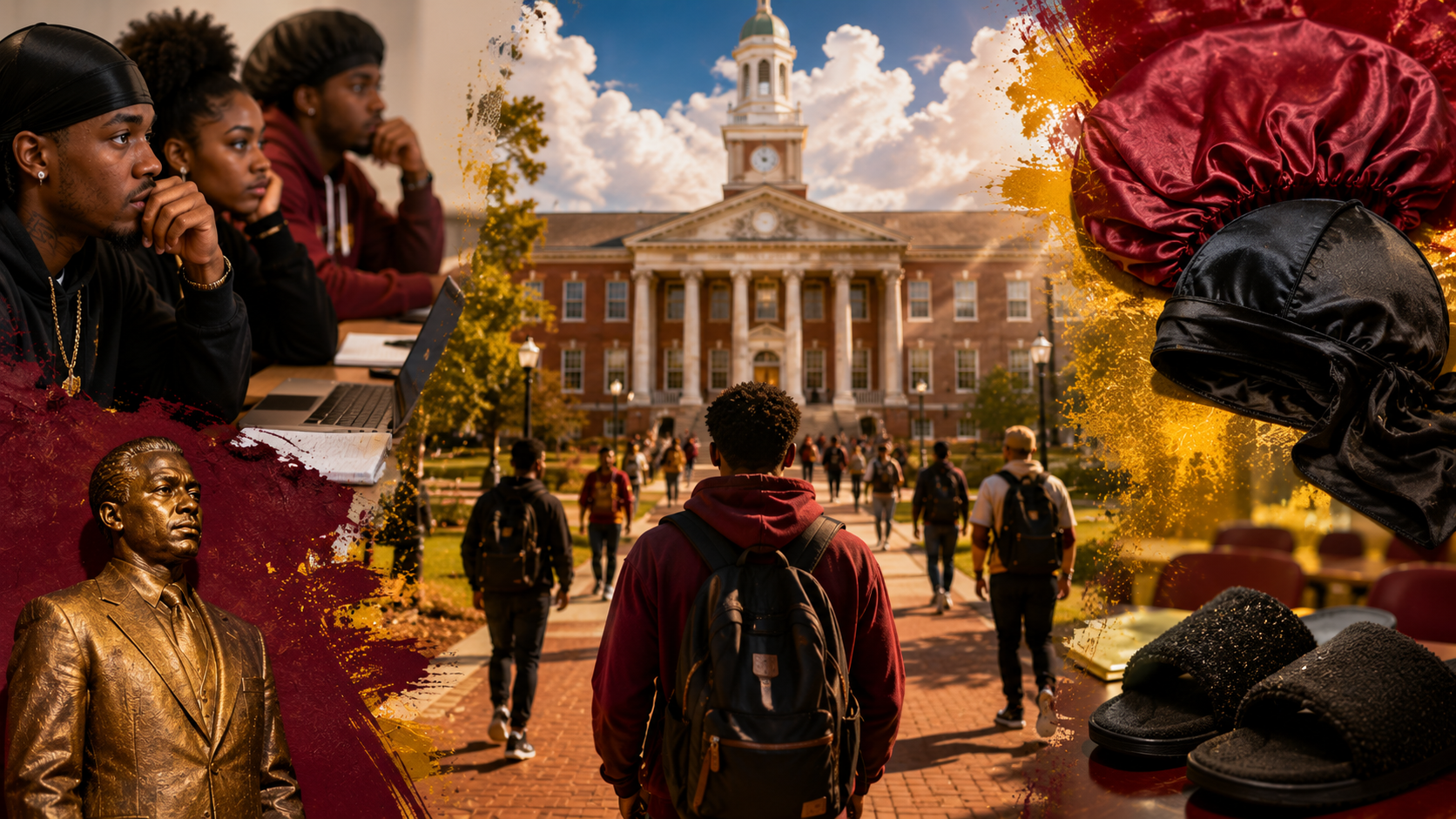
Tuskegee University just rolled out a new dress code, and within hours it had HBCU social media split right down the middle. President Dr. Mark A. Brown announced the changes in a message sent to parents of incoming students, laying out new expectations around student attire, class attendance, and cell phone use ahead of the upcoming school year. The headline detail catching everyone’s attention is simple. Bedroom shoes, bonnets, and durags are now banned in classrooms and the university cafeteria, and revealing clothing has been prohibited across classrooms, dining spaces, and official university events like Convocation. For business meetings and other professional occasions, students are expected to show up in business suits with appropriate shoes.
Brown framed the policy as career preparation rather than punishment, arguing that employers form first impressions quickly and that presentation can sometimes overshadow real qualifications before a person even gets the chance to prove themselves. The timing is not random either. Tuskegee is expecting its largest incoming freshman class in thirty two years, and Brown has been describing this stretch of his presidency as the university’s Renaissance Era, positioning the new rules as part of a broader reset heading into the fall semester. Faculty have also been given authority to enforce every part of the policy, meaning a professor can now directly address a student showing up in banned clothing or using a phone mid lecture, since the cell phone policy tightened right alongside the dress code.
Unsurprisingly, the bonnet and durag ban is the piece generating the most conversation. Both items are commonly used to protect Black hairstyles, and plenty of students and alumni online have pushed back, arguing the rule reinforces a narrow, outdated definition of what professionalism is supposed to look like. Others have come out firmly in support, pointing to Tuskegee’s long standing reputation for discipline and structure as reason enough to embrace the change. It is a debate that has played out at HBCUs for decades, long before Tuskegee’s announcement, and it usually comes back to the same core tension. How much should an institution be shaping students for the professional world they are about to enter, and at what point does that shaping start to feel like it is erasing parts of the culture that got them there in the first place.
Tuskegee is far from the first HBCU to wade into this territory. Hampton University has arguably built the most well known reputation for strict dress code enforcement in the entire HBCU landscape. Hampton bans durags, stocking caps, skullcaps, bonnets, scarves, and bandanas across campus at all times, with the only exception being inside the privacy of a student’s own dorm room. The policy also prohibits baseball caps and hoods indoors, sleepwear worn outside residence halls, and jeans or shorts during formal university events like Founder’s Day and Commencement. Hampton’s School of Business took things even further at one point, drawing national attention for restrictions that reportedly limited hairstyles like dreadlocks and cornrows for students in certain programs, a policy that sparked its own wave of criticism over the years.
Howard University has its own version of professional dress expectations, particularly inside its School of Business, where students in certain orientation courses are required to wear a suit multiple days a week. Some students have said the requirement felt uncomfortable at first but eventually became something they genuinely grew to appreciate, describing a shift in how seriously they carried themselves once dressing professionally became routine instead of an occasional event.
Morehouse College has its own complicated history with dress code enforcement. Back in 2009, the all male college drew significant national criticism after implementing a policy that banned students from wearing high heels, dresses, makeup, and purses, a rule largely aimed at a small portion of the student population who dressed in traditionally feminine clothing. The backlash was intense enough that it became a national conversation about respectability politics within HBCU culture, and while Morehouse’s current dress code no longer spells out those specific restrictions, the institution has retained language giving itself the right to modify its policy as it sees fit.
Not every HBCU takes this approach, though. Schools like Dillard University maintain looser expectations around day to day attire while still holding students to some baseline standard for how they present themselves on campus, showing that strict enforcement is far from universal across HBCUs, even among schools with similarly deep roots in tradition and discipline.
What ties all of these policies together, whether it is Tuskegee’s new rules or Hampton’s decades old restrictions, is the same underlying question that never really gets settled. Is teaching students to dress a certain way genuinely preparing them for the professional world, or is it asking them to strip away parts of their identity and culture in order to be taken seriously in rooms that were never built with them in mind to begin with. That tension has followed HBCUs for years, and Tuskegee’s announcement this week is proof that it is nowhere close to being resolved.
