

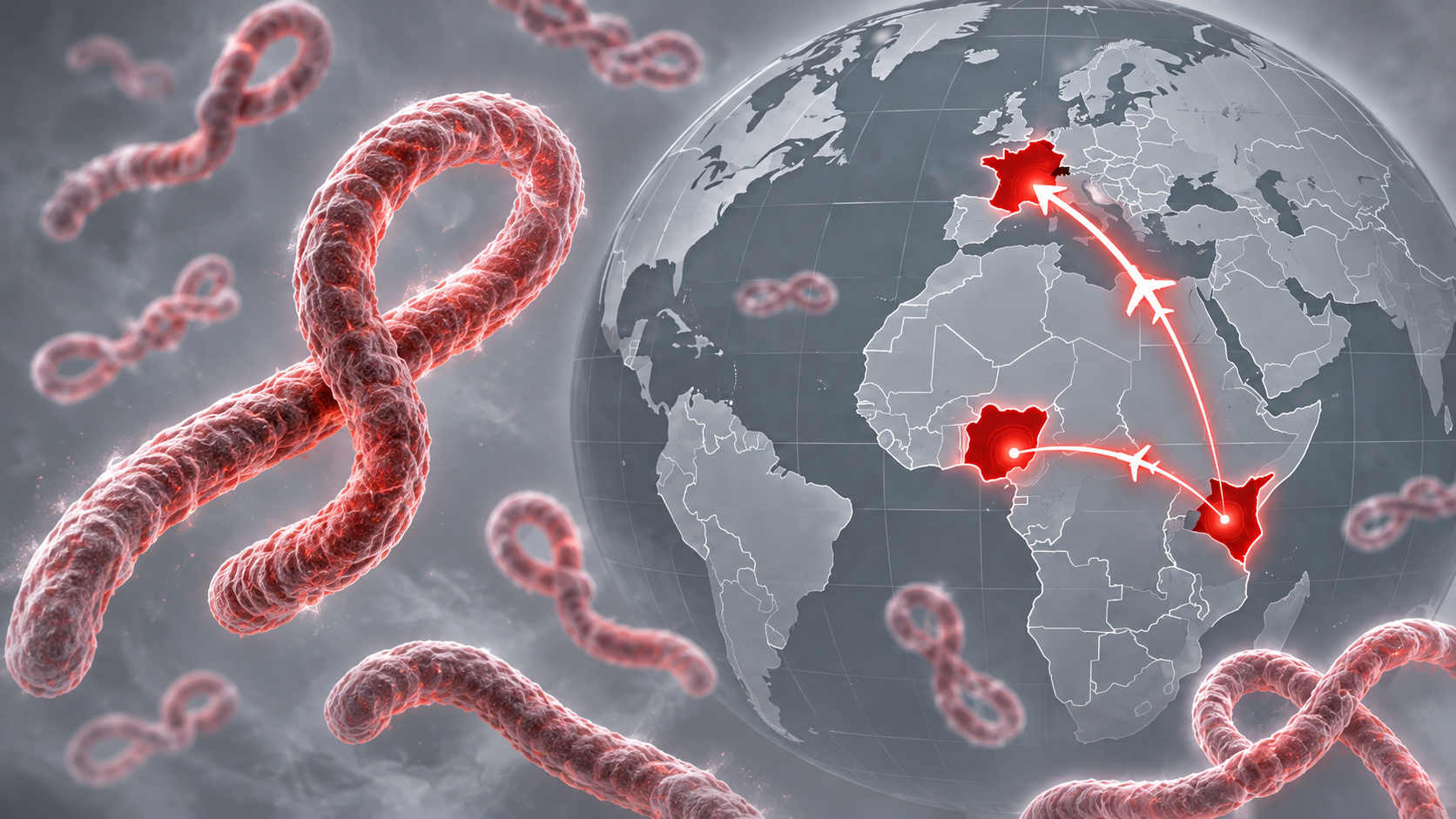
The Ebola outbreak in the Democratic Republic of the Congo has now killed 5,568 people and infected 11,376 as of November 14. Cases have also turned up in Uganda, Kenya, Nigeria and France. Six months after it was declared, it is the second largest Ebola outbreak in recorded history.
Health officials in Congo declared the outbreak on May 15, 2026. Two days later the World Health Organization classified it as a public health emergency of international concern, its highest level of alarm. The virus has since spread across eight Congolese provinces: Ituri, North Kivu, Haut Uele, Tshopo, South Kivu, Bas Uele, South Ubangi and North Ubangi.
It has also moved faster than any Ebola outbreak before it. According to the CDC, it passed 1,000 confirmed cases within 40 days. The 2018 Congo outbreak took about 235 days to reach the same number.
Ebola is a viral hemorrhagic fever, which means it can damage blood vessels and cause bleeding. It was discovered in 1976 near the Ebola River in what is now Congo, the river the disease is named for. It spreads from person to person through direct contact with an infected person’s blood or other body fluids. Symptoms can come on suddenly with fever, fatigue, muscle pain, headache and sore throat. Vomiting, diarrhea, stomach pain, rash and kidney and liver problems can follow.
There are several types of Ebola virus, and this outbreak is caused by one of the rarer ones, the Bundibugyo virus. It was first identified in Uganda in 2007 and caused a second outbreak in Congo in 2012. The most common strain, often called Zaire, has a licensed vaccine. Bundibugyo has no approved vaccine and no approved treatment. Historically it has killed between 30 and 50 percent of the people it infects, and the current Ebola outbreak is running at close to half. The WHO has recommended adding two Bundibugyo vaccine candidates to a clinical trial, and Doctors Without Borders is pushing for wider use of Ervebo, the existing vaccine for the Zaire strain.
Uganda was the first country outside Congo to report cases. It recorded 20 confirmed cases and two deaths, almost all involving people who had traveled from Congo, and was declared free of Ebola in August.
France reported the first case outside Africa on June 24. The patient was an intensive care doctor working with the medical charity ALIMA who caught the virus on a humanitarian mission in Congo. French health officials said the doctor was isolated the moment they arrived and taken to a specialized hospital. The doctor has since recovered. It was the first confirmed Ebola case in Europe during this outbreak.


Made to order and shipped to your door.
Kenya’s first case came in October. A Kenyan man who had been sick in Congo for about a month traveled overland into Uganda, flew to Nairobi on October 3 and died in an isolation unit on October 5. Three health workers who treated him were among the cases that followed, the first known infections passed on inside Kenya. The country has confirmed nine cases and two deaths, all in Nairobi, with no community spread. The last new case was reported October 20, and as of November 11, seven patients had recovered and everyone identified as a contact had finished 21 days of quarantine.
Nigeria confirmed its first case on October 20, making it the fifth country to detect the virus. The patient is a woman in Abuja who had recently traveled to Uganda. Her symptoms began on October 7, four days after she landed in Nigeria. Health authorities identified 44 people she had been in contact with, including health workers, other patients and fellow travelers.
Africa CDC has warned that as many as 12 African nations could be at risk. In the United States, no cases tied to this Ebola outbreak have been reported, and the CDC considers the chance of it spreading here very low.
The only bigger Ebola outbreak was the 2014 to 2016 epidemic in West Africa. It hit Guinea, Liberia and Sierra Leone hardest and recorded more than 28,600 cases and 11,325 deaths. Before this year, the second largest was the 2018 to 2020 outbreak in Congo’s North Kivu and Ituri provinces, which killed 2,287 people before it was declared over in June 2020. This outbreak has already more than doubled that death toll.
Ebola keeps coming back in the region. Uganda fought a Sudan strain outbreak in 2022 that infected 164 people and killed 55. Congo declared a separate outbreak in Kasai province in September 2025.
Violence is making this one harder to stop. On November 13, UN Senior Ebola Response Coordinator Julien Harneis said fighters with the Allied Democratic Forces, an armed group, had recently been killing more people than the virus itself. Their attacks on villages in southern Ituri and North Kivu are going largely unnoticed, he said, and they put health workers at risk.
Doctors Without Borders says the outbreak is still not under control and that health workers on its edges are missing the most basic equipment. Reporting from The National found that about 73 percent of the money sent to organizations fighting the outbreak has not been accounted for. On the ground, UNICEF is supporting emergency nurseries in places like Mongbwalu for children who have lost their parents to the virus.
