

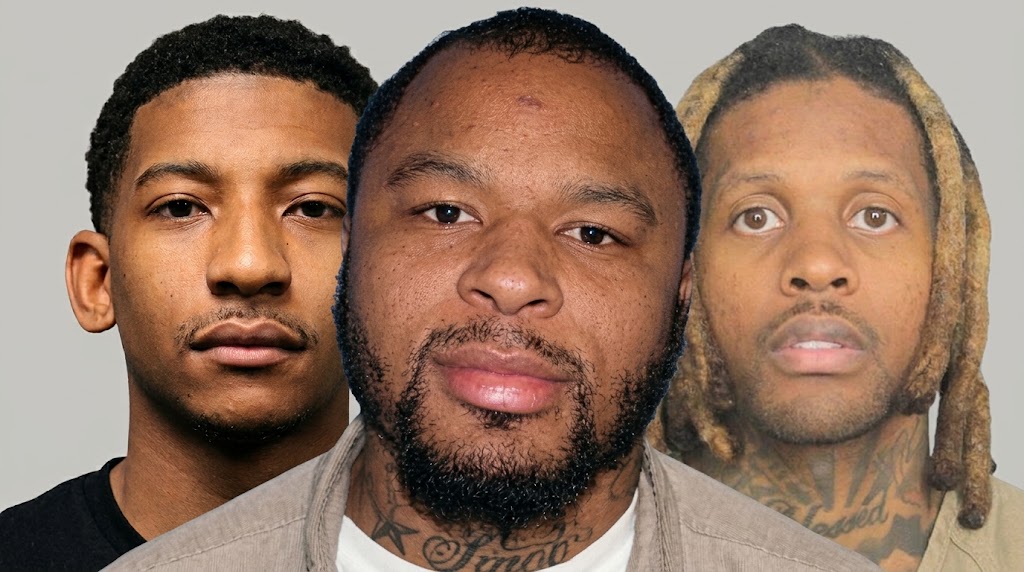
A new credibility fight is unfolding in Lil Durk’s federal trial after his defense team presented communications suggesting two cooperating witnesses stayed in touch through third parties despite an order separating them.
Attorney Brian Steel spent part of Friday’s cross-examination pressing Kacey “OTF Jam” Hester about communications involving Kavon “OTF Vonnie” Grant. Both men were subject to an order designed to keep them from contacting each other. Hester acknowledged knowing the order existed, although he testified that nobody explained the meaning or restrictions to him.
That detail makes the alleged OTF witness communication much more serious than two associates simply checking on one another. If a court has ordered two witnesses or defendants to remain separated, contact covered by that restriction is not permitted unless the court or appropriate authorities change the order. Whether every message Steel introduced legally violated that specific order is ultimately a question for the court, but communicating through intermediaries can create an obvious concern that a separation restriction is being worked around.
Steel introduced messages that were passed through a woman who communicated separately with Hester and Grant. Hester asked during a July 24, 2025 call for Grant to speak with his lawyer about removing the separation restriction so they could be around one another. A later message reportedly indicated Grant had spoken with his attorney about asking prosecutors whether the restriction could be changed.
The third-party communication also surfaced, with several outlets identifying one intermediary as Ashley Jones and saying another woman was also involved in communications connected to Hester and Grant beginning in July 2025.
“At one point, there was a social media post that called Vonnie a rat, and Jam said, ‘Be careful.’ And then, Steel asked, ‘Were you worried about him?’ and Jam said, ‘Yes,’” Blackshire said. Hester also testified that Ashley told him someone had recorded Grant on the phone and that he wanted Grant warned to be careful.
Hester also reportedly described seeing Grant while inside a federal building.
“When I came to this facility (federal building). I seen him in passing. Me being curious. I wanted to know if he was going to the facility I was at. I didn’t know he was corroborating,” he said.
The issue could matter heavily to jurors because both men are cooperating witnesses whose credibility is central to the government’s case. According to Courthouse News Service, Hester has pleaded guilty in connection with the 2022 shooting that killed Saviay’a “Lul Pab” Robinson and has been testifying against Durk Banks. The outlet reported that Grant also pleaded guilty and is expected to testify, while Durk has pleaded not guilty and his attorneys maintain that Grant was responsible for planning the attack.
That creates a major problem if jurors believe cooperating witnesses were able to exchange information before giving testimony. Even without proof that they discussed the substance of the case, undisclosed contact gives the defense room to argue that their accounts were not developed independently.
Federal evidence rules show why courts take witness separation seriously. Under Federal Rule of Evidence 615, judges can exclude witnesses from hearing other testimony and can separately prohibit them from receiving or accessing trial testimony. The rule’s advisory notes explain that witness separation has long been used to discourage fabrication, inaccuracies, and collusion. The notes also specifically identify preventing witnesses from tailoring testimony as a central reason courts may restrict access to what other witnesses have said.
The separation order discussed during the Lil Durk trial is a distinct court restriction, but the underlying concern is similar. Witnesses who may testify about the same events should not be able to coordinate stories, compare versions, or gain information that could shape what they later tell jurors.
Steel does not have to prove Hester and Grant secretly planned matching testimony for the communications to become useful to the defense. Hester denied discussing the prosecution with Grant and challenged Steel to produce the communications, while Steel ultimately received permission to present messages after prosecutors objected.
Now those communications are part of the credibility battle surrounding the Lil Durk trial. If jurors conclude the separation order was knowingly sidestepped through third parties, the issue could make them question not only what the cooperating witnesses are saying, but how independently their stories were developed before they entered the courtroom.
