

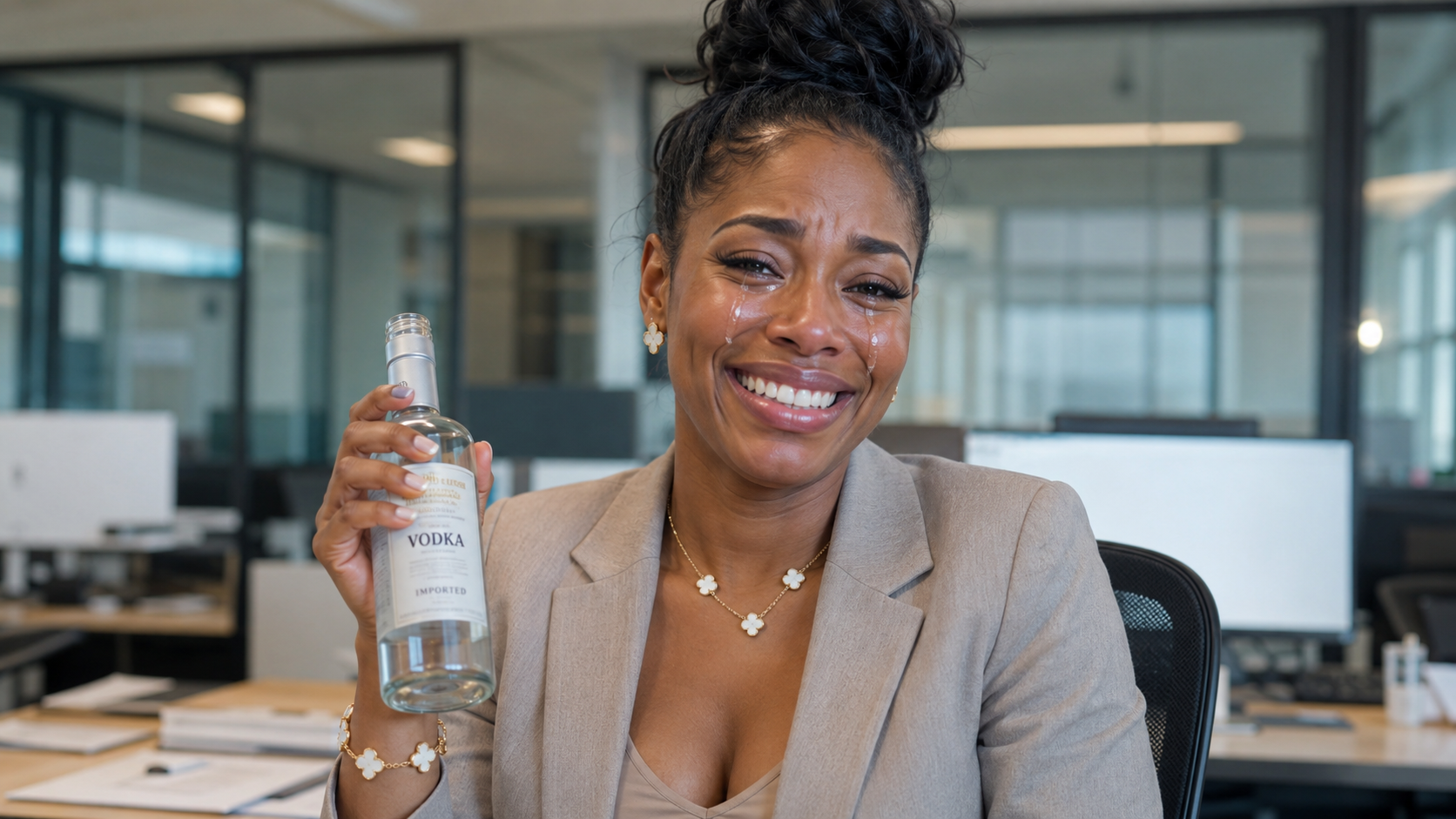
Clocking out does not always mean leaving the emotional weight of work behind. Research suggests that employees who spend their shifts forcing smiles, hiding irritation, and pretending everything is cool may be more likely to drink heavily once the workday is over. That behavior has a name: surface acting. According to a peer-reviewed Journal of Occupational Health Psychology study published in 2019, researchers examined emotional labor and alcohol use among 1,592 U.S. workers who had regular contact with customers, patients, students, clients, or other members of the public. The study was led by researchers connected to Pennsylvania State University, commonly known as Penn State, along with the University at Buffalo and Culture Amp. It was not a University of Pennsylvania study, as some summaries of the research have incorrectly suggested.
The researchers described surface acting as faking or amplifying positive emotions while suppressing negative ones. In everyday terms, that is the employee smiling through disrespect, keeping their voice sweet during a frustrating customer interaction, or acting enthusiastic when they are mentally checked out. According to the study, higher levels of surface acting were significantly associated with heavy drinking even after researchers accounted for demographics, job demands, and negative emotions.
The connection with drinking immediately after work was more complicated. According to the researchers, surface acting was especially tied to after-work drinking among people who were more impulsive or had jobs with less personal autonomy. The relationship was also stronger in jobs built around brief customer encounters, such as certain retail, food service, coffee shop, and call center roles, than in professions where employees formed longer relationships with patients, students, or clients.
Alicia Grandey, a Penn State psychology professor and one of the study’s authors, summed up the emotional cost in a statement published by Penn State: “Smiling as part of your job sounds like a really positive thing, but doing it all day can be draining.”
That does not mean smiling at work automatically sends somebody to the bar. The 2019 research was observational, meaning it identified relationships between surface acting and drinking patterns rather than proving that one directly caused the other. The study’s authors proposed that repeatedly controlling emotional reactions could consume self-control resources, which might leave some employees with less restraint later, but subsequent research has shown that the psychology may be more complicated than simple mental exhaustion.
A new 2026 study published in the Journal of Occupational and Organizational Psychology took another look at the link between surface acting and alcohol. Researchers Nai Wen Chi, Gordon M. Sayre, Yin Yee Wong, and Ke Li Li followed full-time customer service employees in Taiwan through two experience sampling studies that tracked their work experiences and drinking across multiple days.
The first study included 173 employees who provided 1,482 daily observations. A second study included 52 workers and 451 days of observations. According to the researchers, days with more surface acting were associated with stronger feelings of inauthenticity. Those feelings, in turn, predicted stronger motives to drink as a way of coping, which were associated with increased alcohol consumption.
That finding adds an important wrinkle to the original theory. According to the 2026 researchers, depletion itself was not significantly related to alcohol consumption in their models. Instead, the pathway appeared to involve feeling fake or disconnected from one’s real emotions, followed by a greater desire to use alcohol to relieve that discomfort. The relationship was particularly strong among workers who already believed drinking would help reduce tension.
The same researchers also tested more problematic drinking behaviors and reported a similar indirect pattern involving surface acting, inauthenticity, and drinking to cope. They also tested whether drinking the previous night could simply be causing more surface acting the next day and did not find significant evidence for that reverse explanation in either study. Still, the authors described the research in terms of prediction and association, not proof that emotional labor inevitably causes alcohol misuse.
That distinction matters because “heavy drinking” and “binge drinking” are not automatically interchangeable terms. The National Institute on Alcohol Abuse and Alcoholism defines binge drinking as a pattern that raises blood alcohol concentration to 0.08 percent or higher. For a typical adult, that generally corresponds to five or more drinks for a male or four or more drinks for a female within about two hours. The Penn State study examined heavy drinking and drinking after work, so describing its findings simply as proof that pretending to be happy causes binge drinking would overstate what researchers actually found.
The workplace takeaway is not that everybody should start telling their manager exactly how they feel every minute of the day. According to Penn State’s summary of the original research, Grandey suggested that employers consider giving workers more autonomy and making the purpose and rewards of emotional labor clearer. The study found fewer negative associations when workers had greater control or when the emotional effort was connected to meaningful relationships.
For anybody who has ever had to smile through a rude customer, swallow frustration during a meeting, or repeatedly say “my pleasure” while mentally being somewhere else, the research puts scientific language around a familiar reality. Surface acting can require real emotional work, and newer evidence suggests the feeling of not being yourself may follow some employees long after their shift ends.
