

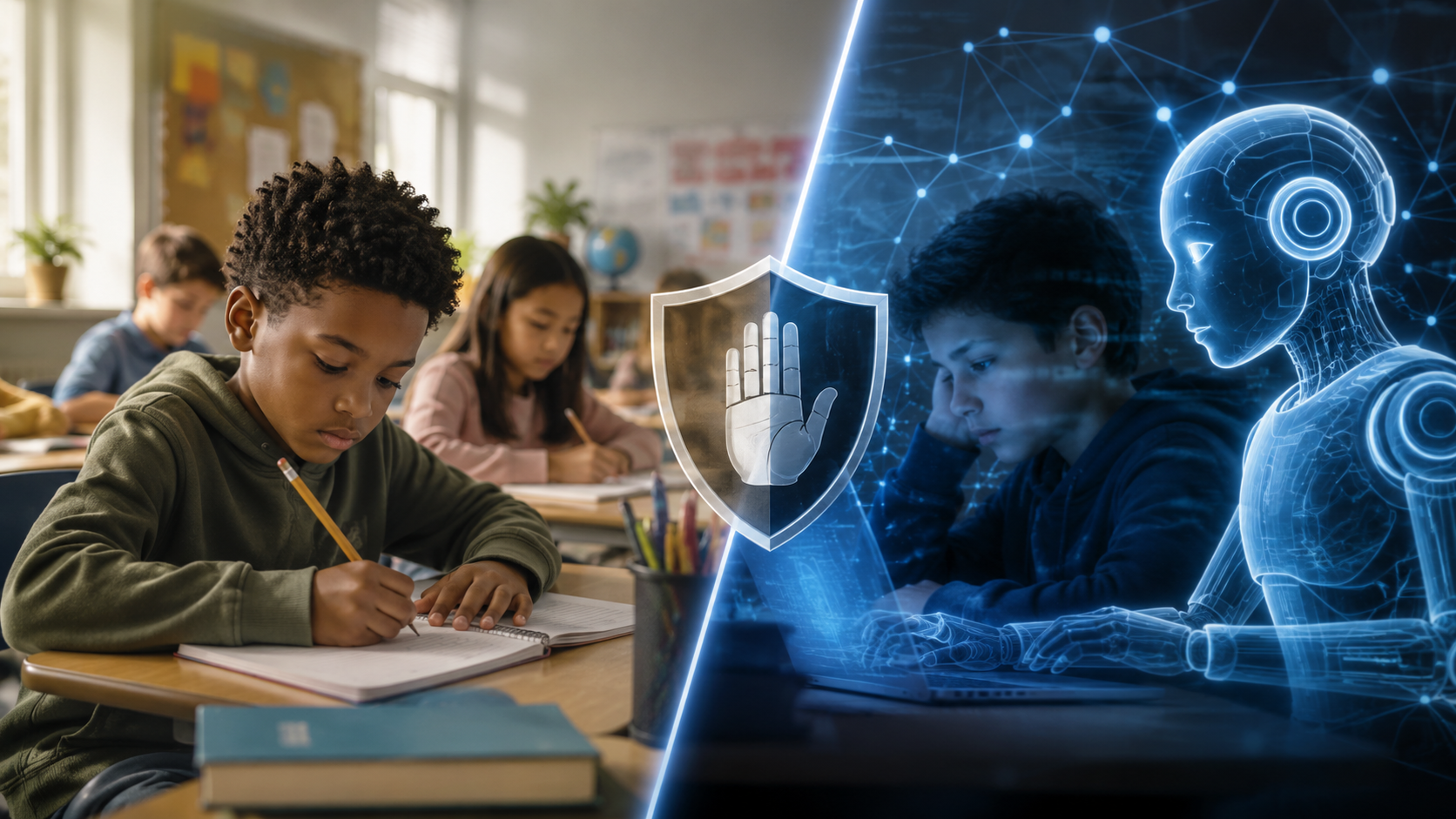
Kids are struggling with reading and math at levels that should have parents paying attention, especially as smartphones, social media, and artificial intelligence become a bigger part of everyday learning.
The latest test scores from the Programme for International Student Assessment, better known as PISA, offer one of the clearest pictures yet. According to the OECD’s PISA 2025 findings, more than 760,000 students across 91 countries and economies participated in the assessment. Average reading scores across OECD countries fell 28 points between 2015 and 2025, while mathematics scores declined 22 points. One in five students was classified as a low performer across science, reading, and math in 2025, compared with 16 percent in 2022.
The numbers matter because PISA is not simply testing whether teenagers memorized a formula or vocabulary word. According to the OECD’s full PISA report, the assessment measures whether 15-year-olds can apply what they know, evaluate information, solve problems, and think critically. Reading showed particularly steep declines in skills such as connecting information across sources and judging whether information is reliable. The share of students displaying what the OECD calls “hasty reading,” meaning they read quickly but inaccurately, also increased sharply.
Technology is part of the conversation, but the data do not prove that AI or social media alone caused falling test scores. The OECD explicitly cautions that the relationship is complicated. Still, its findings show that excessive leisure use of digital devices at school is associated with substantially weaker performance, while more than one in four students reported classmates being distracted by devices during most or every science lesson. Students who used AI for certain school assignments also tended to score lower than students who did not, although guided and purposeful AI use sometimes showed better results than uncontrolled use.
That concern was summed up by OECD Director for Education and Skills Andreas Schleicher in the original reporting: “You don’t get fit by watching sport. If AI makes things easy, it’s not great for you in the long run. It gives you better results, but it doesn’t enhance learning. You have to make an effort. If learning is easy, it’s not learning.”
The report also warned, “We cannot say for sure, but skimming social media feeds and rapidly processing information may be contributing to worsening ability and motivation to engage with complex texts and data.”
For American families, the picture is mixed. According to the OECD’s United States PISA report, U.S. students averaged 490 in reading, 502 in science and 463 in mathematics. Reading fell 14 points from 2022, while changes in science and mathematics were not statistically significant. The United States remained above the OECD average in reading and science and close to the average in math. The OECD cautioned, however, that participation and response problems in the U.S. sample mean the estimates should be interpreted carefully.
So what can parents actually do about falling test scores?
One of the biggest answers may be surprisingly old school: stay involved in what children are learning. OECD researchers examining family support found that students reported less family support in 2025 than in 2022 across nearly every country with available data. In 2022, 77 percent of students said a parent or guardian asked what they did at school at least once a week. By 2025, that figure had fallen to 71 percent. Higher reported family support was consistently associated with stronger science performance and more positive attitudes toward learning, even though the data cannot establish that parental involvement alone caused those outcomes.
Parents can start by making school a regular conversation rather than waiting for a bad report card. Ask what a child learned, what confused them, and what they had to work hardest to understand. The OECD found that the positive relationship between family support and performance was driven largely by parents showing interest in students’ day-to-day learning, not simply talking about college or future careers.
Reading habits deserve the same attention. Instead of allowing every free minute to become scrolling time, families can create regular periods for uninterrupted reading and then talk about what was read. Ask children to explain an argument, identify evidence, distinguish fact from opinion, or compare two sources. Those are precisely the types of deeper reading skills that the PISA 2025 report says have weakened.
Parents also do not have to become anti-technology. They can become more intentional about it. Phones can stay away during homework and reading. AI can be used after a student attempts a problem, not before. Instead of asking a chatbot to write an assignment, a child can use it to generate questions, challenge an answer or identify areas that need more research. The OECD recommends teaching students to check AI-generated information against reliable evidence rather than treating an instant answer as learning.
Finally, parents can push schools for specifics. Ask what assessments show about a child’s reading comprehension and math skills, what intervention is available when a student falls behind, and whether tutoring or structured study support exists. The OECD found that access to homework spaces and peer tutoring was positively associated with science performance across participating countries.
Falling test scores are a system-wide problem, but parents are not powerless. Children still need the things technology cannot replace: attention, conversation, boundaries, practice, curiosity, and adults who care enough to ask what they learned today.
