

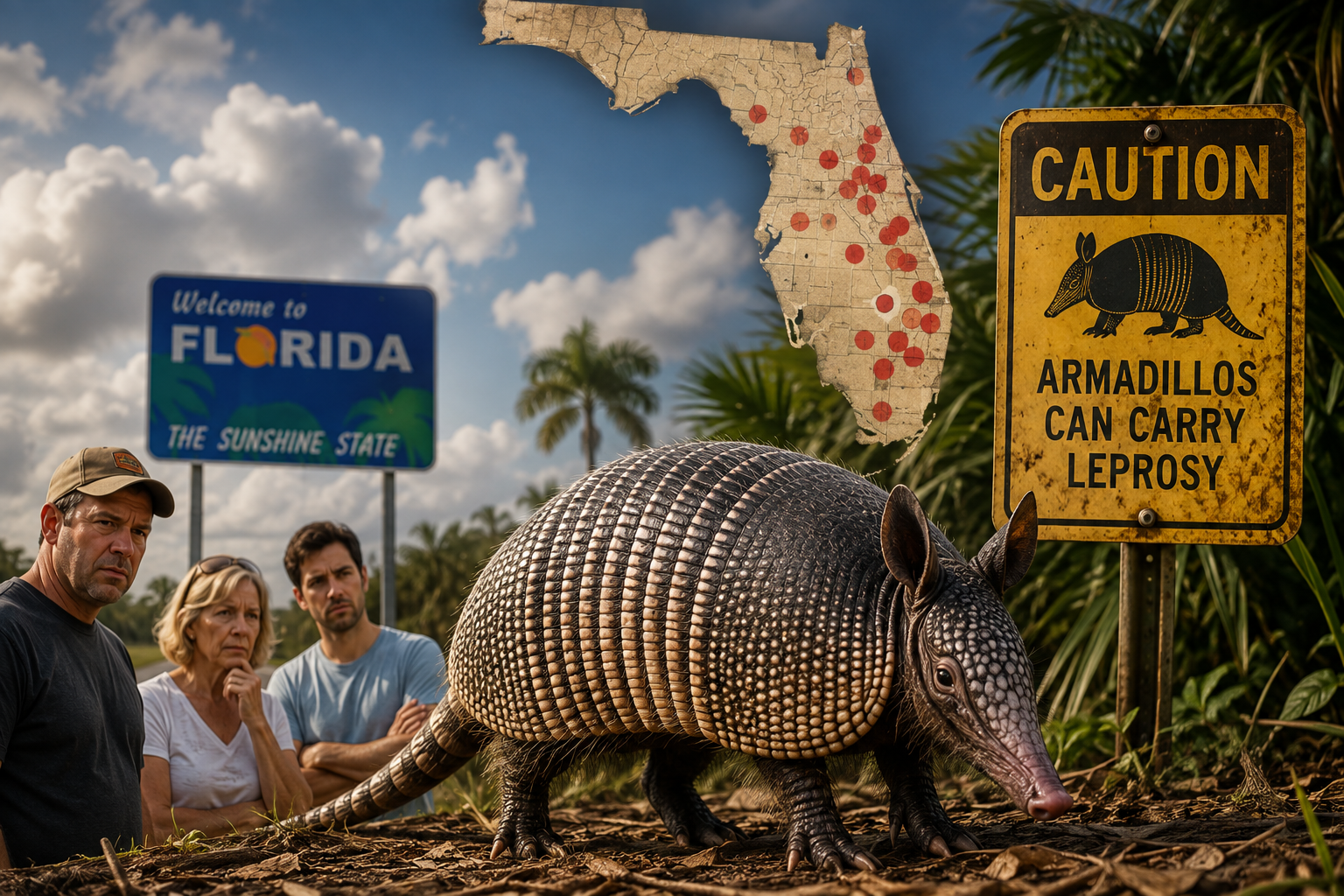
Florida leprosy cases are ticking up again, with the state reporting 17 confirmed infections so far in 2026, according to the Florida Department of Health. That number puts this year on pace with a steady climb health officials have watched build for half a decade. The state logged eight cases in 2022, 23 in 2023, 20 in 2024, and then 36 in 2025, the highest annual total recorded since Florida began tracking the disease in 1992. Dr. Norman Beatty, an infectious disease professor at the University of Florida, told WUSF the final 2026 count will likely climb higher once all reports come in, since case data typically lags behind actual diagnoses.
The concentration of Florida leprosy cases keeps landing in the same corner of the state. According to WFTV, Central Florida counties including Brevard, Lake, Orange, Seminole and Sumter have each logged at least one case this year. The broader list of affected counties this year also includes Charlotte, Duval, Highlands, Lee, Manatee, Miami Dade, Okeechobee, St. Johns and Volusia, stretching the pattern well beyond the traditional hot spots. Brevard County has carried an outsized share of the state’s cases for years. According to research from the University of Florida’s Emerging Pathogens Institute, Brevard accounted for 40 of the state’s 74 leprosy cases between 2019 and 2022, far outpacing every other county in Florida.
So what’s driving the numbers up. Health officials keep pointing to the nine banded armadillo, a common backyard visitor across Central and North Florida that is known to carry Mycobacterium leprae, the slow growing bacterium behind the disease. According to the CDC, the risk of catching leprosy from an armadillo is very low, and most people who come into contact with the animals never get infected. Still, the agency notes that prolonged or repeated contact, through handling the animals, coming into contact with their carcasses, or disturbing soil around their burrows, remains the clearest documented pathway for transmission in the southern United States.
Dr. Beatty broke down the exposure risk for WUSF, saying people should “avoid directly touching the animal, its carcass or ingesting the animal” and steer clear of soil the creatures have been digging through. He added that most armadillos in Florida are not actually infected, and that direct contact with the animal or its habitat still explains many of the cases turning up in the north and central parts of the state.
Not every case fits that pattern, though, which is part of why Florida leprosy cases have drawn national research attention. A 2023 CDC study found that the disease is now considered endemic in the southeastern United States, with Central Florida alone accounting for roughly one in five cases nationwide. That same research flagged a growing number of patients with no history of international travel and no known contact with armadillos, suggesting the bacteria may be circulating in the environment through routes scientists still don’t fully understand. Per the University of Florida’s Emerging Pathogens Institute, Florida patients diagnosed with the disease skew heavily toward men in their sixties who spent significant time working or recreating outdoors, which is part of why the university assembled a dedicated research team to study how the bacteria moves between people, animals and soil.
Despite the rising Florida leprosy cases, doctors are careful to stress that this is not a public health emergency. Florida Surgeon General Dr. Joseph Ladapo has moved to reassure residents even as the state logs new infections. The CDC estimates that around 95 percent of people carry natural immunity to the bacteria, meaning simple exposure rarely leads to infection. Nationally, about 225 people are diagnosed with leprosy each year, and most of those cases still trace back to travel outside the country rather than anything picked up stateside. Worldwide, roughly 250,000 people are diagnosed annually, concentrated heavily in parts of Asia, Africa and South America.
The disease itself, also known as Hansen’s disease, moves slowly. Symptoms including skin lesions, lumps and nerve damage can take anywhere from nine months to 20 years to appear after exposure, and the illness attacks the peripheral nerves that connect the brain and spinal cord to the skin and muscles, which can leave infected people with reduced sensation and a higher risk of unnoticed cuts and burns. The good news is that it’s treatable. According to the CDC, a course of multidrug antibiotic therapy lasting one to two years can cure the disease, and patients typically stop being contagious within days of starting treatment.
For now, the guidance from health officials stays simple. Admire the armadillos rooting around your yard from a distance, resist the urge to pick one up, wear gloves if you’re digging in soil where they’ve been burrowing, and wash your hands thoroughly after any time spent outdoors. As Florida leprosy cases continue to climb, that small bit of caution remains the most effective line of defense researchers have found.
