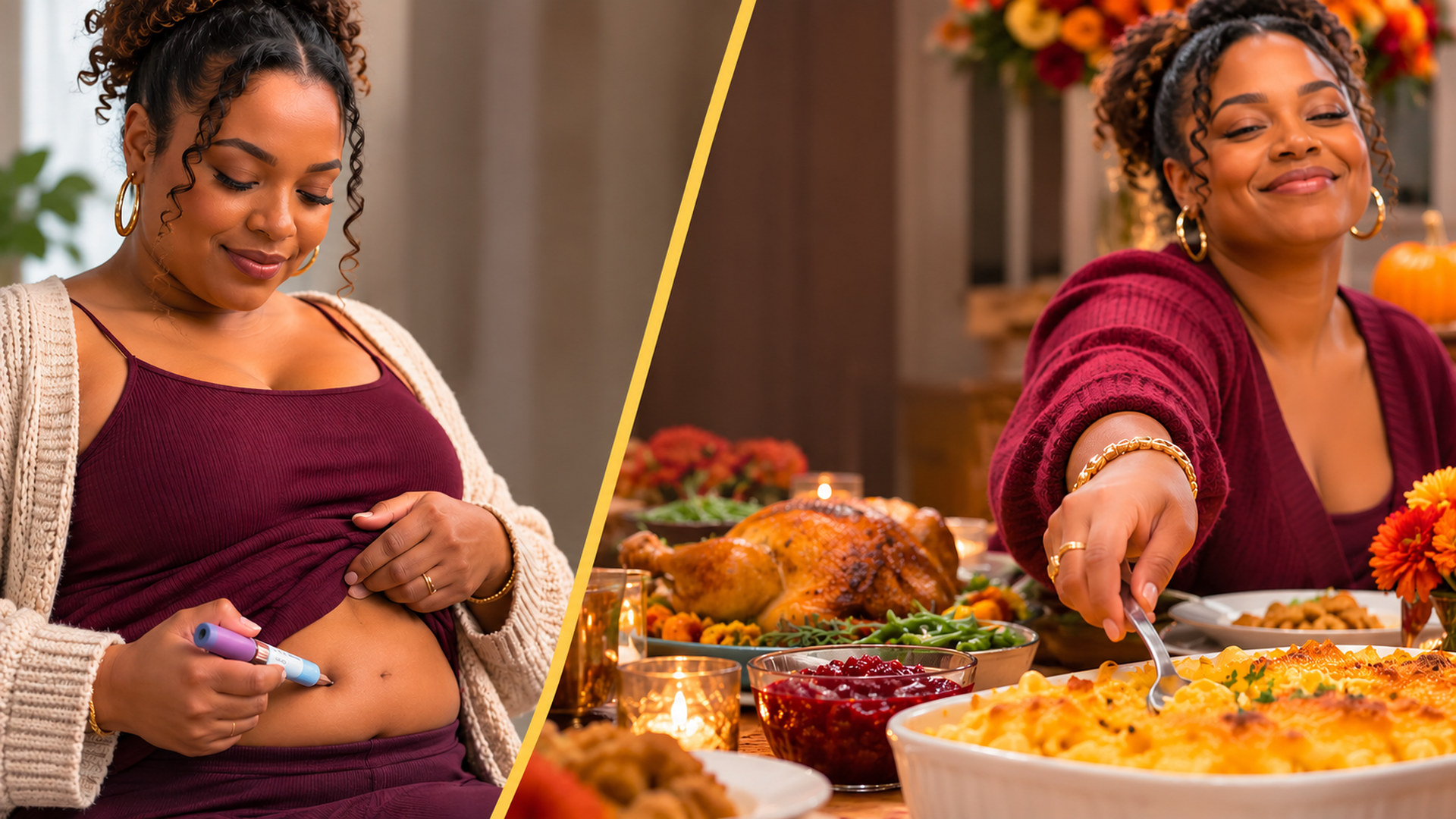
A GLP-1 Thanksgiving looks different from the ones you’re used to, but doctors say you can still eat good, laugh loud, and leave the table feeling fine. About one in 10 U.S. adults reported taking a GLP-1 medication in a CDC survey from 2025, so plenty of people are pulling up to the holiday table on Ozempic, Wegovy, Mounjaro, Zepbound, or another drug in the same family.
These medications reduce hunger and slow how fast your stomach empties, so you feel full sooner and stay full longer. That’s why the plate that used to be your warm-up round is now a whole meal. The goal is to work with the medication instead of fighting it.
The biggest risk is eating as you did before the shot. Dr. Reed Berger-Fleishman, an obesity medicine physician at the University of Illinois Chicago, says patients who barely had nausea on GLP-1s can suddenly get hit with significant nausea or even vomiting after eating past their new comfort level. Fullness also sneaks up on a delay. By the time your body sends the signal, that second helping may already be in trouble.
So don’t starve yourself all day to save room. Showing up to dinner starving, or with low blood sugar, is one of the worst ways to start the holiday. Eat a light, normal meal earlier so you can walk in calm instead of desperate.
When it’s time to fix your GLP-1 Thanksgiving plate, start with protein. Turkey, ham, and the rest of the meat lineup should get first dibs on space. Dr. Kunal Shah, an endocrinologist at Rutgers Robert Wood Johnson Medical School, says protein-rich foods are a good choice for anyone on these medications. The American Diabetes Association’s plate method is a simple guide: fill half with nonstarchy vegetables like greens and green beans, a quarter with protein, and a quarter with starches.
Now about that mac and cheese. Nobody’s telling you to skip it. Rich, fatty foods can make nausea worse and keep you feeling full for hours, so the move is a spoonful instead of a mountain. The same goes for dressing, candied yams, potato salad, and anything fried. A few bites of your favorites usually hit just as hard as a full serving, and you’ll actually feel good enough to enjoy the rest of the night.
Pace matters as much as portions on a GLP-1 Thanksgiving. Eat slowly, put your fork down between bites, and talk to your people. Stop when you feel satisfied, not stuffed. Nausea, bloating, and that early full feeling are your body telling you you’ve hit your limit, so listen the first time.


Made to order and shipped to your door.
Drinks need a game plan too. Alcohol can worsen nausea, acid reflux, and dehydration, all of which can already show up on these medications. Doctors recommend pouring less than you would have before starting treatment, never drinking on an empty stomach, sipping water throughout the night, and stopping if you feel queasy or dizzy. Some people find GLP-1s cut their desire to drink altogether, so the holiday might be the first real test of how your body handles it now.
Dessert is where a lot of people get caught slipping. Sweet potato pie, peach cobbler, and pound cake are not going anywhere, so take a sliver at the table and pack the rest. To-go plates are your best friend during a GLP-1 Thanksgiving, and leftovers taste better the next day anyway.
Then there’s family. Somebody is going to look at your plate and ask why you’re not eating. You don’t owe anyone an explanation about your medication. A simple “I’m good, I already ate plenty” or “I’m saving some for later” is enough. Whether you share that you’re on a GLP-1 is completely your call.
Don’t play with your dose to make room for the feast. Doctors discourage pausing treatment so you can overindulge, and taking an extra dose to curb your appetite more can raise the risk of serious side effects and even overdose. If travel throws off your schedule or you miss a dose, follow the instructions for your specific medication or call your prescriber or pharmacist. Storage rules vary by product, so check yours before you hit the road; keep your pens in your carry-on bag and get refills lined up early.
Most important, one big meal won’t erase your progress. Berger-Fleishman says the holidays aren’t everyday life, and enjoying a special dinner or dessert is part of a healthy relationship with food. Enjoy the day, know when you’ve had enough, and get back to your regular routine once the leftovers are gone. Any questions about side effects or dosing belong with your own doctor.