

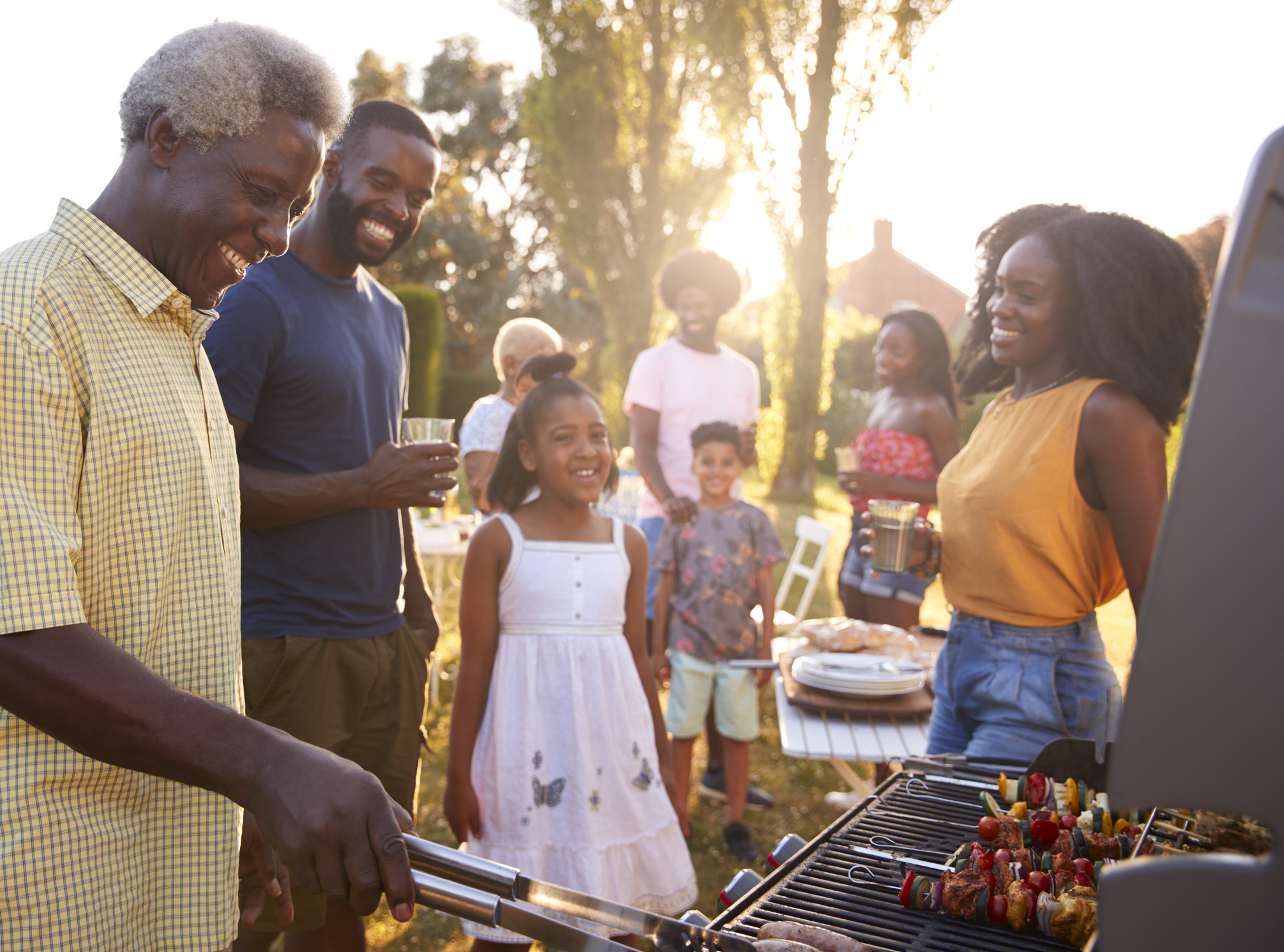
Grocery prices are making Black cookouts more expensive, and families are feeling it every time they try to fill a cart for a summer gathering.
For generations, Black cookouts have been one of the most meaningful and affordable ways to bring people together. A few packs of burgers, hot dogs, chicken, soda, chips, baked beans, fruit, and somebody’s famous potato salad could feed a crowd without turning the host’s budget upside down. It was never just about food. It was about family, music, laughter, elders holding court, kids running through the yard, and cousins reconnecting over plates stacked high enough to need two napkins.
Now, that same tradition is coming with a much heavier receipt.
According to the USDA Economic Research Service, food prices in May 2026 were 3.1% higher than they were in May 2025. The agency also reported that grocery store and supermarket food prices were 2.7% higher than a year earlier, while restaurant and other foodservice prices were 3.5% higher. For families planning Black cookouts, that means nearly every part of the table is costing more.
The USDA Economic Research Service also projected that all food prices will rise 3.2% in 2026, with food at home prices expected to rise 2.8% and food away from home prices expected to rise 3.6%. Those numbers may look small on paper, but anybody feeding a crowd knows how quickly a few extra dollars per item turns into a much bigger total.
The biggest problem is meat.
According to Reuters, Wells Fargo Agri Food Institute estimated that a summer barbecue for 10 people will cost $161 in 2026, up 2.4% from last year. Reuters also reported that hamburger beef is up 14%, making beef one of the clearest reasons cookout prices are rising.
That hits Black cookouts right at the grill.
Burgers, ribs, steaks, hot dogs, chicken, and wings are usually the centerpiece of the event. The person behind the grill is not just cooking. They are feeding the family, setting the tone, and making sure nobody leaves hungry. When beef prices climb, the whole cookout budget moves with them.
The average retail price for one pound of lean and extra lean ground beef hit a record $8.62 in May 2026, based on U.S. Bureau of Labor Statistics data. Reuters reported that drought, wildfires, and tight cattle supplies have helped keep beef prices high, while some consumers are turning to chicken and pork to save money.
The USDA Economic Research Service also reported that beef and veal prices were 12.9% higher in May 2026 than in May 2025. The agency said the U.S. cattle herd has fallen to its lowest level in 75 years, while wholesale beef prices remain at all-time highs for this time of year. USDA projected beef and veal prices will increase 7.5% in 2026.
That is why grocery prices feel especially personal during cookout season. Burgers were supposed to be the budget-friendly option. Now, even a simple tray of patties can make a host pause in the meat aisle.
The pressure does not stop with the grill. Retail fresh vegetable prices were 11.9% higher in May 2026 than they were in May 2025. Fresh tomato prices were 32% higher. Nonalcoholic beverages were 5.8% higher, and USDA projected beverage prices would increase 5.7% in 2026.
That matters because cookout sides are not optional in the culture. Tomatoes for burgers, fruit trays, salad, baked beans, corn, soda, lemonade, bottled water, desserts, condiments, foil, cups, plates, and napkins all become part of the final bill. One item may not hurt by itself, but a full cookout cart tells a different story.
According to LendingTree, 49% of Americans said it was at least somewhat difficult to afford food in 2026, while 52% said they were spending more on food than the year before. The outlet also found that 86% of people had changed how they shop for groceries, including paying closer attention to prices, cutting back on splurge items, watching food waste, and choosing store or generic brands.
That shift is showing up at Black cookouts too. More guests are being asked to bring something real, not just pull up with an appetite. One person may be responsible for drinks. Another may bring a pan of macaroni. Somebody else may get assigned ice, cups, fruit, or dessert. The potluck has always been part of the tradition, but grocery prices are making it feel less like a courtesy and more like a strategy.
Advance America reported that one in three families surveyed said they are buying fewer fruits and vegetables. The company also found that 51% of families said their overall diet is less healthy than it was two to three years ago because of grocery prices, while 64% said they worry at least occasionally that grocery costs are making their diet less healthy.
That is bigger than one cookout. It speaks to a wider reality where families are being forced to make tradeoffs around food that used to feel basic. When fresh produce, beef, and drinks all cost more, even a joyful gathering becomes a budgeting exercise.
Still, Black cookouts are not disappearing. Families are adjusting because the tradition means too much to let it go. Hosts are shopping sales, buying in bulk, choosing store brands, swapping beef for chicken, cutting back on the number of meat options, and asking guests to contribute more. Instead of five meats, there may be two. Instead of several trays of sides, there may be a tighter menu built around what stretches.
The heart of the cookout was never about luxury. It was about abundance, care, community, and making sure everybody had a plate. It was about elders being served first, kids getting seconds, music carrying across the yard, and people feeling like they belonged.
Grocery prices may be changing the menu, but they have not changed the meaning. Black cookouts are still sacred. They are still where families gather, stories get passed down, and summer memories are made. The difference in 2026 is that the person standing behind the grill is not just managing the food. They are managing beef prices, grocery prices, and the quiet pressure of making tradition affordable.
