

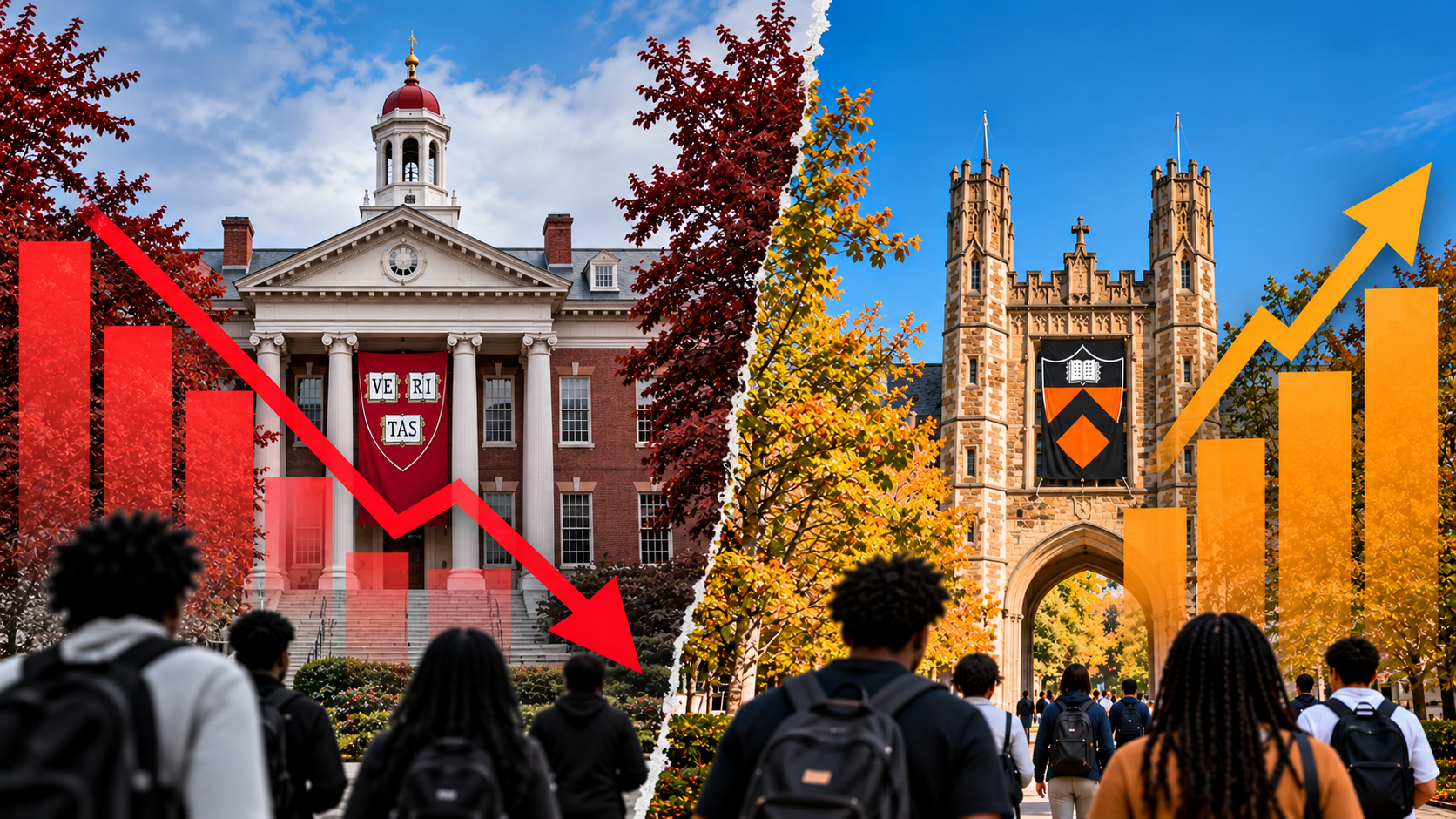
Harvard Black enrollment dropped for a third straight year, with Black students making up 9.3 percent of the Class of 2030, according to data the school released Tuesday and the Harvard Crimson reported.
That is down 2.2 percentage points from 11.5 percent in the Class of 2029. Black students made up 14 percent of the Class of 2028, the first class admitted after the Supreme Court’s 2023 decision, and 18 percent of the class before it. The share has fallen every year since the ruling.
Asian American students moved the other way. They now make up 43.2 percent of the Class of 2030, up from 41 percent in the Class of 2029 and 37 percent in the Class of 2028. Hispanic and Latino students are 11.4 percent of the class, largely unchanged after a five percentage point decline last year. Nearly 2 percent of freshmen identified as Native American, Native Hawaiian or Pacific Islander, and 9 percent did not report their race or ethnicity.
The slide in Harvard Black enrollment traces back to Students for Fair Admissions v. Harvard, the 2023 ruling that ended affirmative action, the practice of letting colleges consider an applicant’s race when building a class. Harvard was the named defendant in a lawsuit accusing the school of discriminating against Asian American applicants, and the justices ruled against it.
Harvard was not alone that first year. Columbia College and Engineering saw its Black first-year share fall to 12 percent from 20 percent, and the University of North Carolina, the other defendant in the case, dropped to about 8 percent from almost 11 percent.
Harvard also changed how it reports these numbers. Beginning with the Class of 2028, the college calculates racial percentages using only the students who reported their race, instead of the entire freshman class. The Crimson reported that the change has made it difficult to determine how demographics are shifting. With 9 percent of this class not reporting, the Black share of the full freshman class could be lower than 9.3 percent. The 18 percent figure from before the ruling predates the change, so the comparison across those years is not exact. Harvard releases racial data only after admissions end and students arrive on campus.
Other Ivy League schools have posted mixed results, according to The Crimson. At Yale, the share of African American freshmen fell from 12 percent last year to 10 percent this fall, its lowest level in a decade. Princeton reported that Black students make up 8.4 percent of its Class of 2030, a rebound from 5 percent last year.
Interest in Harvard itself surged. The college received 55,104 applications for the Class of 2030, a 15 percent jump from last year’s 47,893 and the largest pool in years when standardized test scores were required. Harvard reinstated its SAT or ACT requirement last year after five admissions cycles of test-optional policies, and applications fell 11 percent that year. Harvard did not release how many students it admitted, but the Crimson reported that enrollment and yield figures suggest an acceptance rate of about 3.7 percent, down from 4.18 percent last year. Yield is the share of admitted students who choose to enroll, and it was 80.9 percent, the sixth straight year above 80 percent.
The data arrives while Harvard remains under federal scrutiny. The Crimson reported that the Trump administration sued Harvard in February over its refusal to hand over applicant-level admissions records. The lawsuit does not accuse Harvard of racial discrimination.
The Class of 2030 was also the first admitted through Harvard’s new partnership with QuestBridge, a nonprofit that matches high-achieving, low-income students with top colleges and full scholarship packages. Dean of Admissions and Financial Aid William Fitzsimmons told the class during Visitas weekend that the South has emerged as a key pipeline for Harvard admits, pointing to Texas as a major source of students.
In Tuesday’s announcement, Fitzsimmons wrote that “each generation has recognized the remarkable opportunities Harvard offers” and that “The Class of 2030 carries that tradition forward, bringing their own experiences and aspirations to campus.” The statement as reported by the Crimson did not address the decline in Black enrollment.
