

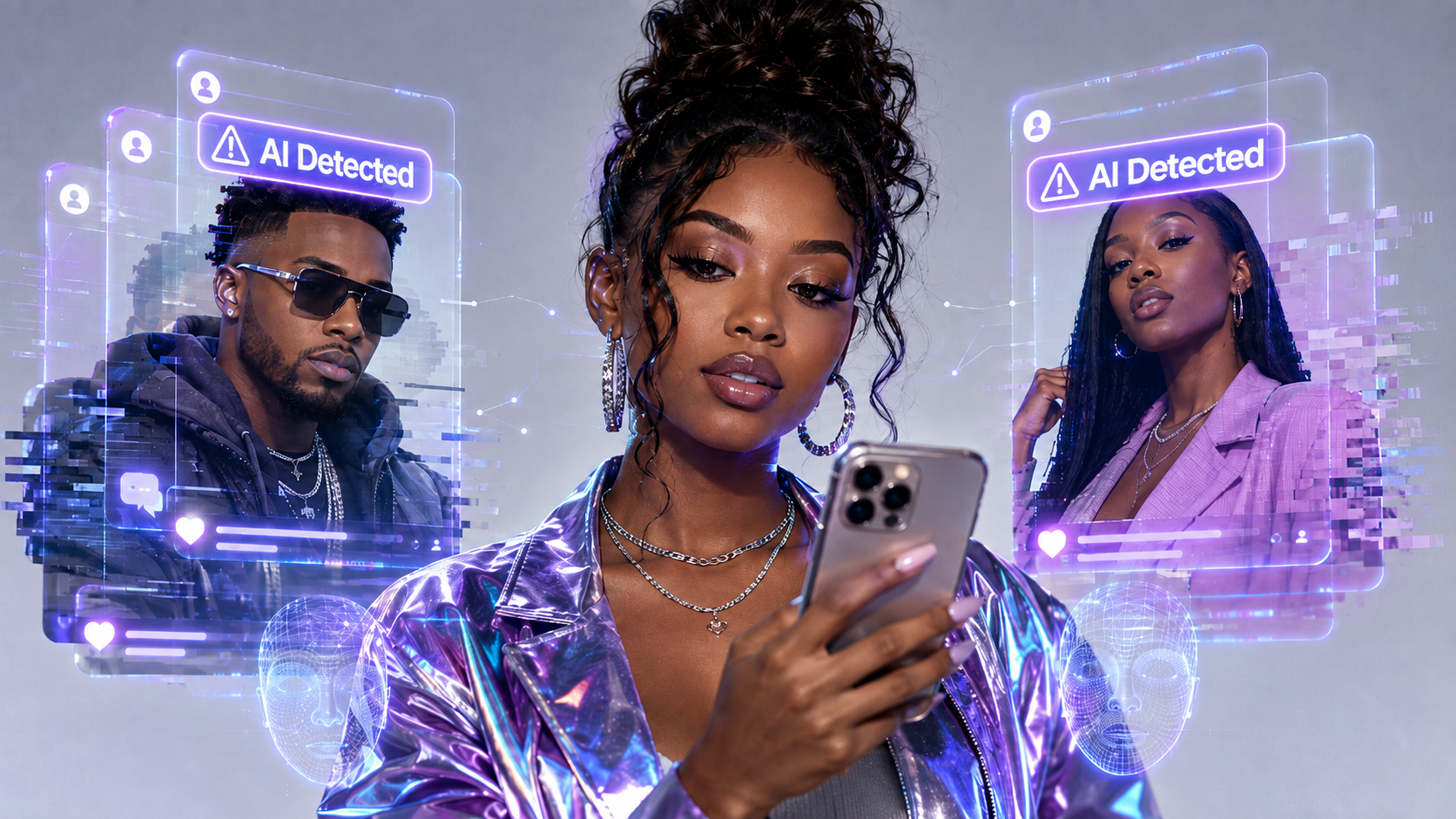
Instagram is tightening its approach to AI-generated people, putting creators on notice that accounts built around synthetic personalities can no longer quietly blend in with human influencers without consequences.
The platform is replacing its existing “AI creator” label with the clearer “AI-generated profile” label. The designation applies when the person featured on an account was generated or substantially created using artificial intelligence. More importantly, creators who should disclose an AI-generated person but fail to do so could see their reach reduced. Properly labeled AI profiles will not be penalized simply because the person is artificial.
The restrictions could hit hardest inside Instagram’s recommendation system. Undisclosed AI profiles can reportedly lose visibility in places such as Explore and Reels, cutting off two major ways creators reach people who do not already follow them. Instagram can also identify suspected AI accounts itself, while users who believe an account was wrongly flagged reportedly have an opportunity to appeal.
That means virtual models, fictional influencers, and synthetic personalities are not being banned. Instagram is instead drawing a line around transparency.
The company says users have complained about discovering that accounts they believed belonged to real people were actually computer-generated. “They want to know when a profile features an AI-generated person,” Instagram explained.
However, simply using AI does not automatically trigger the label. Someone can use artificial intelligence to edit photos, polish captions, create graphics, or make other creative changes without labeling the entire profile as AI-generated. The new disclosure specifically focuses on accounts where the human-seeming person at the center of the profile is artificial.
That distinction is becoming increasingly important because AI influencers are no longer limited to obviously animated characters. New tools can generate photorealistic faces, bodies, videos, and voices. Pair those images with regular posts, captions, comments, and a carefully constructed backstory, and users may have little reason to suspect that the influencer they are following does not exist.
The problem gets more serious when money, health advice, or private conversations enter the picture.
Earlier in 2026, Wired investigated more than two dozen apparently AI-generated male influencer accounts promoting the dating app Goose on Instagram. Some reportedly contacted potential users through direct messages. The New York Times also found hundreds of AI-generated doctors, healers, and wellness personalities across social media that promoted supplements or made health claims.
A synthetic fashion model promoting clothes raises questions about advertising transparency. An AI-generated doctor appearing to offer medical authority or a fake financial expert pushing products can carry much greater consequences.
Federal regulators have already been wrestling with the impersonation problem.
The Federal Trade Commission’s existing Impersonation Rule gives the agency enforcement power against people falsely posing as government entities or businesses. The FTC has also proposed expanding federal protections to prohibit impersonation of individuals, specifically warning that AI-generated deepfakes and voice cloning can dramatically increase the reach and sophistication of fraud.
The money involved shows why regulators are paying attention. Consumers reported losing approximately $3.5 billion to imposter scams in 2025, according to FTC data. Those losses cover impersonation fraud broadly and are not limited to AI schemes, but artificial intelligence can make convincing fake identities far easier to produce at scale.
Advertising laws already provide another layer of protection. The FTC requires influencers to clearly disclose material relationships with brands, and its updated endorsement guidance specifically recognizes virtual influencers. Federal rules also prohibit certain fake reviews and testimonials, including AI-generated testimonials falsely presented as coming from people who do not exist.
Still, calls for stronger protections continue because existing laws do not create a universal American rule requiring every AI-generated social media personality to identify itself.
The U.S. Copyright Office previously recommended that Congress create a federal digital replica law, arguing that existing protections leave significant gaps when realistic AI-generated images, videos and voices imitate actual people.
Lawmakers have since pushed the NO FAKES Act of 2026, which would establish federal protections against certain unauthorized digital replicas of someone’s voice or visual likeness. It would also establish a notice and takedown process. The legislation advanced through the Senate Judiciary Committee in June 2026 but has not become federal law.
Europe has already moved further. Transparency requirements under the European Union’s AI Act took effect on August 2, 2026. Covered AI systems must inform people in certain situations when they are interacting with artificial intelligence, while deepfakes and other covered synthetic content must carry disclosures. Providers also face requirements for machine readable markings designed to help identify AI-generated material.
Instagram’s crackdown fits into a much bigger shift taking place across social media, advertising and government regulation.
AI personalities are not disappearing, and some could become major influencers in their own right. What is changing is the expectation that users deserve to know whether the beautiful model, wellness guru, lifestyle creator, or friendly stranger messaging them is actually human.
Instagram is not telling creators that they cannot build a fake person. It is making it harder to hide the fact that the person is fake.
