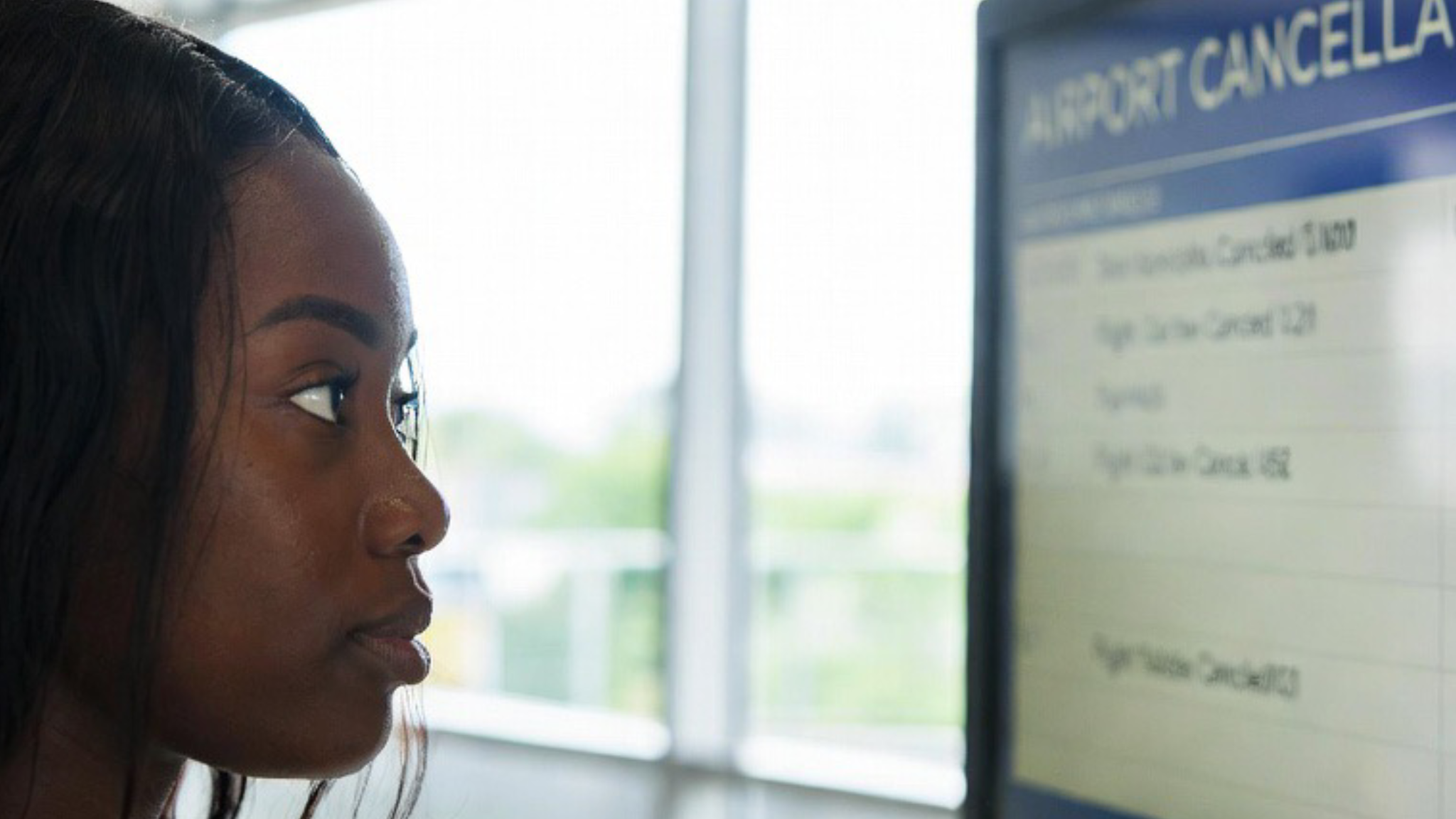
Donald Trump and Israeli Prime Minister Benjamin Netanyahu’s military campaign against Iran has disrupted tourism and global travel across multiple destinations. Americans travel to cities like Dubai for vacations, business trips, and international connections, but the conflict quickly changed that reality. As Iran launched retaliatory missile attacks across the region targeting areas that host U.S. military installations, normal life in major travel hubs started shifting overnight. Airports slowed, flights were canceled, and travelers suddenly found themselves navigating a region where a routine layover or work trip could turn into a travel emergency.
A lot of American travelers use the Middle East as a bridge between continents. Flights connecting the United States to Asia, Africa, and parts of Europe often pass through Gulf hubs because they offer the fastest routes. When those airports slow down or airspace closes, vacations, business travel, and family visits start unraveling at the same time.
One airport shutdown can break thousands of itineraries.
Dubai, United Arab Emirates
Dubai has long been one of the world’s biggest stopover cities and a top destination for American tourists and business travelers. When disruptions hit Dubai International Airport, airlines began canceling flights and limiting operations as the region’s security situation shifted. Travelers who planned luxury vacations suddenly found themselves dealing with delays, uncertainty, and rerouted flights.
Dubai is also home to U.S. military presence in the region. That reality turned what is normally one of the world’s most stable travel hubs into a place where flight schedules and airport operations can change quickly.
Doha, Qatar
Doha plays a major role in international aviation, especially for Americans heading to Asia, Africa, and the Middle East. When regional airspace closures began spreading across the Gulf, flights through Doha slowed dramatically. Passengers started stacking up in terminals as airlines worked to reroute aircraft away from restricted flight paths.
Abu Dhabi, United Arab Emirates
Abu Dhabi is another key hub for long-haul travel between continents. As the conflict escalated, airline operations across the region became limited, with some flights paused and others operating on constantly shifting schedules.
For travelers, that meant fewer seats, higher demand, and unpredictable itineraries.
Tel Aviv, Israel
Israel’s airspace closure immediately disrupted tourism tied to family travel, sightseeing, and faith-based tours. Flights in and out of Tel Aviv were limited while authorities managed the security situation and controlled which aircraft could operate.
Travelers attempting to leave faced long waits and uncertain departure timelines.
Jerusalem, Israel
Jerusalem remains one of the most visited religious travel destinations in the world. Many Americans visit every year as part of church tours, historical trips, and educational travel programs.
When regional tensions escalated and flights slowed, travelers suddenly had to think about exit routes and transportation logistics instead of tour schedules.
Cairo, Egypt
Egypt continues to attract American travelers interested in history and cultural tourism. While Cairo itself is not part of the conflict, its proximity to the regional air corridor means airlines have had to adjust routes and schedules.
Longer flight paths and missed connections began affecting travelers across major international itineraries.
Istanbul, Turkey
Istanbul functions as one of the world’s major bridge cities between Europe, Asia, and the Middle East. As airlines avoided restricted airspace farther south, many flights began rerouting north through Turkey.
That increased traffic through Istanbul but also brought delays and scheduling disruptions.
Kuwait City, Manama, Beirut, and Amman
Several other cities across the region have also felt the ripple effects. Kuwait City, Bahrain’s capital Manama, Beirut in Lebanon, and Amman in Jordan all sit within the same tightly connected air corridor.
When surrounding airspace becomes restricted, flights into and out of these cities slow down or pause entirely.
Tourists, business travelers, and families visiting relatives all end up dealing with the same disruptions.
Why Americans are feeling the impact quickly
The Middle East functions as one of the world’s most important aviation crossroads. Airlines route long-haul flights through cities like Dubai, Doha, and Abu Dhabi because their locations make it easier to connect travelers between continents.
When that corridor narrows, airlines must reroute aircraft around closed airspace. Those changes make flights longer, increase fuel costs, and disrupt airline schedules across the global network.
Passengers usually only see the result.
A cancellation notification.
What the U.S. government is telling travelers
The U.S. State Department has issued a worldwide caution warning Americans that travel disruptions could continue because of ongoing military activity involving Iran.
Officials have also advised Americans in several countries across the region to monitor conditions closely and leave using available commercial transportation if necessary.
Airspace restrictions can change quickly depending on the security situation.
What this means for tourism
If a trip depends on a Middle East stopover, travelers should expect delays or cancellations until airspace stabilizes and airlines rebuild normal flight schedules.
Vacations to destinations like Dubai, Doha, Tel Aviv, or Cairo may still operate, but as of now flights have been cancelled.
For many travelers already in the region, the focus has shifted away from sightseeing.
Right now the priority is getting home safely.
And for the rest of the world, the situation is a reminder of how quickly global travel can change.