

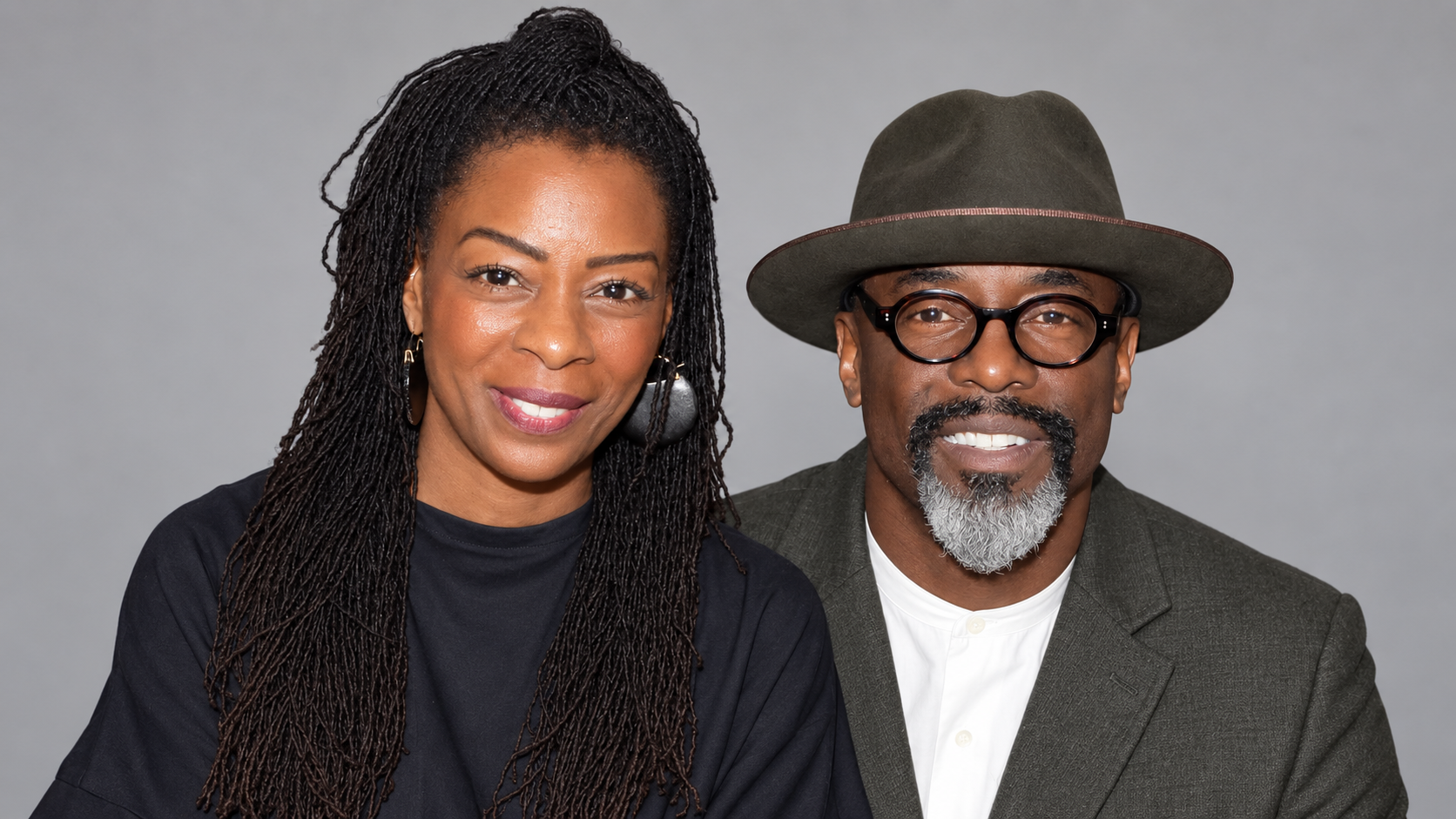
Isaiah Washington is turning a deeply private family loss into a health warning after revealing that his wife of nearly three decades, Jenisa Washington, died following a massive hemorrhagic stroke.
The “Grey’s Anatomy” alum shared the news publicly on October 3, explaining that Jenisa suddenly collapsed on May 31, 2025. She never recovered and died on June 9, 2025.
“Yes…the rumors are true,” Washington wrote alongside a photograph of his late wife. “It came as a huge shock to me and our entire family.”
View this post on Instagram
Washington kept her death out of the public eye for roughly 16 months, a decision that appeared consistent with Jenisa’s preference for privacy.
“She succumbed to a massive hemorrhagic stroke and never recovered,” he wrote.
While Washington did not disclose Jenisa’s medical history or say what caused her stroke, he used the announcement to urge others not to dismiss potentially serious symptoms.
“Listen, y’all…some headaches are not just headaches or migraines, they can be much worse and a warning sign,” Washington wrote. “Get a brain scan if you can and take those headaches seriously.”
His warning carries added weight for Black families, particularly Black women, who face a disproportionate burden from stroke in the United States.
According to the Centers for Disease Control and Prevention, stroke is a leading cause of death among Black women, who are more likely to die from a stroke than White or Hispanic women. Nearly 3 in 5 Black women have high blood pressure, compared with roughly 2 in 5 White women. Hypertension is one of the most important stroke risk factors.
The disparity is especially stark during middle age. CDC data from 2022 found that among women ages 45 to 64, Black women had the highest stroke death rate in every region of the country. Depending on the region, their death rates were roughly two to five times higher than those of other racial and ethnic groups studied.
Black adults overall are also nearly twice as likely as White adults to experience a first stroke, according to the CDC.
There is no single explanation for the disparity.
High blood pressure is a major factor. The American Heart Association reports that roughly 59% of non-Hispanic Black women have hypertension. Black adults can also develop high blood pressure earlier in life and experience more severe hypertension than some other racial and ethnic groups.
Diabetes and obesity, which can raise stroke risk, are also more prevalent among Black women. Other contributors may include family history, smoking, high cholesterol, physical inactivity and certain heart conditions.
Women can have additional stroke risks associated with pregnancy, preeclampsia, some forms of hormonal birth control and hormone therapy. High blood pressure during pregnancy can also increase a woman’s risk of stroke and cardiovascular disease later in life.
Still, racial disparities in stroke cannot be reduced to individual lifestyle choices alone. Access to preventive care, blood pressure treatment, and other social and health care factors can also affect outcomes.
A hemorrhagic stroke happens when a blood vessel in or around the brain ruptures, causing bleeding that damages surrounding brain tissue.
Hemorrhagic strokes account for about 13% of strokes, while the majority are ischemic strokes caused by a blockage in blood flow. High blood pressure and brain aneurysms are among the conditions that can lead to hemorrhagic strokes.
A sudden, severe headache with no known cause can be a stroke warning sign, but headaches are not the only symptom people should watch for.
The CDC recommends remembering B.E. F.A.S.T.: sudden loss of Balance, sudden Eye or vision changes, Face drooping, Arm weakness, Speech difficulty, and Time to call 911.
Other warning signs can include sudden numbness or weakness, particularly on one side of the body, confusion, difficulty understanding speech, dizziness, trouble walking or a sudden unexplained severe headache.
Stroke is an emergency. Anyone experiencing these symptoms should call 911 rather than wait for them to improve.
The alarming numbers do not mean stroke is inevitable. The CDC estimates that about 4 in 5 strokes are preventable.
Knowing and controlling blood pressure is one of the most important steps. Managing diabetes and cholesterol, avoiding smoking, staying physically active, and regularly discussing cardiovascular risk with a health care provider can also lower risk.
Washington and Jenisa married on Valentine’s Day in 1996 and remained together for 29 years. They shared three children, Isaiah V, Tyme and Iman.
Although Washington built a public career through roles including Dr. Preston Burke on “Grey’s Anatomy,” “Crooklyn,” “Ghost Ship,” “The 100,” and “P-Valley,” Jenisa largely remained outside of the spotlight.
Washington previously explained that becoming a husband and father changed how he approached Hollywood.
“For me, being married and having children did change a lot of my trajectory,” he said in a 2022 interview. “That’s why I didn’t want to get married 25 years ago, but I’m glad I did because the wife and children really make you the best human being that you can be.”
He also joked about avoiding intimate scenes because of his family.
“I always told my wife, since I have the kids and a wife, that I would rather kiss a horse than a woman on screen,” Washington said.
“Because then I have to explain myself to my daughter, like why are you kissing a strange woman?”
When it came to accepting roles, Washington said, “I’ve said ‘no’ more than I have said ‘yes.’”
Now, more than a year after Jenisa’s death, Washington is publicly sharing a loss that his family endured privately.
“I don’t know if this is an appropriate post,” he concluded, “because Jenisa Washington was extremely private, but I guess I just have to be reprimanded by her on the other side.”
His message also serves as a reminder beyond his family’s tragedy: know your blood pressure, recognize sudden stroke symptoms, and seek emergency help immediately when something feels seriously wrong.
